
Tiny jellyfish sparks a blueprint for scar-free, rapid wound repair
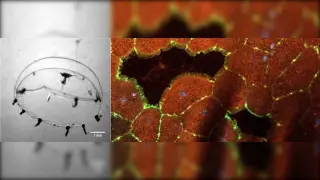
Researchers studying the tiny jellyfish Clytia hemisphaerica show its epithelial cells can close wounds in minutes without scarring, via a two-stage process: lamellipodia extend across the damaged basement membrane to cover the gap, then an actomyosin cable contracts to pull cells together and expel debris. For larger wounds, a collective sheet migration restores tissue. Because the jellyfish lacks inflammation and blood vessels, scientists can observe the core mechanics of wound repair in real time, providing a simplified model that could inform future regenerative medicine, though direct translation to humans remains uncertain.