Tag

Epithelial Cells

All articles tagged with #epithelial cells

Tiny jellyfish sparks a blueprint for scar-free, rapid wound repair
science10 days ago

Tiny jellyfish sparks a blueprint for scar-free, rapid wound repair

Researchers studying the tiny jellyfish Clytia hemisphaerica show its epithelial cells can close wounds in minutes without scarring, via a two-stage process: lamellipodia extend across the damaged basement membrane to cover the gap, then an actomyosin cable contracts to pull cells together and expel debris. For larger wounds, a collective sheet migration restores tissue. Because the jellyfish lacks inflammation and blood vessels, scientists can observe the core mechanics of wound repair in real time, providing a simplified model that could inform future regenerative medicine, though direct translation to humans remains uncertain.
Single-cell atlas maps Crohn’s disease drivers in ileal tissue
science26 days ago

Single-cell atlas maps Crohn’s disease drivers in ileal tissue

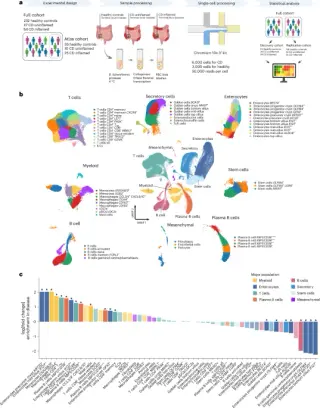
Researchers generated IBDverse, a 1.1‑million‑cell scRNA‑seq atlas of terminal ileal biopsies from 111 Crohn’s disease patients and 232 controls, using discovery and replication cohorts to identify robust cell-type signatures. They map 57 cell clusters across epithelial, immune and mesenchymal compartments, find IFN‑driven MHC‑I upregulation in epithelial cells (persisting in progenitors after inflammation resolves), and identify ITGA4+ macrophages as key inflammatory drivers with enriched JAK–STAT signaling and IL‑6/IL‑12/IL‑23 production. Heritability analyses link inflammatory monocytes and macrophages to CD risk, outlining a cellular–molecular framework with therapeutic implications; data and code are publicly available.

"Mapping Lung Adenocarcinoma Cell States and Plasticity"
medical-research2 years ago

"Mapping Lung Adenocarcinoma Cell States and Plasticity"

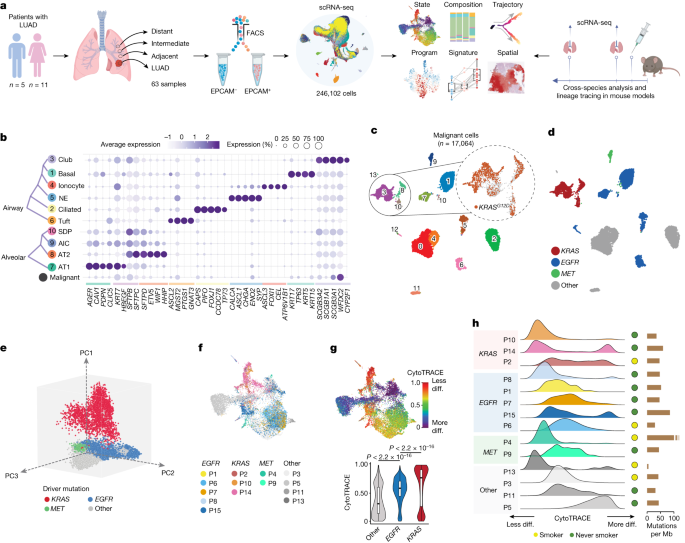
A study on lung adenocarcinoma (LUAD) reveals the transcriptional landscape of epithelial and malignant cells, identifying distinct cell subsets and their roles in LUAD development. The research shows that KRAS mutant LUADs exhibit unique transcriptional programs and extensive heterogeneity, while a subset of alveolar intermediate cells (AICs) transition to malignant cells, particularly KRAS mutant cells. These AICs, termed KRT8-high alveolar cells (KACs), are enriched in tumour-adjacent normal regions and display features of reactive epithelial cells. The study provides insights into the cellular and transcriptional phenotypes of LUAD, potentially identifying actionable targets for early treatment strategies.

Unveiling the Mechanical Waves Behind Zebrafish Limb Regeneration
biology3 years ago

Unveiling the Mechanical Waves Behind Zebrafish Limb Regeneration

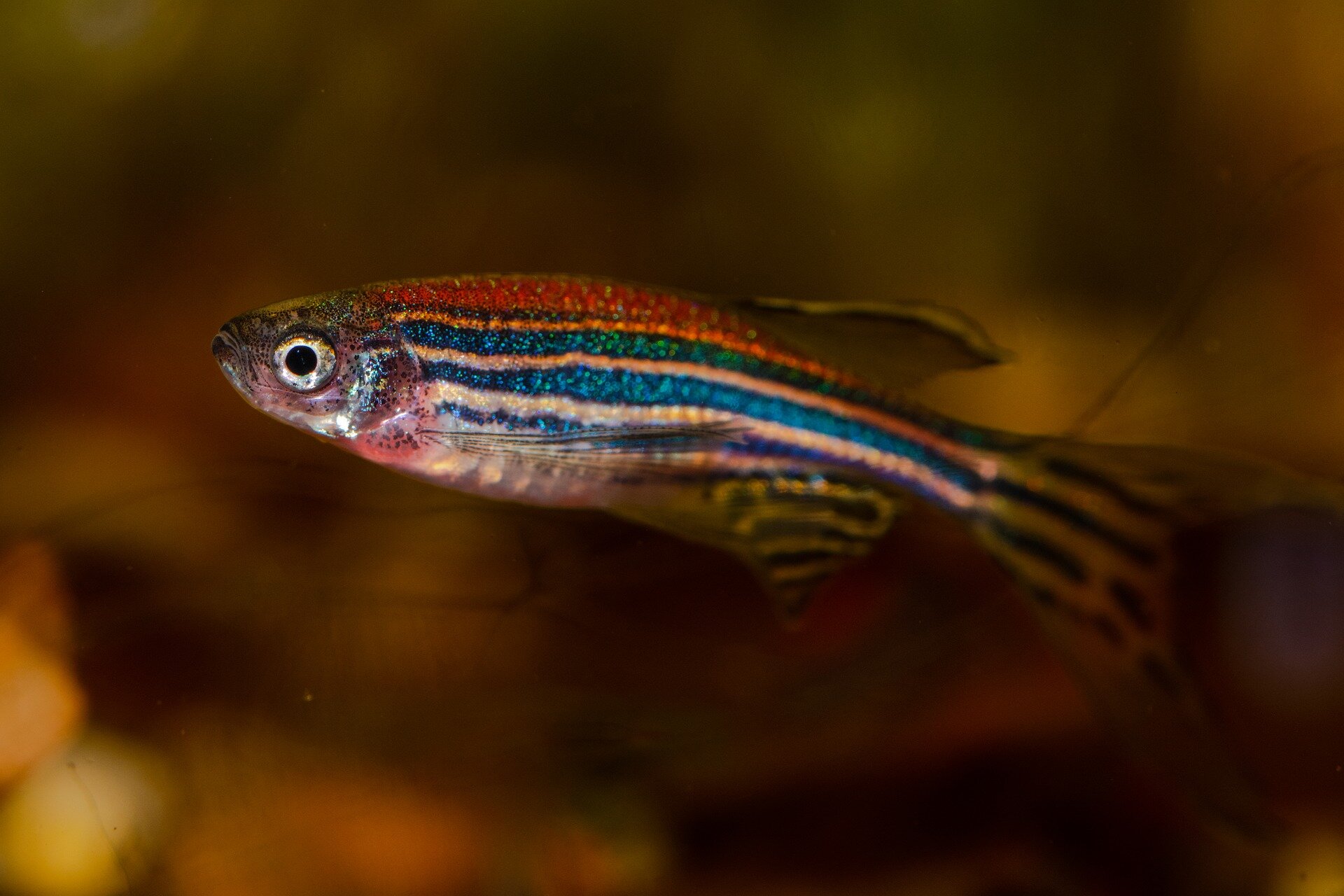
Biologists from Taiwan and the Philippines have identified mechanical waves involved in the regeneration of amputated tailfins in zebrafish. Through live-cell imaging, they observed a cell density wave propagating away from the amputated tissue during the regeneration process. The researchers developed mechanical models to explain this wave behavior, suggesting the involvement of an in vivo position-sensing mechanism based on traveling density waves in the regeneration process.