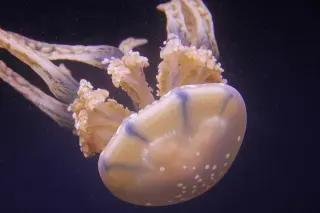
A SpaceX Falcon 9 launch from Cape Canaveral produced a luminous, jellyfish‑shaped cloud visible across Florida as dawn broke, drawing early risers to witness the unusual sky display likely linked to rocket exhaust and Starlink activity.
Researchers from Tohoku University and the National University of Singapore identified a new box jellyfish, Chironex blakangmati, off Sentosa Island, Singapore, distinguishing it from related species by distinct perradial lappet morphology and confirming it with genetic analysis, expanding the Chironex genus to four species. In the same expedition, samples of C. indrasaksajiae—previously associated with Thai waters—were found in Singapore for the first time, indicating a surprising range expansion. The study highlights Southeast Asia’s jellyfish biodiversity and public-safety implications and was published in the Raffles Bulletin of Zoology.
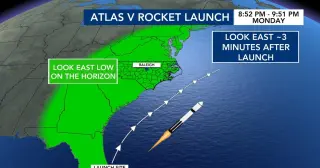
ULA's Atlas V is slated to launch Monday night, April 27, 2026, with a window from 8:52 p.m. to 9:51 p.m. Local sunset in Raleigh is around 8:00 p.m., so the rocket's vapor trail could be illuminated as it moves east, potentially forming a jellyfish-like glow about three minutes after liftoff. Look toward the eastern sky shortly after launch to catch the display; a live stream is available.
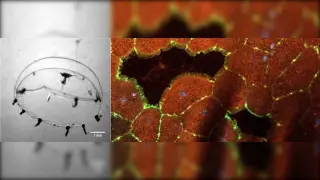
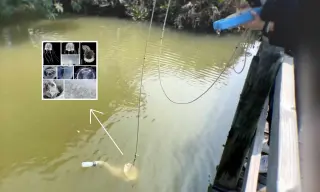
Researchers in Hong Kong’s Mai Po Nature Reserve describe Tripedalia maipoensis, a tiny box jellyfish about 0.6 inches long, as a new species—the fourth described in the Tripedaliidae family. DNA analysis shows it is distinct from Tripedalia cystophora (16S rRNA ~17.4% difference). The jellyfish has 24 eyes arranged in four rhopalia, with two lens eyes likely forming images to aid navigation under mangroves. Found during nocturnal sampling of shrimp ponds, this is the first box jellyfish formally reported from Chinese coastal waters and underscores hidden biodiversity in human-modified habitats. The study was published in Zoological Studies.
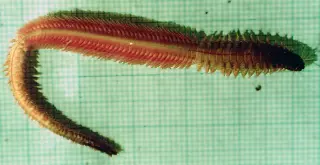
A Danish study finds jellyfish from two species feeding on polychaete worms, a burrowing bottom-dweller, marking the first documented instance. Across a year, 45 of 166 Aurelia aurita and 3 of 71 Mnemiopsis leidyi were found with worms in their guts, typically when worms rise to spawn at night. This seasonal feeding burst adds a new layer to fjord energy flow and could affect ecosystems if the invasive M. leidyi expands.
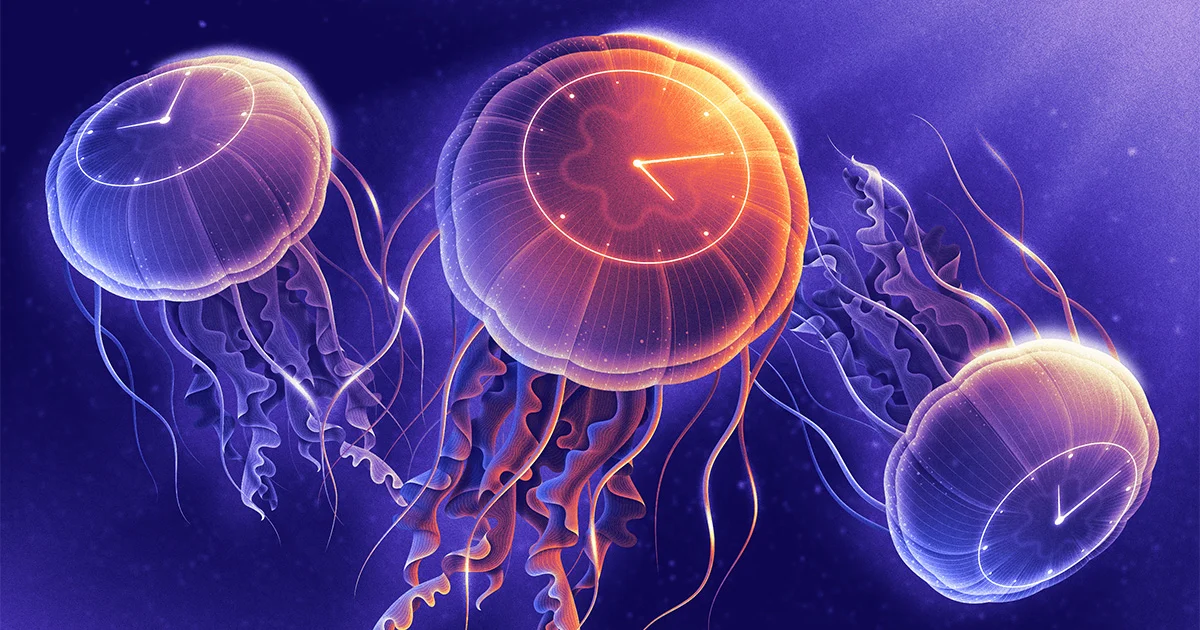
A newly described hydrozoan jellyfish species off Japan keeps a self-sustained 20-hour cycle that governs sunset spawning, suggesting an alternate, non-traditional circadian mechanism that evolved without standard clock genes.
NASA tested gravity sensing in space by sending thousands of jellyfish polyps to orbit in the 1990s. After about nine days, tens of thousands of jellyfish developed, but once returned to Earth the space-born jellyfish struggled to swim and exhibited vertigo, suggesting that humans born in space might also face difficulties re-adapting to Earth's gravity.
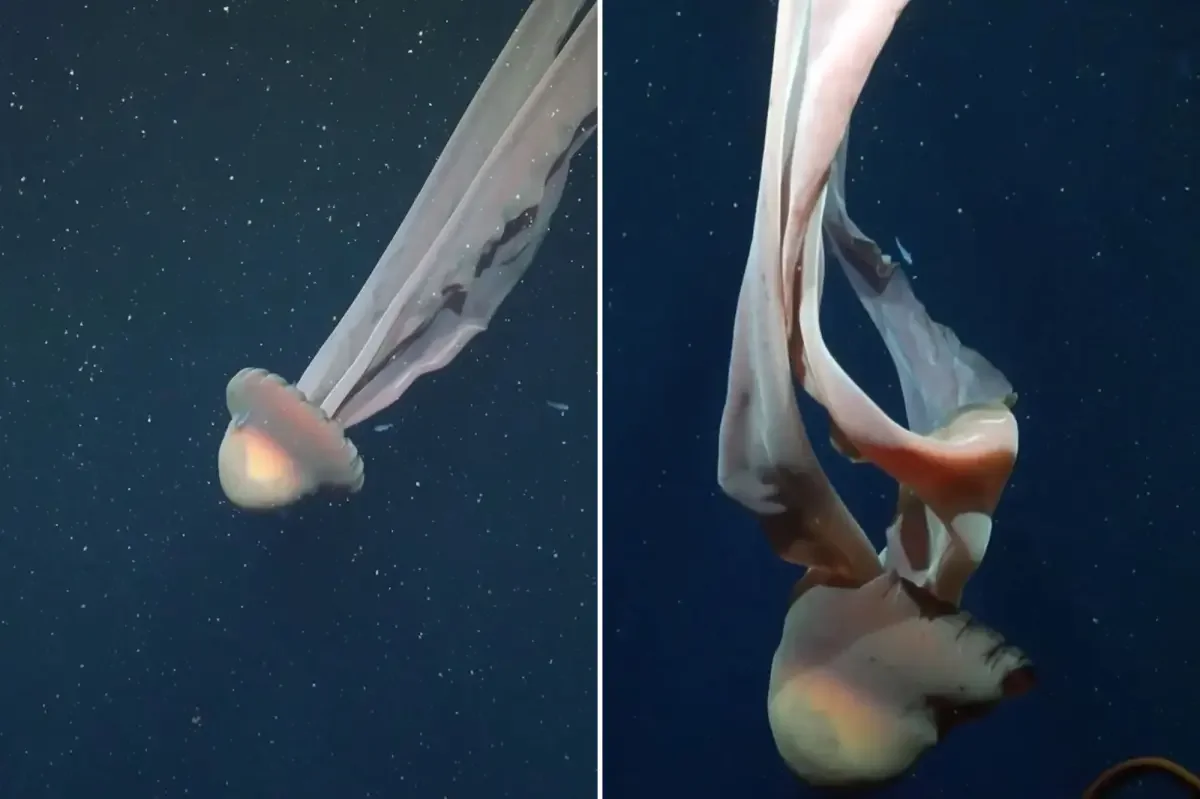
Scientists filming off Argentina’s coast with the Schmidt Ocean Institute’s ROV SuBastian captured rare footage of Stygiomedusa gigantea, a schoolbus-sized phantom jellyfish that can reach about 33 feet in length at depths around 820 feet; the deep-sea sighting, notable for its four ribbon-like arms used to snare prey, came amid footage of potential new species and rich reef systems uncovered during the expedition.
Venice’s lagoon is being invaded by Mnemiopsis leidyi, the warty comb jelly known as the sea walnut, originally from the western Atlantic and now spreading through the Adriatic likely via ballast water and warmer waters linked to climate change. Scientists warn the invasive jellyfish are proliferating, clogging nets and preying on fish eggs, larvae and plankton, which harms the lagoon ecosystem and threatens the region’s multi‑billion‑euro fishing industry as conditions become increasingly favorable for its spread.
Naomi Osaka debuted a jellyfish-inspired on-court outfit — a turquoise, tentacle‑accented look by Nike, Marty Harper, and Robert Wun — at the Australian Open, featuring a pleated miniskirt over wide-leg trousers, a wide-brim hat with veil and parasol; she defeated Antonia Ruzic 6-3, 3-6, 6-4, marking a landmark moment for couture in live tennis.
Naomi Osaka opened the Australian Open with a bold butterfly-themed entrance—featuring a wide-brim hat, veil and a white parasol—before defeating Antonia Ruzic 6-3, 3-6, 6-4. The look nods to her 2021 Melbourne success and jellyfish-inspired dress, while the event’s water motif and a remodeled Rod Laver Arena tunnel provided a backdrop as she eyes a second-round match against Sorana Cirstea and builds confidence.
Naomi Osaka kicked off her Australian Open campaign with a jellyfish-inspired ocean-blue outfit designed with Nike and London stylist Robert Wun, dedicating it to her daughter Shai. She beat Antonia Ruzic 6-3, 3-6, 6-4 at Rod Laver Arena to reach round two, with commentators praising both the statement look and her performance.
A study published in Nature Communications reveals that jellyfish and sea anemones, despite lacking brains, sleep in patterns similar to humans, supporting the theory that sleep evolved to repair DNA in nerve cells and highlighting its fundamental biological role across species.
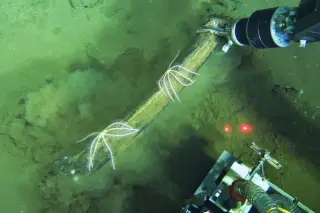
Researchers discovered an invisible biogeographic barrier in the North Atlantic that influences the distribution of Botrynema jellyfish, revealing how deep-sea currents and a 'soft barrier' in water conditions shape where different morphs of this Arctic jellyfish can live, with the knobbed form able to reach subtropical waters near Florida likely via deep currents.
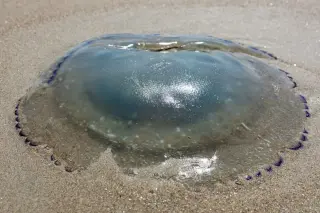
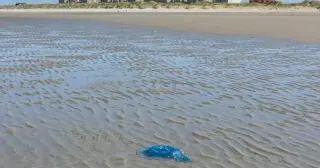
Sightings of giant jellyfish, particularly the barrel jellyfish, have surged around the UK coast this year, likely due to rising sea temperatures and changing currents, with ecological shifts also affecting other marine species; meanwhile, sightings of the Portuguese man o’ war have decreased significantly.