A medium-severity vulnerability in LiteLLM Proxy allows authenticated users to inject global logging callbacks, potentially exposing all users' prompts and responses to unauthorized observability tools. The flaw, present in versions 1.62.4 through 1.83.x, is fixed in version 1.84.0.
A leaked master key allowed attackers to hijack LiteLLM's release pipeline, publishing a malicious Python package that steals credentials and installs backdoors.
LiteLLM disclosed that attackers compromised its release pipeline to push a malicious version 1.107.0 of its Python package and Docker images on October 21, 2026. The compromised software included a credential stealer and a remote access trojan that exfiltrated secrets to a specific domain. The breach exploited leaked GitHub CLI tokens found in logs, allowing attackers to bypass security controls and publish the malicious artifacts to PyPI and Docker registries. Users who installed unpinned versions between 11:39 a.m. and 1:23 p.m. UTC are affected. The malware harvested system, browser, and cloud credentials, with evidence showing attackers used stolen AWS keys to probe LLM services shortly after exfiltration. LiteLLM has since hardened its release process, but the incident highlights risks from logging sensitive tokens in AI gateway logs.
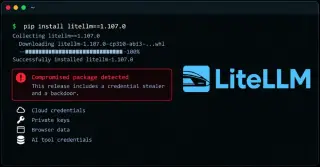
LiteLLM 1.107.0 was compromised in a supply chain attack, delivering a credential stealer and backdoor via PyPI and Docker. The malicious release, triggered by stolen GitHub tokens, exfiltrated cloud credentials and AI tooling secrets. Users must revoke exposed credentials and pin version 1.106.2.