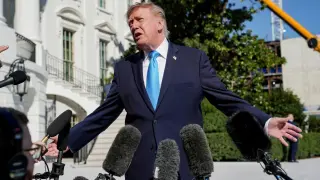
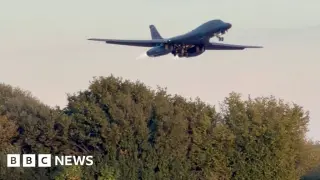
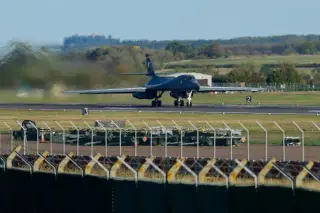
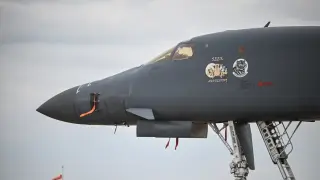
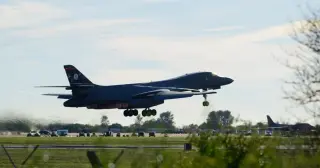
The United States abruptly withdrew all 12 B-1 bombers from RAF Fairford in the United Kingdom over the weekend, citing security concerns. President Trump attributed the move to threats linked to Iran, while officials described a complex plot involving potential drone attacks and explosives. The withdrawal ends the base’s role as a launchpad for strikes on Iran, which began in February, and returns the aircraft to their home bases in the US.
The United States abruptly withdrew all 12 B-1 Lancer bombers from RAF Fairford in the UK over the weekend, citing urgent security threats. The rapid evacuation, which occurred before refueling aircraft were fully prepared, follows a series of counterterrorism arrests near the base. While US officials frame the move as a precaution against Iranian aggression, critics and some analysts view it as a sign of panic and a potential embarrassment for UK security services.
The U.S. military rapidly withdrew all 12 B-1 Lancer bombers from RAF Fairford in England following a suspected terror plot linked to Iran. The Pentagon confirmed the redeployment on Sunday, October 4, 2026, citing urgent security threats. British authorities had arrested a dual British-Iranian national in London and six other suspects in the area, leading to the emergency move. The base, located 100 miles west of London, has been a key staging point for U.S. strikes against Iran since the conflict began in February 2026.
The U.S. Air Force rapidly withdrew all 12 B-1 bombers from RAF Fairford in southern England over the weekend following new intelligence of an Iran-backed plot against the base. British authorities arrested a dual U.K.-Iranian national and five others, though suspects were released on bail. The move highlights ongoing tensions between the U.S. and Iran, with the base used for strikes during the recent conflict.
The U.S. Air Force rapidly withdrew all 12 B-1 bombers from RAF Fairford in England over the weekend following new intelligence suggesting an imminent Iran-backed attack. The move, described as highly unusual for a peacetime allied base, occurred despite ongoing counterterrorism investigations into a suspected plot. While the Pentagon confirmed the redeployment, it declined to detail the specific new threats, and British authorities continued to investigate suspects linked to the incident.
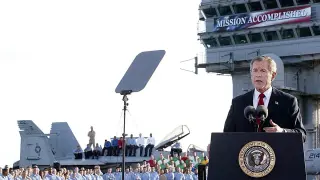
Marking the 25th anniversary of the US invasion of Afghanistan, analysts are debating whether the war was a failure of execution or a strategic error. While some argue the US overreacted, others contend that the administration underreacted by diverting resources to Iraq, allowing the Taliban to regroup and eventually retake power.
UK Prime Minister Andy Burnham stated on Wednesday that there are 'strong indications' Iran was involved in a security incident at RAF Fairford, a base used by US forces for strikes on Iran. Five British men were arrested early Sunday after suspicious vehicles were spotted near the base but were released on bail. Iran denied involvement, while US President Trump criticized the release and said Washington is 'studying' the incident. Israeli PM Netanyahu claimed Israel provided intelligence about the planned attack.
While public discourse focuses on existential risks from superintelligence, counterterrorism researchers highlight a more immediate threat: 'abliterated' AI models with removed safety guardrails. These tools, now widely available, are being used by extremist groups to plan attacks and radicalize individuals. Simultaneously, AI pioneers warn of an 'intelligence explosion' that could accelerate development beyond human control, prompting calls for urgent government regulation and transparency.
Five British men were arrested near RAF Fairford on suspicion of a terrorist plot but released on bail, prompting sharp criticism from US President Donald Trump and Secretary of State Marco Rubio. While UK authorities maintain the investigation is ongoing, US officials allege foreign involvement, specifically suggesting Iran, though Tehran denies any connection. The incident has raised questions about the adequacy of UK counterterrorism protocols regarding US military assets.
A federal judge ruled that FEMA cannot withhold 20% of counterterrorism grants from local governments that refuse to adopt specific election administration changes, marking another setback for the Trump administration's efforts to influence voting rules.
Two senior FBI counterterrorism agents were removed from their posts after refusing to investigate harassing phone calls to Katie Miller, the wife of White House adviser Stephen Miller. The move has sparked outrage among career agents who view the action as political interference, while the White House claims the agents were stifling legitimate threat assessments.
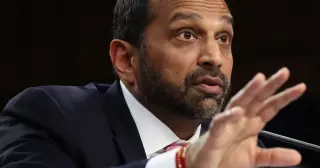
Two senior FBI agents in charge of counterterrorism in Washington have been removed from their posts and reassigned to headquarters following a dispute over the handling of an investigation into alleged harassing phone calls directed at Katie Miller, the wife of White House deputy chief of staff Stephen Miller. According to sources familiar with the matter, the agents determined that the calls did not meet the threshold for an FBI investigation or have any nexus to terrorism. However, bureau leadership disagreed with this assessment, leading to the ousting of Michael Burgwald, the special agent in charge, and his deputy, Courtland Rae. The move has sparked internal criticism among career agents who view the decision as politicized, particularly given the broader pattern of personnel changes under FBI Director Kash Patel. While the White House framed the reassignment as a necessary step to address stifled investigations into serious threats, the FBI’s Washington field office chief denied that the order came from Director Patel, describing it as a local personnel decision based on mission needs.
Two senior FBI counterterrorism officials were demoted and reassigned to headquarters after disagreements over the investigation of alleged harassing phone calls made to Katie Miller, wife of White House deputy chief of staff Stephen Miller. The move, confirmed by FBI leadership, has drawn criticism from career agents who view it as politicized and a weakening of the bureau's counterterrorism capabilities.
Two senior FBI counterterrorism officials were demoted and reassigned to headquarters after a dispute over the investigation into alleged harassing phone calls directed at Katie Miller, wife of White House deputy chief of staff Stephen Miller. The move, confirmed by the FBI on September 26, 2026, followed criticism from the Miller family and White House leadership that the probe was progressing too slowly. While the bureau’s Washington field office chief denied that Director Kash Patel ordered the change, sources indicate the decision stemmed from frustration over what was perceived as a lack of urgency in addressing threats against a high-profile official’s family.
The FBI transferred two senior counterterrorism officials from the Washington Field Office to headquarters following a review of their handling of alleged threats against Stephen Miller’s wife, Katie Miller. The move, driven by frustration from the Miller family and White House leadership, reflects concerns that the investigation into harassing phone calls was progressing too slowly. While the officials were not fired, their reassignment marks a significant loss of experienced personnel in a unit critical to combating Middle East-related extremism. The White House confirmed the decision was made by senior FBI leadership to address what it described as stifled investigations into serious threats, though the FBI’s local chief denied that Director Kash Patel ordered the change, calling it a local personnel decision based on mission needs.