Tag

Pypi

All articles tagged with #pypi

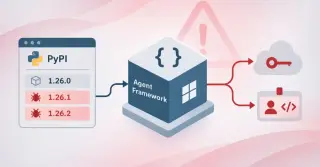
Microsoft Agent Framework PyPI package hijacked to steal Azure and CI credentials
cybersecurity4 days ago

Microsoft Agent Framework PyPI package hijacked to steal Azure and CI credentials

Attackers compromised Microsoft's official agent-framework Python package on PyPI, publishing malicious versions 1.26.1 and 1.26.2 on November 17, 2026. The malware steals cloud and CI credentials via automatic execution on Python startup. Security firms detected the breach, and PyPI quarantined the releases within minutes. Developers are advised to isolate affected environments and rotate exposed secrets immediately.


Microsoft Agent Framework PyPI Compromise Exposes Azure and CI Secrets
cybersecurity5 days ago

Microsoft Agent Framework PyPI Compromise Exposes Azure and CI Secrets

Attackers hijacked Microsoft’s official agent-framework Python package on PyPI, releasing malicious versions 1.26.1 and 1.26.2 that steal Azure, GitHub, and CI/CD credentials. The malware executes automatically on Python startup via .pth files, exfiltrating secrets to a public webhook. Microsoft has quarantined the packages, but users must rotate credentials and audit environments immediately.

Malicious Microsoft Agent Framework Packages Steal Azure and CI Credentials
cybersecurity6 days ago

Malicious Microsoft Agent Framework Packages Steal Azure and CI Credentials

Attackers published two malicious versions of Microsoft's agent-framework Python package on November 17, 2026, to steal cloud credentials and environment data. The compromised releases, 1.26.1 and 1.26.2, were quarantined on PyPI after security firms detected them. The malware uses .pth files to execute a stealer on every Python startup, harvesting Azure tokens, GitHub Actions secrets, and local credential files. It exfiltrates data to a specific webhook endpoint. Users are advised to isolate affected hosts, pin to version 1.26.0, and rotate exposed credentials. This is the second major Microsoft-related PyPI compromise this year, following a similar attack on the durabletask package in May.

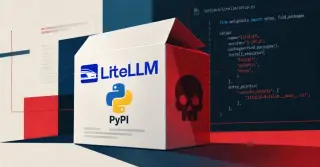
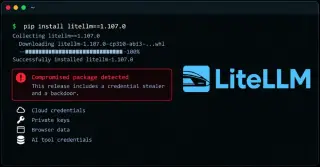
LiteLLM Supply Chain Attack: Malicious v1.107.0 Steals Cloud and AI Credentials
cybersecurity1 month ago

LiteLLM Supply Chain Attack: Malicious v1.107.0 Steals Cloud and AI Credentials

LiteLLM disclosed that attackers compromised its release pipeline to push a malicious version 1.107.0 of its Python package and Docker images on October 21, 2026. The compromised software included a credential stealer and a remote access trojan that exfiltrated secrets to a specific domain. The breach exploited leaked GitHub CLI tokens found in logs, allowing attackers to bypass security controls and publish the malicious artifacts to PyPI and Docker registries. Users who installed unpinned versions between 11:39 a.m. and 1:23 p.m. UTC are affected. The malware harvested system, browser, and cloud credentials, with evidence showing attackers used stolen AWS keys to probe LLM services shortly after exfiltration. LiteLLM has since hardened its release process, but the incident highlights risks from logging sensitive tokens in AI gateway logs.

TrapDoor Strikes npm, PyPI, and Crates.io with Cross-Ecosystem Credential-Stealing Malware
security6 months ago

TrapDoor Strikes npm, PyPI, and Crates.io with Cross-Ecosystem Credential-Stealing Malware

A coordinated TrapDoor campaign targets npm, PyPI, and Crates.io, distributing 34 malicious packages across hundreds of versions to steal developer secrets, crypto wallets, SSH keys, cloud credentials, and environment data. npm payloads run trap-core.js to harvest credentials and establish persistence via cron, systemd, Git hooks, and SSH lateral movement; Rust crates search keystores and exfiltrate data to GitHub Gists; Python packages auto-execute on import and fetch a remote JavaScript payload executed via node -e. The attack also hides instructions in .cursorrules and CLAUDE.md to trick AI tools through PRs, signaling an evolution of developer-workflow attacks across multiple ecosystems.

technology1 year ago

PYX: Advancing Python Packaging

The article humorously and critically discusses the ongoing challenges and frustrations in Python packaging, highlighting the multitude of tools, inconsistent solutions, native dependencies, and ecosystem fragmentation, while introducing 'uv' as a promising, fast alternative for package management and installation. It also touches on concerns about commercialization, licensing, and the future of open source tools like pyx and uv in the Python community.

"Protecting Windows and Linux PCs from Malicious PyPI Malware: Essential Safety Measures"
cybersecurity2 years ago

"Protecting Windows and Linux PCs from Malicious PyPI Malware: Essential Safety Measures"

Researchers have discovered almost a dozen malware-laden packages on the PyPI repository, delivering the WhiteSnake Stealer infostealer capable of evading antivirus programs and targeting Windows PCs. The malware aims to steal information from web browsers, cryptocurrency wallets, and messaging apps, and includes a clipboard monitor for cryptocurrency theft. Developers are advised to remain cautious when using PyPI, watch for suspicious package names, and ensure they are downloading legitimate packages to protect against potential threats.

"PyPI Malware Threatens Windows and Linux Users with Crypto and Info Theft"
cybersecurity2 years ago

"PyPI Malware Threatens Windows and Linux Users with Crypto and Info Theft"

Malicious packages on the PyPI repository have been found to deliver the WhiteSnake Stealer malware on Windows systems, while also targeting Linux hosts with a Python script. The malware, uploaded by a threat actor named "WS," is capable of stealing information, communicating with a C&C server using the Tor protocol, and exfiltrating sensitive data, particularly crypto wallet information. The packages have been observed to overwrite clipboard content with attacker-owned wallet addresses and steal data from browsers, applications, and crypto services. This discovery highlights the ability of a single malware author to disseminate multiple info-stealing malware packages into the PyPI library over time.