Tag

Ratepayer Protection Act

All articles tagged with #ratepayer protection act

Senate blocks data center cost bill as midterms near
politics9 days ago

Senate blocks data center cost bill as midterms near

The Senate failed to advance the Ratepayer Protection Act, a bill aimed at making data centers cover their energy costs, with a 57-43 vote. Democrats blocked the measure, arguing it lacks mandatory enforcement, while Republicans accused them of obstructing a popular issue ahead of the midterms. The vote particularly impacts Ohio Senator Jon Husted, whose campaign is vulnerable to data center backlash.
politics15 days ago

Senate Democrats Weigh Husted's Data Center Bill Amid Midterm Pressure

Senate Democrats are debating whether to advance the Ratepayer Protection Act, a bill championed by embattled Ohio Republican Sen. Jon Husted. While the measure passed the House with broad bipartisan support, Senate Democrats view it as a strategic move to rescue Husted’s reelection campaign against Sherrod Brown. The bill would require states to consider frameworks ensuring data centers pay for their own energy costs, but critics argue it lacks mandatory enforcement. The vote is expected to influence midterm campaign narratives regarding energy affordability and corporate accountability.

politics16 days ago

Senate GOP Weighs Data Center Vote Amid Midterm Pressure

Senate Republicans are considering a vote next week on the Ratepayer Protection Act, a bill championed by vulnerable Ohio Senator Jon Husted to force tech companies to cover data center energy costs. The move comes as GOP leaders weigh staying in Washington to pass the measure before midterm elections, despite Democratic opposition and stalled energy permitting talks.

politics16 days ago

Senate GOP Weighs Staying in Town to Vote on Data Center Bill Amid Midterm Anxiety

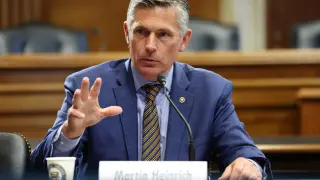
Senate Republicans are debating whether to remain in Washington next week to vote on the Ratepayer Protection Act, a bill championed by vulnerable incumbent Sen. Jon Husted (R-Ohio) to force tech companies to cover data center energy costs. The measure, which passed the House with bipartisan support, stalled after Sen. Martin Heinrich (D-N.M.) blocked a quick vote, arguing it lacks enforcement. Democrats, led by Chuck Schumer, oppose the bill as voluntary and insufficient, pushing instead for a stricter alternative. The decision to stay or leave for campaigning reflects growing GOP anxiety over affordability issues ahead of the November midterms.

Senate Hold Halts Bipartisan AI Data-Center Power Bill After House Vote
politics21 days ago

Senate Hold Halts Bipartisan AI Data-Center Power Bill After House Vote

In Washington, Sen. Martin Heinrich, the lone Senate Democrat, blocked a bipartisan bill—the Ratepayer Protection Act—designed to require large electricity users (such as AI data centers) to pay for grid upgrades, despite the House passing the measure 417-3; Heinrich argued it doesn’t go far enough and pushed an alternative GRID Savings Act, while Republicans accused him of delaying relief as AI infrastructure costs loom ahead of the midterm elections.

Senate stalls on bid to shield ratepayers from AI data-center costs
politics22 days ago

Senate stalls on bid to shield ratepayers from AI data-center costs

A House-passed bipartisan Ratepayer Protection Act to prevent AI data centers (100 MW+) from shifting grid and infrastructure costs onto ratepayers stalled in the Senate after Sen. Martin Heinrich blocked a quick vote, arguing the bill lacks enforcement teeth and relies on voluntary commitments; supporters vow to press ahead while critics call it insufficient, with opponents pushing stricter measures like Heinrich's GRID Savings Act as the data-center energy-cost debate intensifies ahead of the 2026 elections.

politics22 days ago

Senate blocks fast-track data-center ratepayer bill amid push for stricter energy rules

A Republican bid to fast-track the Ratepayer Protection Act in the Senate failed after Sen. Martin Heinrich objected, with Democrats arguing the measure doesn’t go far enough and offering a tougher GRID Savings Act alternative. The House had approved the bill 417-3, and leaders indicated a consent agreement would be needed in the Senate, potentially followed by counteroffers from Democrats. The digest also notes privacy and surveillance scrutiny around Flock Safety’s license-plate cameras and ongoing bipartisan AI policy discussions, underscoring ongoing debates over energy costs, technology regulation, and civil liberties ahead of the midterms.

politics29 days ago

GOP to Bring Data Center Energy-Cost Shield to Floor Before Midterms

The House is set to vote next week on the Ratepayer Protection Act, a measure aimed at requiring tech companies to cover energy infrastructure costs for data centers amid rising power prices driven by AI demand. Leadership pressured by vulnerable lawmakers has decided to move forward with an expedited floor procedure that requires a two-thirds majority of those present, signaling action before the six-week midterm recess, with another item on the agenda addressing AM radio in new vehicles.

politics3 months ago

Lawmakers clash over data center energy costs and a nationwide moratorium

A House panel advanced data center legislation but deep divisions over a nationwide moratorium on new data centers threaten momentum; Pallone and Castor push for stronger federal action while Guthrie warns it could slow AI progress, and Senate leaders are divided about moving forward. The Ratepayer Protection Act passed by voice vote, but broader energy and grid bills face an uphill battle as lawmakers weigh who should cover new generation and transmission costs.

Congress weighs charging tech firms to power the AI data-center boom
politics3 months ago

Congress weighs charging tech firms to power the AI data-center boom

The House will debate the Ratepayer Protection Act, which would require utilities to adopt a “large load” standard and have data-center builders pay for grid upgrades to power AI, effectively making tech firms cover a portion of AI-related electricity costs. The measure codifies the White House pledge and has bipartisan support, but its path to becoming law remains uncertain, with major operators like Amazon, Google, Meta, Microsoft and SpaceX’s xAI involved in the debate.