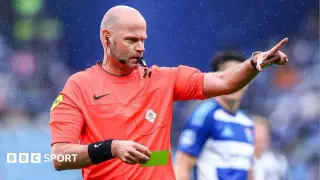
Dutch referee Rob Dieperink, who was removed from FIFA's World Cup list following a UK police investigation, has died at 38; the sexual assault case against him was dropped for lack of evidence. Dieperink had officiated in the Eredivisie since 2017 and served as a VAR at Euro 2024. FIFA and the KNVB expressed condolences.
TheAthletic’s piece catalogs ten high‑profile controversies around FIFA’s World Cup 2026, spanning off‑field governance and on‑field officiating: Ronaldo’s suspended ban that was eventually lifted, FIFA’s controversial Peace Prize award to Trump, a new seeded draw designed to keep the top teams apart, hydration breaks introduced for broadcast value, and a string of disputed VAR and refereeing decisions (including Argentina‑Egypt and Embolo vs. Paredes identity changes). It also covers Balogun’s eligibility reversal amid political pressure, broadcast/technology issues (SkyCam and ball‑heartbeat data), and scheduling moves/potential disruptions. Across these cases, the piece underscores concerns about transparency, governance, and how decision‑making by FIFA can fuel conspiracy theories and distrust.
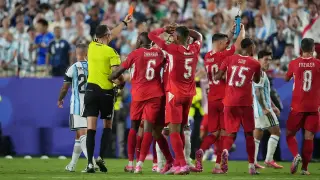
Breel Embolo became the first player in World Cup history to be sent off on a second yellow after a VAR review under a mistaken-identity interpretation in the Argentina-Switzerland quarterfinal. The referee initially booked Leandro Paredes for a foul; after VAR, he ruled no foul by Paredes and punished Embolo for simulation, highlighting a rule meant to correct penalties to the wrong player but not the offense itself. The incident echoes an earlier case and has intensified debate over refereeing and the new VAR interpretation at this World Cup.
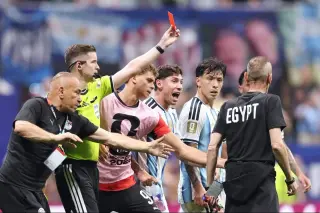
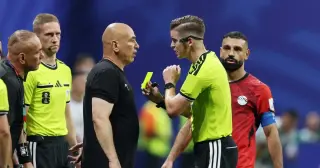
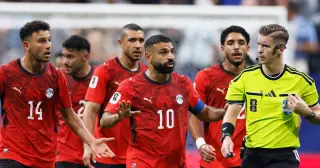
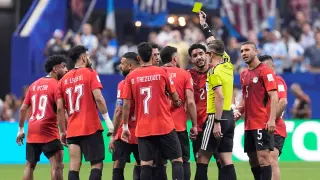
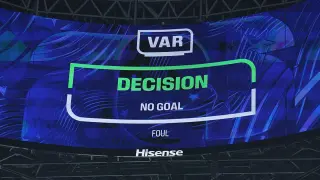
FIFA refereeing chief Pierluigi Collina defended the officiating in Argentina’s 3-2 win over Egypt, dismissing bias claims as unfounded and emphasizing referees’ independence, while noting that constructive discussions about decisions are normal but unfounded accusations threaten officials. He pointed to VAR overturning Mostafa Zico’s disallowed goal due to a foul and said the Salah-Alvarez contact was considered normal football contact, with Egypt’s complaints highlighting perceived unfair treatment.
FIFA’s chief refereeing officer Pierluigi Collina rejected claims that referees or VAR decisions in the Argentina–Egypt World Cup Round of 16 were influenced by outside pressures or Messi’s presence, stressing the integrity and independence of match officials. He explained VAR interventions, including disallowing Egypt’s second goal due to a foul in the build‑up (Marwan Attia on Lisandro Martínez) and clarified the APP (attacking possession phase) process. Despite Egyptian accusations of bias and late-penalty appeals, Collina insisted decisions are made independently, noting the late 92nd‑minute winner for Argentina by Enzo Fernández and defending the officiating decisions throughout the match.
FIFA refereeing chief Pierluigi Collina defended the officiating in Argentina's 3-2 comeback win over Egypt, rejecting bias allegations, saying officials acted independently and that VAR correctly overturned Mostafa Zico's goal and judged Salah–Alvarez contact as normal football play.
FIFA’s Pierluigi Collina defended World Cup officials amid the Argentina 3-2 Egypt round-of-16 clash, insisting their integrity and independence from FIFA cannot be questioned even as players and coaches protested. He clarified VAR guidelines, saying there is no fixed distance or time limit for reviews and that a foul is stepping on an opponent’s foot, while normal defender contact after the ball is not necessarily a foul. He pointed to the disallowed second Egypt goal and the late Alvarez-Smart sequence culminating in Enzo Fernandez’s winner as demonstrations of correct calls, while acknowledging some subjectivity in decisions. Argentina advances to face Switzerland, and the tournament continues to scrutinize officiating, with the quarterfinal crew for France-Morocco being entirely Argentine (though the VAR team comes from another country).
A ranked rundown of 11 contentious refereeing decisions at the 2026 World Cup, from late offsides and disallowed goals to disputed penalties and a controversial red card, highlighting the VAR debates and reactions from managers (including Tuchel and Hassan) and public figures alike.
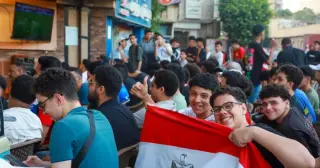
Egypt led Argentina 2-0 in the World Cup round of 16 before a 79th-minute surge by Messi and Argentina’s side sealed a 3-2 comeback, knocking the Pharaohs out. Fans in Cairo cafes celebrated a superb performance led by Mohamed Salah and coach Hassan, then vented frustration at refereeing they saw as biased in Argentina’s favor. Though heartbreakingly short of quarterfinals, the display drew nationwide pride for a team that proved competitive on football’s biggest stage.
Egypt's football federation filed a formal complaint with FIFA, urging the removal of the match officials and an investigation into alleged refereeing and VAR errors they say cost them a 3-2 World Cup last-16 defeat to Argentina, including a disallowed goal and a contentious penalty claim.
Argentina's 3-2 comeback against Egypt in the World Cup round of 16 was overshadowed by a controversial late VAR decision that disallowed Egypt's earlier goal, prompting questions about refereeing consistency and potential political pressures around the tournament, with experts split on culpability and calls for greater transparency in VAR reviews.
Thomas Tuchel criticized World Cup officiating as erratic and unreliable after England's 3-2 last-16 win over Mexico, saying VAR decisions and inconsistent calls could send any team home and that refereeing must rise to the tournament's elevated level.
The France vs Paraguay last-16 match drew heavy criticism of referee Ilgiz Tantashev, prompting questions about officiating standards, VAR use, and the process for appointment; experts note a trend of fewer yellow cards this World Cup due to rule changes and a higher tolerance for physical play, raising concerns about protecting players and consistency as the tournament advances.
Paraguay frustrated France in a 1-0 World Cup clash in Philadelphia by deploying a stubborn, defensive plan and a wave of gamesmanship, prompting a debate over whether the tactics were disgraceful or a legitimate underdog approach. Mbappé’s second-half penalty settled it, while the referee’s leniency and Paraguay’s theatrics drew heavy criticism even as their disciplined containment of the world champions highlighted a different way to win.
Mexico beat South Africa 2-0 in the 2026 World Cup opener, but the match will be remembered for three red cards—the first time a World Cup curtain-raiser produced that many dismissals (Sithole, Zwane, Montes)—as Quinones and Jimenez scored; it also featured just 23 fouls and VAR scrutiny, with the record pace of dismissals casting a shadow over the tournament.