
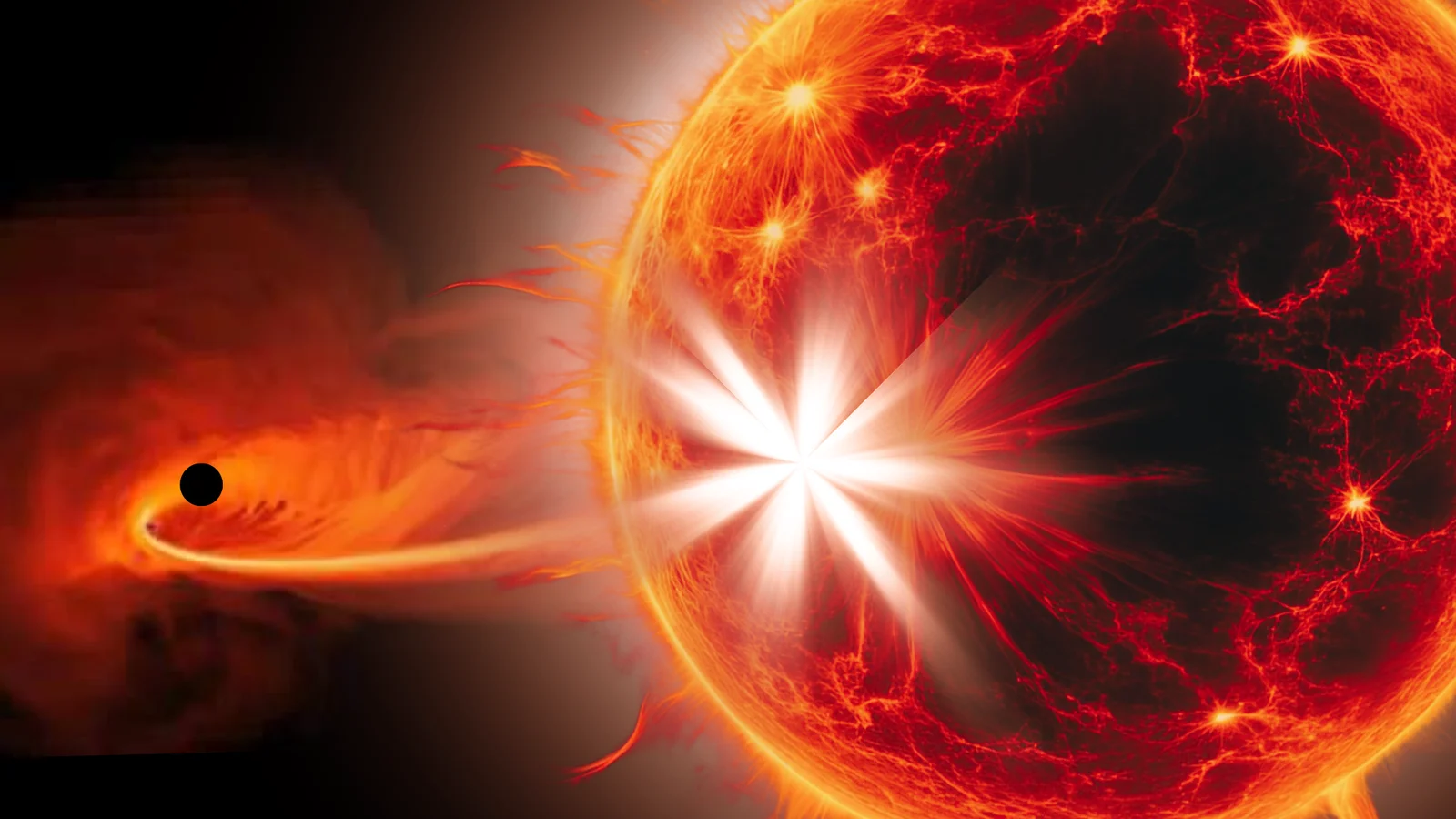
Stellar Spin Dictates Dimming in Repeating Black Hole Flares
Researchers say the fading of flares in repeating partial tidal disruption events (rpTDEs) around supermassive black holes is tied to the star’s spin: if a star is already spinning rapidly before its first close pass, torques from the black hole don’t significantly speed up the spin, so less material is stripped in subsequent encounters and the flares dim. A star’s internal mass distribution and the possibility of prior spin-up from binary capture (Hills mechanism) can further influence the amount of stripped material and the degree of dimming, helping explain variations among rpTDEs, with findings published in The Astrophysical Journal.