
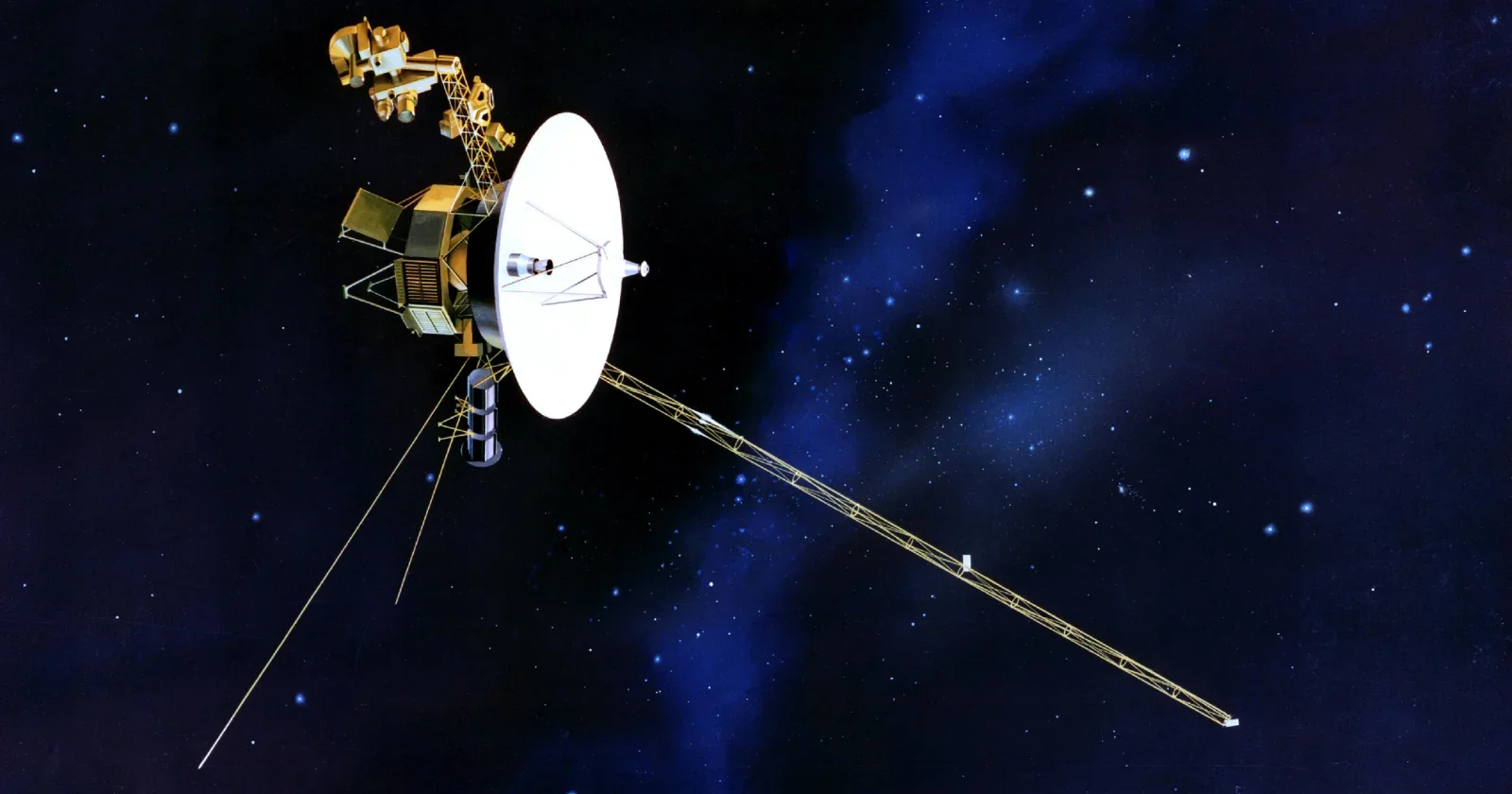
Tiny Chips, Vast Reach: Voyager 1 Probes Interstellar Space After Five Decades
Launched in 1977, Voyager 1 still transmits data from beyond the Sun’s wind using six small, 1970s-era computers with about 32,000 words of memory (roughly 68 kilobytes). Its mission survives because it was designed to be understandable, redundant and conservative, not powerful. Power from its plutonium RTGs declines by ~4 watts per year, so engineers have shut down instruments and trimmed systems; currently it relies on two active instruments and a ground-based command/control system. Commands take about 23 hours to reach Voyager and replies take a similar time, so every operation is planned as a long-range expedition. The spacecraft’s ground system on Earth does much of the “intelligence,” coordinating attitude, data formatting, and fault responses, while the high-gain antenna and attitude control keep it pointed at Earth. Voyager 1 remains the only probe outside the solar wind bubble, capable of sparse but valuable measurements of the interstellar medium until power or distance eventually limits contact (potentially into the 2030s).