
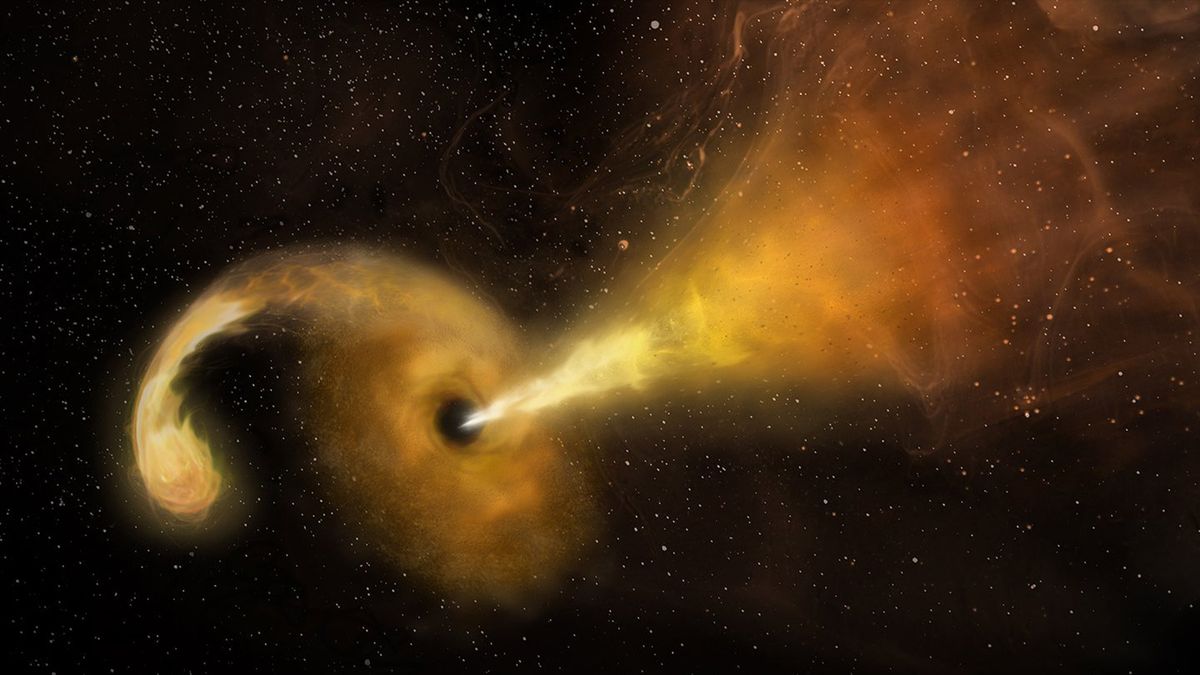
Black Holes: Devouring Stars and Regurgitating Stellar Remains
Astronomers studying black holes involved in tidal disruption events (TDEs) have discovered that up to 50% of these black holes "burp up" stellar remains years after devouring stars. The destroyed star's material forms an accretion disk around the black hole, which gradually feeds it. Traditionally, astronomers only observe these black holes for a few months following TDEs, but in this new research, they found that in many cases, the black holes emit radio waves years later. The cause of this delayed emission is still unknown, but it suggests that computer models of TDEs need updating to capture this unexpected behavior.