Tag

Accretion Disk

All articles tagged with #accretion disk

Black Hole Merger in Galactic Nucleus May Have Lit Up the Sky
science24 days ago

Black Hole Merger in Galactic Nucleus May Have Lit Up the Sky

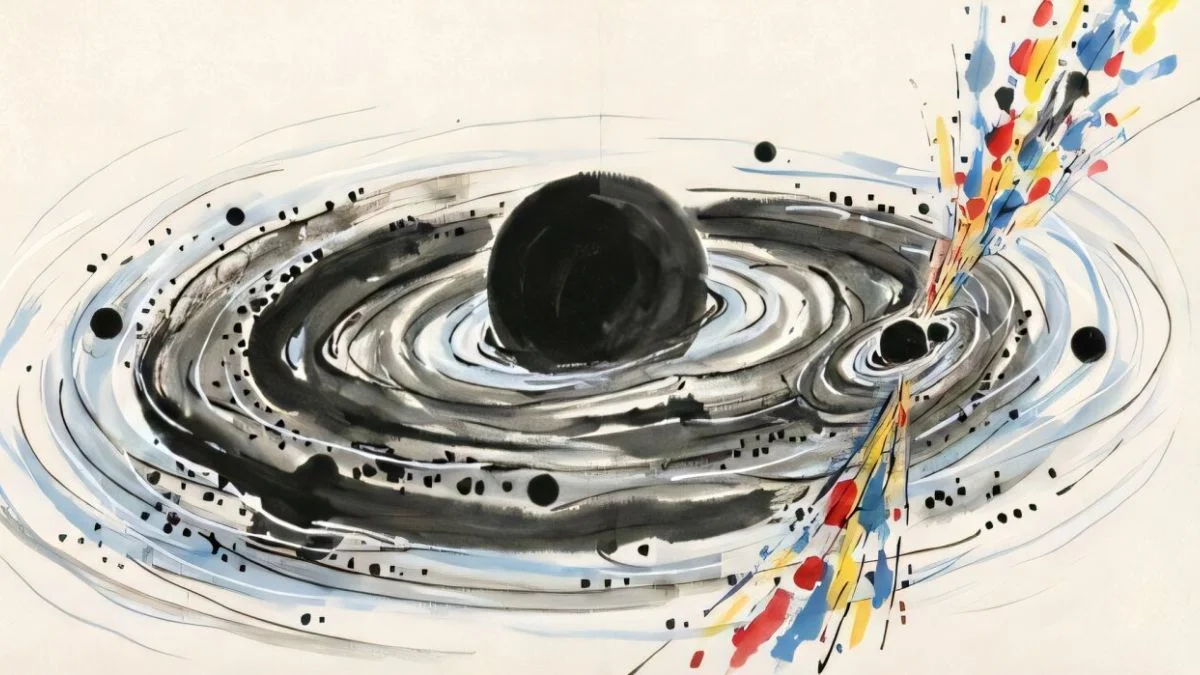
Astronomers connecting the November 2024 gravitational-wave event S241125n with a brief gamma-ray and X-ray flash propose the merger happened inside the accretion disk of a supermassive black hole at the center of a galaxy. If true, the environment would feed rapid accretion and jets, producing light from an event usually expected to be dark, offering a new scenario for how black hole mergers in galactic nuclei might be observed. Further observations and modeling are needed to confirm this explanation.

Warped spacetime powers flickering light in newborn magnetars
space29 days ago

Warped spacetime powers flickering light in newborn magnetars

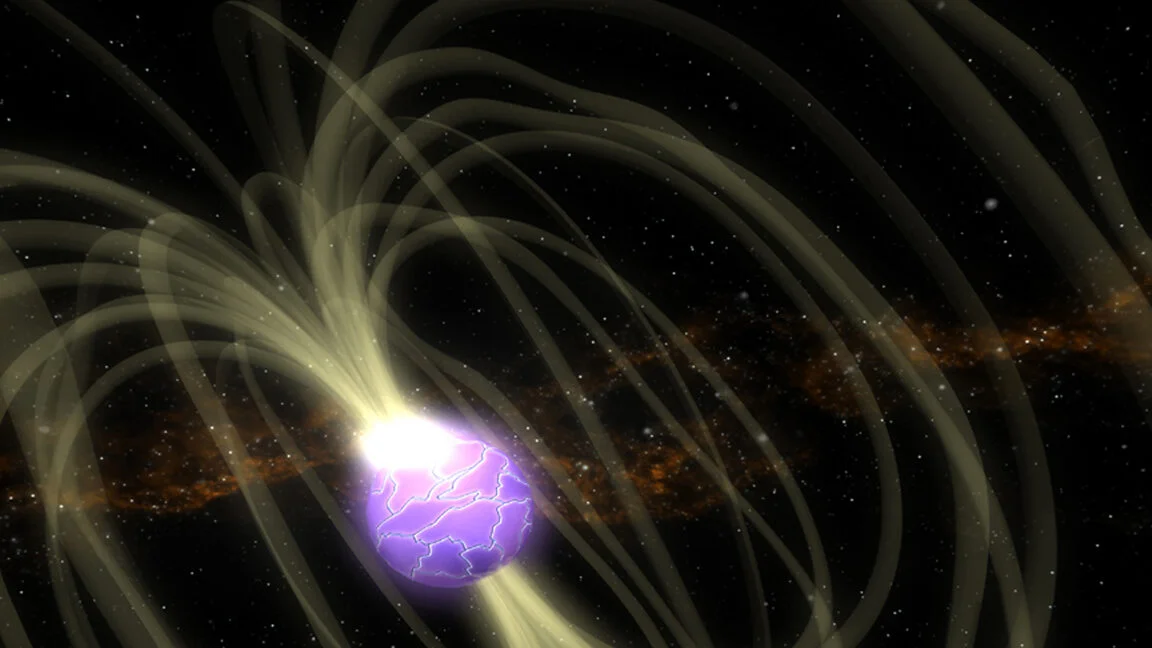
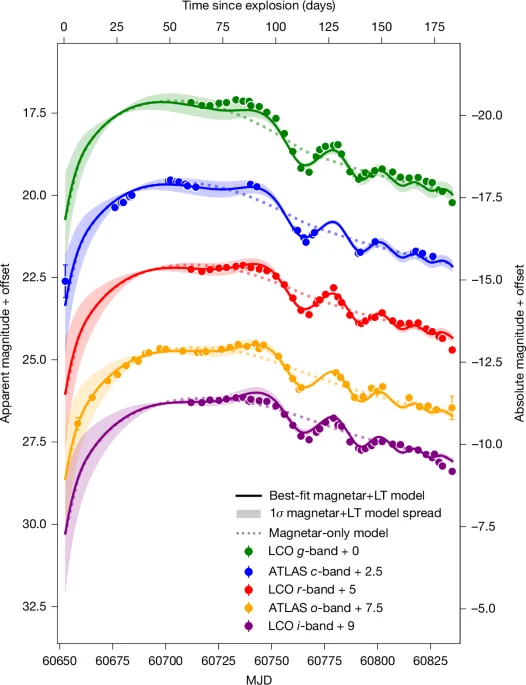
Astrophysicists propose a magnetar+Lense-Thirring model to explain the zigzag, chirped light curves of Type I superluminous supernovae, like SN 2024afav. A newborn magnetar’s rapid spin twists spacetime; a misaligned, shrinking accretion disk precesses and intermittently blocks or redirects radiation, producing regular brightness bumps and a shrinking period. The model fits the observed data, yields a 4.2-millisecond spin and strong magnetic field, and could unify explanations for several such supernovae; future Rubin Observatory discoveries will test it.

Frame-dragging magnetar powers a superluminous supernova
science1 month ago

Frame-dragging magnetar powers a superluminous supernova

High-cadence observations of the SLSN-I SN 2024afav reveal chirped light-curve bumps linked to a magnetar central engine with an infalling disk undergoing Lense–Thirring precession. Modeling constrains the magnetar’s spin to about 4.2 ms and its magnetic field to ~1.6×10^14 G, providing the first observational evidence of LT frame-dragging in a magnetar’s environment and supporting magnetar spin-down as the source of extreme luminosity in SLSNe-I.

First Real-Time Movie of a Black Hole Aims to Decode Galactic Evolution
space2 months ago

First Real-Time Movie of a Black Hole Aims to Decode Galactic Evolution

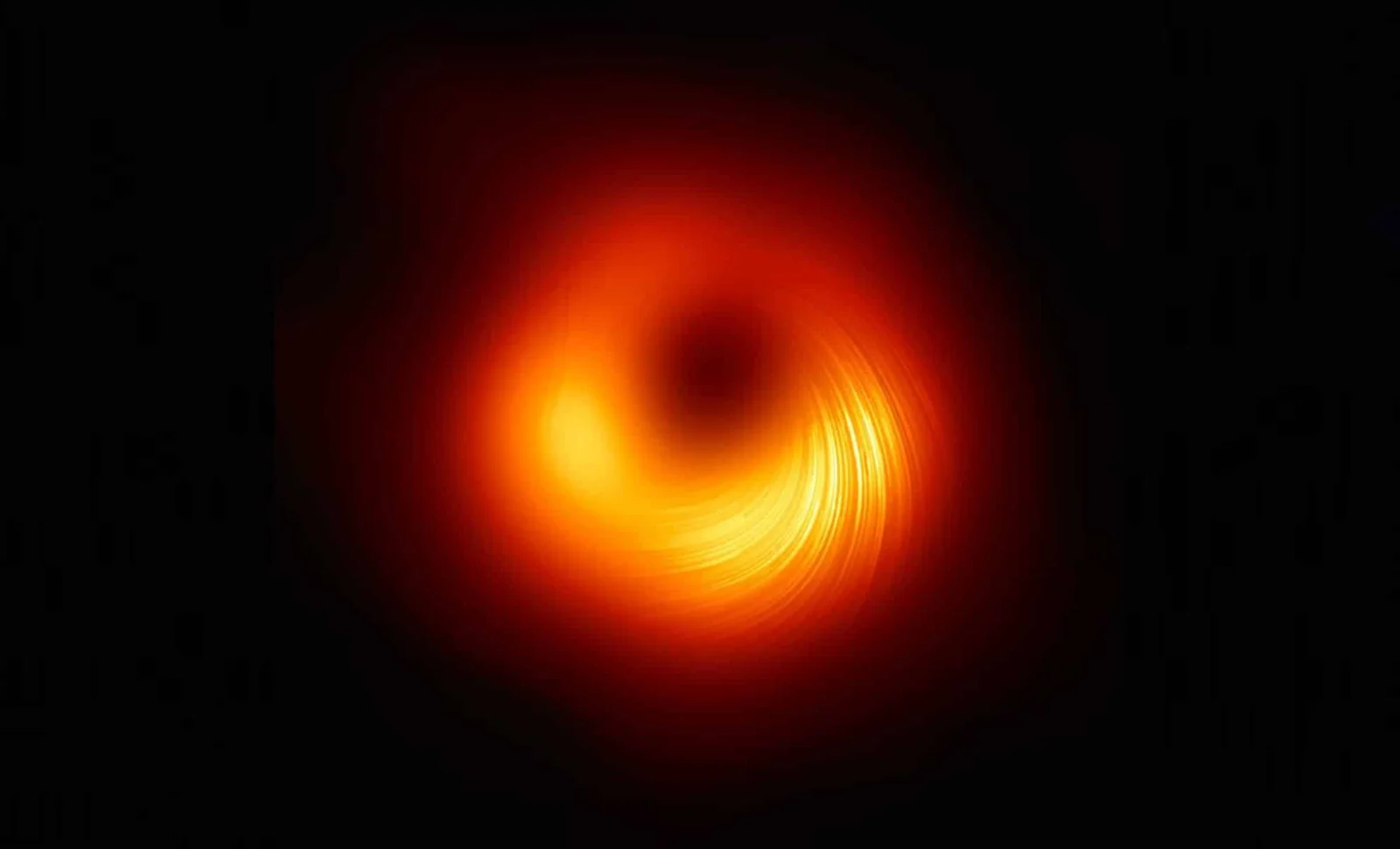
Astronomers with the Event Horizon Telescope plan the first time-resolved movie of a supermassive black hole, targeting M87 to measure spin and jet-launching mechanisms. By stitching data from a world-spanning telescope network, they hope to move beyond the 2019 image and illuminate how black holes influence galaxy evolution, with data processing and delivery taking months before public release.

JWST captures sharp image of Circinus black hole’s feeding disk
space2 months ago

JWST captures sharp image of Circinus black hole’s feeding disk

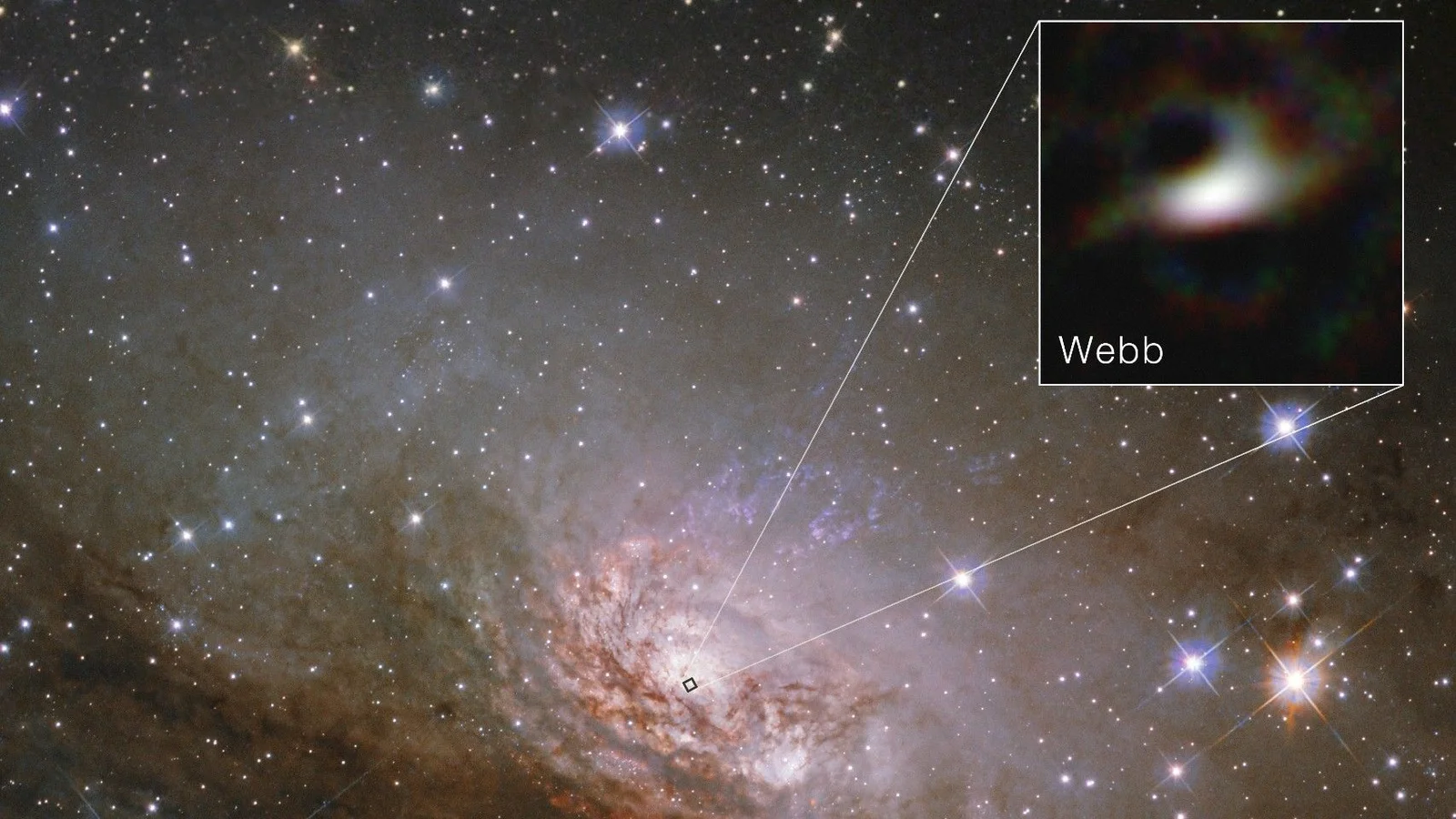
The James Webb Space Telescope’s interferometric imaging provides the sharpest view yet of Circinus galaxy’s center, revealing that the infrared glow around its supermassive black hole mainly originates from the dusty accretion disk feeding the hole rather than outflows, a finding that sheds light on how such black holes grow and influence their host galaxies.

science1 year ago

Hubble Uncovers Sizzling Secrets of Young Star FU Orionis

NASA's Hubble Space Telescope has revealed new insights into FU Orionis, a young star in Orion, showing its accretion disk is hotter and more dynamic than previously thought, with temperatures reaching 16,000 kelvins. This challenges existing theories about young stars and has implications for understanding stellar and planetary formation, as the intense activity could affect the chemical and physical environments of surrounding disks where planets form.

New Insights into Black Hole Coronas and Their Cosmic Mysteries
science1 year ago

New Insights into Black Hole Coronas and Their Cosmic Mysteries

Scientists have, for the first time, observed the shape of a black hole's corona, revealing it to be disk-like rather than spherical, similar to the accretion disk. Using data from NASA's Imaging X-ray Polarimetry Explorer, researchers studied scattered X-rays from obscured black holes, including Cygnus X-1 and X-3, to detect this pattern. This discovery aids in refining black hole models and understanding their role in active galactic nuclei.

"Dancing Black Holes: Unraveling the Mystery of Galactic Hiccups"
astronomy2 years ago

"Dancing Black Holes: Unraveling the Mystery of Galactic Hiccups"

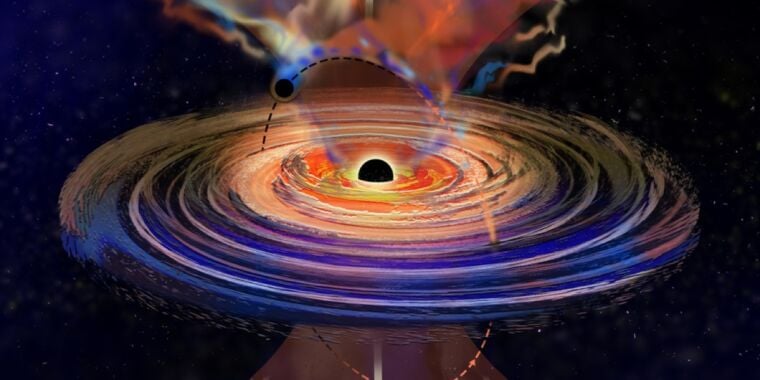
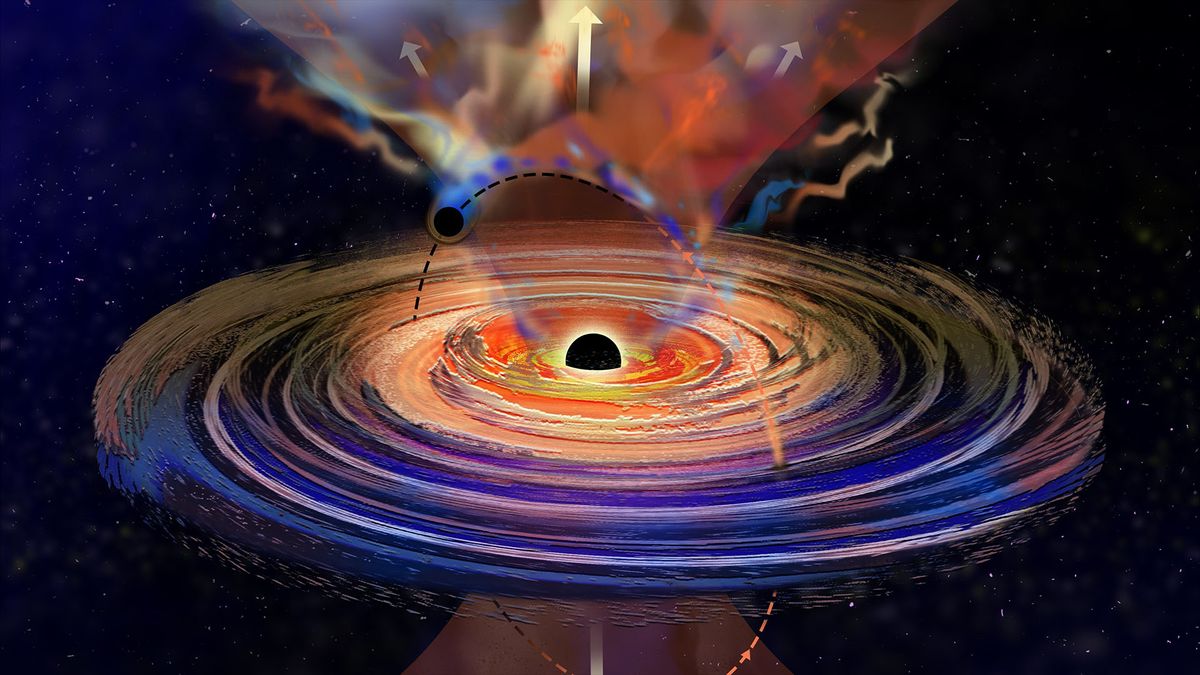
Astronomers have discovered the cause of an unusual burst of light from a supermassive black hole 848 million light-years away, which exhibited periodic energy dips akin to celestial hiccups. They found that the black hole is orbited by a smaller black hole that periodically punches through its accretion disk, releasing plumes of gas. This challenges the traditional understanding of black hole accretion disks and suggests a significant population of similar binary black hole systems in the universe.

"Surprising Discovery: 2nd Black Hole Found Orbiting 'Hiccupping' Black Hole"
astronomy2 years ago

"Surprising Discovery: 2nd Black Hole Found Orbiting 'Hiccupping' Black Hole"

Astronomers have observed a distant supermassive black hole exhibiting periodic "hiccups," which are caused by a smaller black hole orbiting around it and disrupting its accretion disk. This discovery suggests that black hole accretion disks may host a variety of cosmic objects, including other black holes and stars. The researchers anticipate that the immense gravity of the supermassive black hole will eventually merge with its companion black hole. This finding challenges existing knowledge about black hole systems and may lead to the discovery of a new population of extreme binaries.

"Dancing Black Holes: Unraveling the Mystery of Supermassive Hiccups"
astronomy2 years ago

"Dancing Black Holes: Unraveling the Mystery of Supermassive Hiccups"

Astronomers have observed a supermassive black hole experiencing periodic eruptions, which are believed to be caused by a smaller black hole diving through its accretion disk. This behavior challenges the conventional understanding of black hole accretion disks and suggests the presence of exotic components such as stars and smaller black holes. The eruptions were triggered by a star being shredded in a tidal disruption event, leading to a sudden influx of matter that brightened the accretion disk. The findings, published in Science Advances, could help astronomers better understand supermassive black holes and their environments.

"17-Billion-Sun Black Hole: The Universe's Hungriest and Brightest"
astronomy2 years ago

"17-Billion-Sun Black Hole: The Universe's Hungriest and Brightest"

Astronomers have identified the brightest quasar ever observed, named J0529−4351, with a supermassive black hole estimated to have a mass of 17-19 billion solar masses and an accretion disk roughly seven light-years across. The quasar's extreme brightness is powered by an accretion rate just below the Eddington limit, equivalent to about a Sun's mass per day, and its variability suggests it may not be pushing the limit constantly. Researchers are intrigued by the system's extreme nature and believe it could provide insights into sustaining high accretion rates for long enough to form such extreme supermassive black holes, and they suggest using the ALMA telescope array and the Very Large Telescope to further study this unusual system.

"Unveiling the Cosmic Mystery: The Birth of Stars near Black Holes"
astronomy2 years ago

"Unveiling the Cosmic Mystery: The Birth of Stars near Black Holes"

Astronomers have long debated whether star formation is possible around black holes, particularly in the vicinity of Sagittarius A* (Sgr A*), the supermassive black hole at the center of the Milky Way. While the extreme tidal and electromagnetic forces near black holes were believed to disrupt star formation, recent observations have suggested that star formation may be occurring closer to Sgr A* than previously thought. Researchers have identified a young stellar object, X3a, which may have formed in a gaseous envelope in the outer ring of the accretion disk surrounding Sgr A*. Other theories, such as tidal disruption events and shock compression, have also been proposed to explain the presence of stars near black holes. The evolutionary stage of the black hole and the surrounding galaxy likely play a role in star formation.

First-Ever Planet-Forming Disk Found Beyond the Milky Way
astronomy2 years ago

First-Ever Planet-Forming Disk Found Beyond the Milky Way

Astronomers have discovered a young star, HH 1177, outside the Milky Way galaxy that is surrounded by a dense disk where planets may form. This unprecedented find in the neighboring dwarf galaxy, the Large Magellanic Cloud, could provide valuable insights into star and planet formation. The star's disk was observed using the ALMA telescope, and its presence was confirmed by measuring the movement of dense gas around the star. This discovery marks the first direct evidence of an extragalactic accretion disk, shedding light on the formation of stars and planets in other galaxies.

"Groundbreaking Discovery: Spinning Black Hole Found 55 Million Light-Years Away"
astronomy2 years ago

"Groundbreaking Discovery: Spinning Black Hole Found 55 Million Light-Years Away"

A study led by Yuzhu Cui has provided solid proof that the supermassive black hole in the galaxy M87 is spinning. The study analyzed 17 years' worth of data from a global network of radio telescopes and discovered a recurring 11-year cycle of precessional jets, indicating a misalignment between the black hole's rotational axis and the accretion disk. This finding confirms the existence of spinning black holes and presents new challenges for scientists in understanding their structure and energy transfer mechanisms.