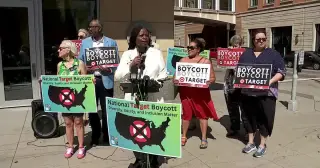
The American Federation of Teachers passed a resolution urging its 1.8 million members and others to shop at local stores instead of Target, citing the retailer’s insufficient response to federal immigration enforcement in Minneapolis as it works to regain sales momentum under new CEO Michael Fiddelke.
While shopping at Target, Amanda Caswell tests the Meta Ray-Ban Display glasses and highlights seven practical uses: asking the glasses about products, reading labels, translating packaging, taking photos hands-free, sending quick messages, listening to her shopping list via open-ear audio, and quickly looking up information—demonstrating how hands-free AI can make shopping easier, even if the setup isn’t perfect and still depends on Wi‑Fi.
Despite Rev. Jamal Bryant’s announcement that the Target fast ended, Black women organizers say the boycott remains alive and leadership will decide when it ends; Target says it is not pledging new DEI commitments. Minnesota organizers and national figures like Mallory and Turner insist the movement continues, citing broken promises and ongoing economic harm to Black women.
Leaders of a yearlong boycott over Target's diversity initiatives say they're ending the protest after Target reaffirmed its plan to invest $2 billion in Black-owned businesses, completing a long-standing commitment. The retailer says no policies were reversed despite conversations with leadership, and CEO Michael Fiddelke is framing the moment as a reputational reset. Analysts say the boycott had limited impact on sales, which were already under pressure, while Target emphasizes growth for diverse communities and the broader consumer base.
Target's new chief executive, Michael Fiddelke, says adopting fresh perspectives while reaffirming Target's core values will be central to regaining customer trust, addressing both shoppers and investors at the March 3, 2026 Financial Community Meeting in Minneapolis.
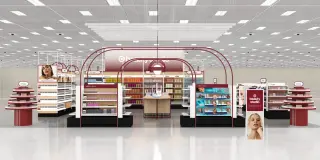
Target plans an additional $2 billion in 2024-2026 for store Refreshes and operations—$1B in capital (30 new stores, 130 remodels) and $1B in operating costs for staffing, training, and AI tools—to re-energize assortments and guest experience. It will roll out Target Beauty Studio in 600 stores, revamp home labels, and push more fresh food and niche brands to boost trips. The move follows a softer quarter, but the company still guides for roughly 2% full-year net sales growth and higher EPS, with shares rising on the outlook.
Target lays out a multi-year growth plan for 2026 and beyond built on four priorities: merchandising leadership, accelerated technology and AI-driven personalization, an elevated guest experience, and stronger teams and communities. The plan calls for about $2 billion in incremental investment in 2026 (including over $1 billion in CapEx and more than $1 billion in operating investments), a major store transformation, payroll and training boosts, expanded digital discovery, and category upgrades across health, home, beauty, women’s style, baby, food & beverage, and fandom. It also includes faster delivery and expanded same- and next-day services, plus expansions to Target Circle, Roundel, and Target Plus. The 2026 outlook targets around 2% net sales growth and EPS of $7.50–$8.50 (GAAP & Adjusted), with forward-looking statements noted in the earnings materials.
Target’s turnaround centers on busy families, expanding baby-care and groceries, boosting in-store service with roughly $1B in 2026 investments (on top of last year’s capex) and opening 30 new stores plus remodeling 130, in a bid to return to quarterly sales growth after years of stagnant results.
Target plans to invest $2 billion this year to upgrade its stores and hire more workers as part of a broader turnaround effort to reverse weak sales and regain momentum.
Target reported Q4 2025 net sales of $30.5 billion (down 1.5% year over year) with GAAP EPS of $2.30 and adjusted EPS of $2.44; full-year net sales were $104.8 billion and GAAP/Adjusted EPS were $8.13/$7.57. Growth drivers included strength in Food & Beverage, Beauty and Toys, plus more than 25% growth in non-merchandise sales as membership revenue more than doubled and Roundel and marketplace momentum expanded. The company guided for 2026 to deliver about 2% net sales growth, a modest improvement in operating margin (roughly 20 basis points), and GAAP/Adjusted EPS of $7.50–$8.50; Q1 2026 EPS is expected to be flat to up slightly from last year’s adjusted $1.30. Target also highlighted a healthy balance sheet with remaining buyback capacity and a trailing twelve-month ROIC of 13.8%, with a webcast planned for today.
Target’s new CEO Michael Fiddelke unveiled a turnaround plan to revive growth, including a 25% jump in capital spending to $5 billion this year to bolster operations, technology, and store design, as he seeks to restore Target’s Tarzhay reputation after years of stiff competition and strategic missteps; the company says February sales rose and expects total sales to grow around 2% for the year.
Target is set to report its fiscal Q4 2025 results at an investor meeting led by new CEO Michael Fiddelke, outlining its 2025 outlook as it tries to reverse a sales slump amid softer traffic and rising prices; analysts expect Q4 EPS of about $2.15 on $30.48 billion in revenue, below last year's $8.86 EPS, with full-year adjusted EPS guidance of $7-$8. The retailer has faced three straight quarters of declining traffic and weaker spend, layoffs of corporate staff, and backlash to DEI changes, contributing to market-share losses to Walmart, Costco and TJ Maxx, while planning increased store labor and investments in customer experience and technology to regain momentum.
Keith Wallis, 39, is accused of an organized retail theft scheme at Target stores from Miami to Orlando, stealing 75 trading-card boxes paired with 99-cent taco seasoning packets and paying only for the seasonings at self-checkout. He allegedly sold the stolen cards on eBay, resulting in more than $10,000 in losses to Target and about $40,000 in revenue for Wallis. He faces multiple felonies—organized retail theft (two counts), dealing in stolen property (three counts), and money laundering—with a potential up to 90 years in prison. The investigation involves multiple Florida law-enforcement agencies and prosecutors in the 19th Judicial Circuit.
Target will stop selling breakfast cereals made with synthetic colours by the end of May, part of a broader push to curb ultra-processed foods amid consumer and political pressure. Walmart has similar plans for its private-label products by 2027, while Target says 85% of its cereal sales already come from cereals without synthetic dyes. General Mills says it will remove certified synthetic colours from US cereals by this summer; Kellogg has not yet commented. The move aligns with wider health-policy efforts linked to Kennedy’s Make America Healthy Again movement.