Venus Moon Mystery Solved by Spin and Tides, Not a Second Catastrophe
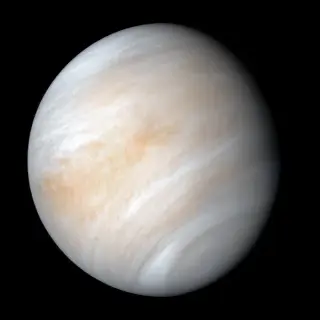
A new study shows Venus’s moonless state can arise from normal tidal evolution after a single giant impact, not a later catastrophe. Whether a moon could survive depends on Venus’s early spin: a fast spin (day <12 hours) could allow a moon to last billions of years; a slower spin would drag it inward and tear it apart within tens of millions to a few billion years. Different interior dissipation models converge for slow spins but differ for fast spins with massive moons. Debris disks from impacts tend to either fall back or place any moon at the tidal survival boundary. Thus Venus-like exoplanets may generally struggle to retain large moons, with climate implications.