Italy Commits $5 Billion to Send Two Astronauts to the Moon
Italy has announced a $5 billion investment to send two astronauts to the Moon, marking a significant expansion of its lunar exploration ambitions.

All articles tagged with #moon
Italy has announced a $5 billion investment to send two astronauts to the Moon, marking a significant expansion of its lunar exploration ambitions.
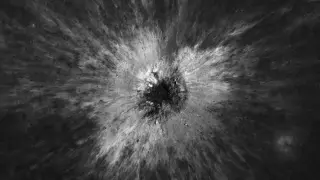
NASA’s Lunar Reconnaissance Orbiter captured a new Moon crater, McGetchin, about 221.9 meters wide and 43 meters deep. Discovered in Oct 2025 and imaged on Dec 5, 2025, scientists believe the impact occurred in 2024 and involved an object roughly the size of a three-to-six-story building. Described as the largest newly formed crater on the Moon (and possibly in the solar system), the pristine site provides a rare opportunity to study fresh lunar geology before space weather erodes it.
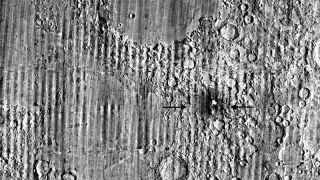
Using data from NASA’s Lunar Reconnaissance Orbiter, scientists identified McGetchin crater on the Moon—about 728 feet wide and 141 feet deep, formed by a 2024 impact between April 11 and May 22. The crater, the largest newly formed crater observed in the solar system since humans began monitoring such features, was confirmed with high‑resolution imagery and a cooler surrounding area detected by the Diviner instrument, highlighting ongoing lunar impact activity and informing future Artemis‑era planning.
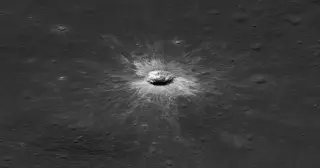
NASA says the Moon’s largest fresh crater seen since 2009—the 728‑foot‑wide McGetchin crater—formed likely in spring 2024 and was spotted by the Lunar Reconnaissance Orbiter. The impact would have released about 15,500 tons of TNT, and its ejecta blanket shows debris can travel up to ~60 miles from the site, underscoring that even non-direct hits can threaten future lunar outposts. While such events are rare (roughly once every 132 years for a crater this size), the finding highlights real risks to planned Moon bases as NASA and China push for 2030s missions, including nuclear-powered bases at the south pole, and signals the need for robust shielding and debris forecasting in base designs.
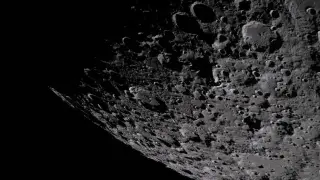
A Frontiers in Space Technologies study estimates that even with optimistic water reserves (about 1 billion tons) and high recycling (around 98%), a city of 1 million on the Moon would exhaust its usable water in about 2.5 years, unless extremely efficient reuse is maintained. A 100,000-person town could last roughly 1,000 years, while the Moon might need water imports from other solar-system sources to support larger populations. The research also warns against a 'gold rush' for lunar ice and emphasizes protecting scientifically valuable polar ices and establishing governance to manage lunar water resources.
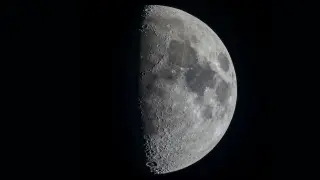
Space.com highlights five lunar targets for International Observe the Moon Night 2026: Montes Apenninus—casting a long shadow near Mare Imbrium; a trio of shadowed craters (Plato, Archimedes, Eratosthenes) along the terminator; the Apollo 11 landing site at Tranquility Base; Mare Crisium on the moon’s eastern edge; and Rupes Recta—the 62-mile straight-wall cliff. A telescope of about 4 inches or larger helps reveal the detail, and the first-quarter phase is ideal for viewing.
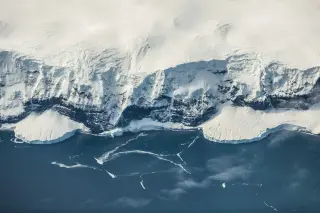
A digest of several studies: Venus may have swallowed a primordial moon due to tidal evolution, potentially shaping its harsh climate; evidence suggests Antarctica hides remnants of the Gondwana Supermountains and submarine fan systems linked to the Cambrian explosion; researchers demonstrate xenocortication by transplanting human brain organoids into mice, where the tissues develop similarly to human brain cells; and a six-page fragment of Nicholas Love’s Mirror of the Blessed Life of Jesus Christ was found tucked in John Gage’s belongings from the Dissolution period.
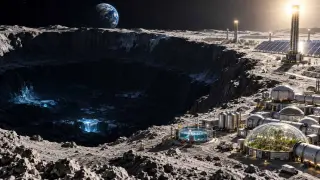
Solar power on the Moon could support a million residents, but water is the bottleneck: with optimistic water supplies and high recycling, a 1-million-person Moon city might last a bit over 100 years; given current estimates of far less lunar water, that timescale collapses to only a few years for a large city, while smaller settlements could endure for centuries. Solutions include improved recycling, reduced water use (e.g., vertical farming), importing water, or locating more water beneath the surface.
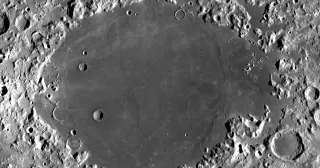
A routine Lunar map check uncovered a new 222‑metre crater named McGetchin, formed between 11 April and 22 May 2024 inside the Crisium basin on the Moon’s eastern near side. At 43 metres deep, it stands as the largest newly formed crater found anywhere in the solar system. A seven‑kilometre cold spot and an 8–9 kelvin nighttime cooling anomaly accompany the feature, consistent with impact decompaction. The event is estimated to have released about 6.5×10^10 kilojoules, far surpassing previous records. Observations come from NASA’s Lunar Reconnaissance Orbiter (LRO) and Diviner thermal data, with implications for dating the youngest craters; researchers also call for in‑situ follow‑ups to better understand the cold spots and ejecta dynamics.
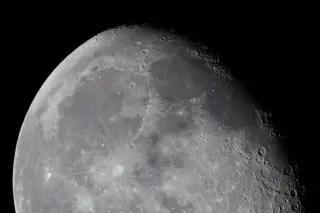
The annual International Observe the Moon Night invites moon lovers worldwide to view the Moon and learn about lunar science, with NASA-backed events and 22 happenings in the D.C. region. The piece also highlights recent lunar research: computer simulations suggest the Moon could have formed within five hours after the Theia impact, and a newly identified crater named McGetchin was detected on the Moon’s eastern edge from NASA’s LRO data, possibly visible as a flash under favorable conditions.
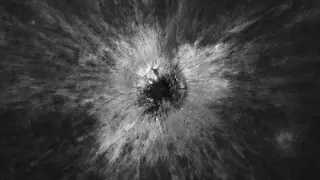
Researchers using NASA’s Lunar Reconnaissance Orbiter data identified the 728-foot (222 m) McGetchin crater—likely formed by a 2024 Moon impact—whose surrounding 4.3-mile (7 km) cold spot suggests fluffy regolith retains heat poorly; the findings, published in Science Advances, imply such impacts are rare (about once every 132 years) and could inform future lunar bases and regolith management.
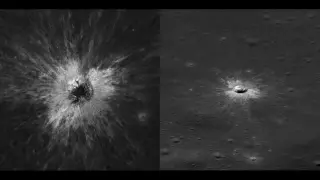
NASA's Lunar Reconnaissance Orbiter confirmed a newly formed crater on the Moon, named McGetchin, created by an impact between April 11 and May 22, 2024. The crater measures about 728 feet (222 meters) across and 141 feet (43 meters) deep, making it the largest modern‑day lunar crater, though not the Moon’s largest overall. Such impacts are estimated to occur roughly every 132 years. Follow-up images show a four‑mile‑wide area around the crater that remains about 16°F cooler at night, likely from disturbed regolith, which could affect rover-wheel interactions near fresh craters.
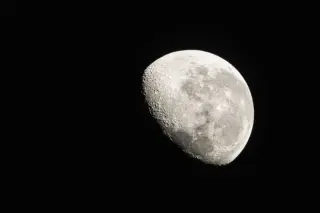
NASA’s LRO data pin down the Moon’s 222‑metre McGetchin crater forming between April 11 and May 22, 2024—an unusually precise age for a fresh crater. Its gleaming ejecta and a seven‑kilometre thermal anomaly show how new impacts expose subsurface material at a boundary between mare basalt and highland crust and how space weathering darkens ejecta over time. Reported in Science Advances, two papers detail the dating method and the broader implications for ejecta distribution and regolith evolution. The IAU named the crater McGetchin in 2026, highlighting how such young features provide rare, date‑constrained windows into impact processes on the Moon.
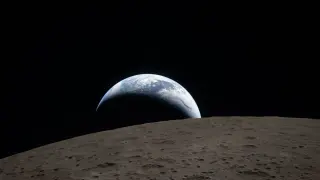
Gen. Dan Caine, chairman of the Joint Chiefs of Staff, says the modern battlefield now spans from the seabed to cislunar space, signaling that future conflicts could extend to the Moon’s vicinity and prompting interest in lunar bases and norms near the Moon’s south pole. The Space Force is also publicly discussed as operating on-orbit weapons to deter space-enabled attacks, reflecting rising competition with China and Russia in the space domain.
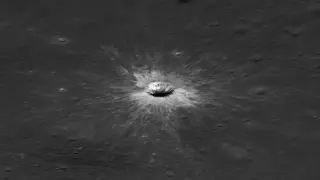
NASA’s Lunar Reconnaissance Orbiter identified McGetchin crater as the largest newly formed impact crater on the Moon, about 728 feet (222 meters) wide and 141 feet (43 meters) deep, formed between April 11 and May 22, 2024. The site, observed before and after the impact, shows an extensive ejecta blanket and a ~4.3-mile-wide thermal “cold spot” around it, revealing how the surface and upper regolith were disturbed. The findings—published in Science Advances—offer a pristine natural laboratory for studying crater formation and lunar geology with implications for future exploration.