Tag

Transcriptional Regulation

All articles tagged with #transcriptional regulation

CDK4/6-Activated Rb Rewires Estrogen Signaling in Breast Cancer
science1 month ago

CDK4/6-Activated Rb Rewires Estrogen Signaling in Breast Cancer

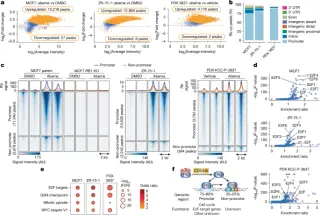
In HR+ breast cancer, CDK4/6 inhibitors activate hypophosphorylated Rb, causing it to redistribute to chromatin where it represses E2F targets but unexpectedly boosts estrogen receptor–driven gene expression by forming ER-rich transcriptional hubs. This Rb-driven enhancer/promoter activity, aided by KDM5A, can promote proliferation and is mitigated by anti-estrogen therapy in endocrine-sensitive tumors, explaining their synergy. In ESR1-mutant endocrine-resistant cancers, the pro-growth ER program persists, limiting CDK4/6 inhibitor efficacy. The study maps Rb binding with CUT&RUN and HiChIP across cell lines, PDXs, and clinical samples, revealing a dual role for Rb: a tumor suppressor that also activates pro-proliferative transcriptional programs.
Diverse autism mutations converge on a shared chromatin-regulation network in stem-cell–derived human cortex
science8 months ago

Diverse autism mutations converge on a shared chromatin-regulation network in stem-cell–derived human cortex

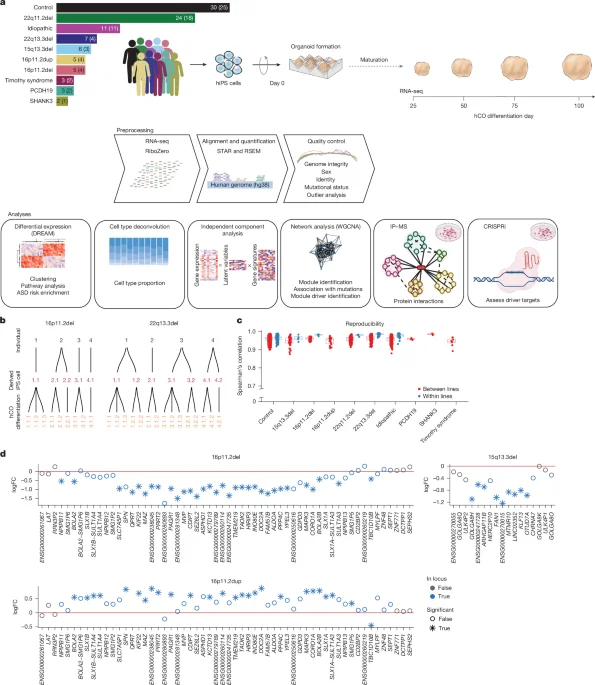
A large hiPSC-based study generated cortical organoids from eight ASD-risk mutations, idiopathic ASD, and controls, profiling gene expression across 25–100 days. Early mutation-specific changes give way to convergent transcriptional and chromatin-regulatory disruptions enriched for ASD risk genes, including SWI–SNF components. CRISPRi validation supports key regulators driving this convergent network, suggesting that diverse genetic risks in ASD propagate through shared transcriptional pathways that affect early neurodevelopment, while idiopathic cases show less convergence.

Decoding the Mechanisms of Olfactory Receptor Selection in Mammalian Nose
science-and-technology2 years ago

Decoding the Mechanisms of Olfactory Receptor Selection in Mammalian Nose

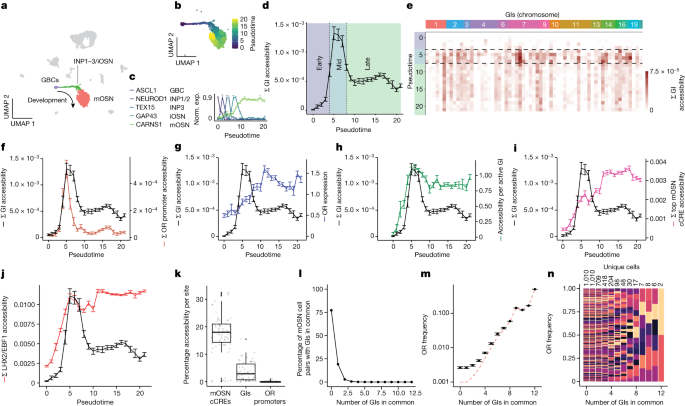
Researchers have discovered that olfactory sensory neurons (OSNs) use RNA-mediated symmetry breaking to achieve singular olfactory receptor (OR) choice. OSNs stably express one OR from over 1,000 available genes in a monogenic and monoallelic fashion. The expression of ORs in mature OSNs requires genomic interactions between the active OR allele and a network of OR gene-specific enhancers called Greek islands (GIs). Through single-nucleus ATAC-seq and RNA-seq, the researchers found that GI accessibility gradually increases during neuronal differentiation and then declines sharply during the transition to mature OSNs. They also observed distinct features between active and inactive GI hubs, including differences in contact specificity, biochemical properties, and histone modification patterns. These findings provide insights into the regulatory mechanisms underlying singular OR transcription in OSNs.

"Primate-specific RNA polymerase II elongation factor found in new human gene cluster sequence"
science-and-technology2 years ago

"Primate-specific RNA polymerase II elongation factor found in new human gene cluster sequence"

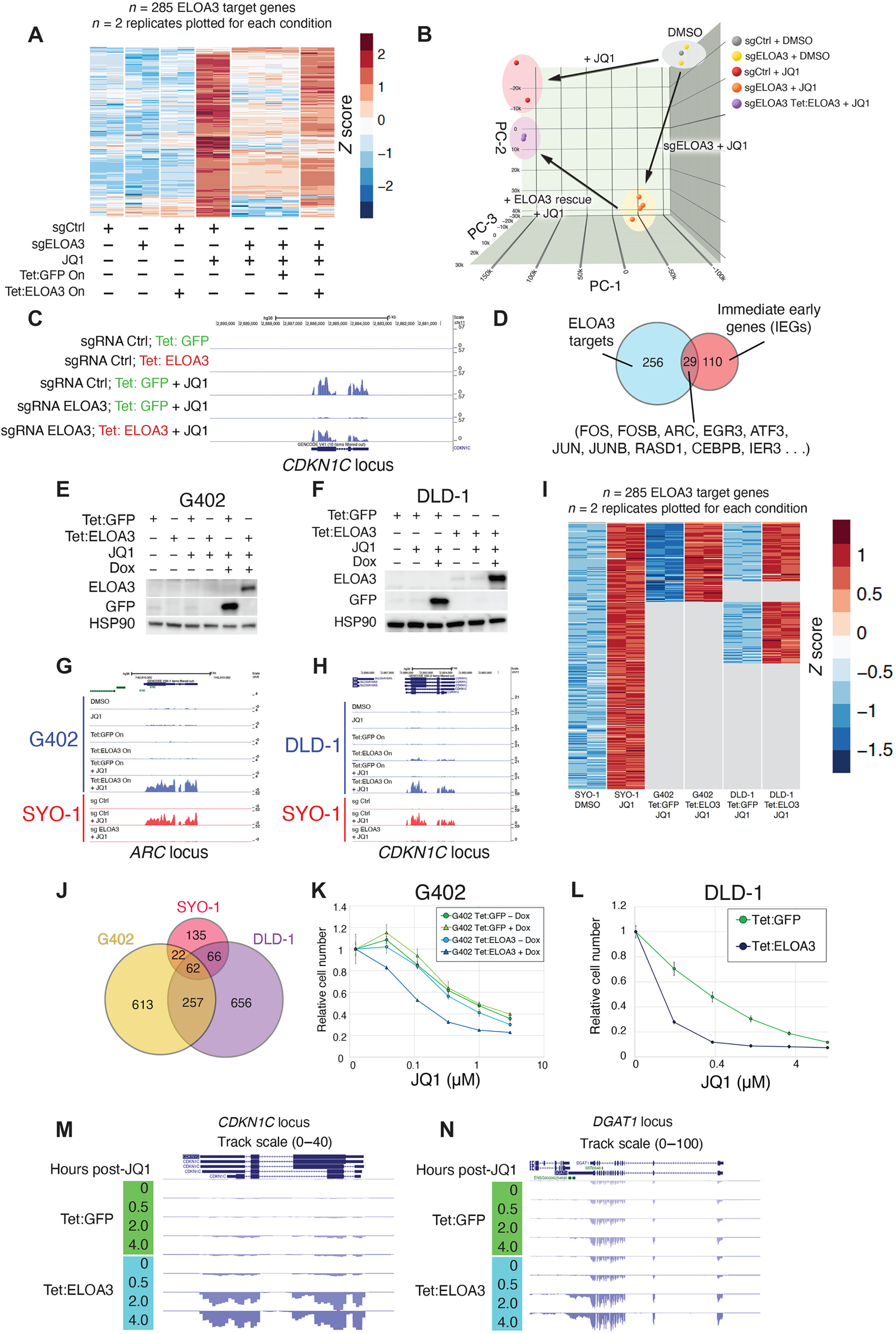
Researchers have discovered a new repeat gene cluster sequence that is exclusively expressed in humans and non-human primates. The discovery has implications for understanding transcriptional regulation, human evolution, and repetitive DNA sequences. The gene cluster encodes the protein Elongin A3 (ELOA3), which is closely related to a protein previously studied for its role in regulating gene expression. The number of ELOA3 gene repeats varies among individuals and primate species, suggesting concerted evolution and gene homogenization. The discovery enhances our understanding of the human genome and opens up possibilities for targeted drug design in cancer. Further research will explore the expression of ELOA3 in genomes and its potential role in developmental disorders and diseases.