Anthropic announced that its AI system, Claude, identified a novel enzyme system in viral DNA resembling CRISPR. While the discovery accelerated data analysis, scientists question its originality and practical utility, as the finding remains unproven and potentially overlaps with prior unpublished research.
New gene-editing technologies are emerging to overcome the limitations of CRISPR-Cas9, specifically its inability to efficiently insert large DNA segments. Techniques like PASTE, evoCAST, and recombineering allow researchers to replace entire faulty genes or engineer complex cellular circuits, addressing diseases with multiple genetic variants. While these methods offer broader therapeutic potential, they face significant challenges in delivery efficiency and complexity. The global CRISPR market is projected to grow at 16% annually, driven by these advancements and expanding clinical trials.
Cathy Tie, founder of Origin Genomics, argues that editing human embryos to prevent hereditary diseases is a moral imperative, despite current U.S. bans and safety concerns. While critics warn of eugenics and off-target risks, proponents cite new precise editing tools and patient demand for alternatives to IVF screening.
A Phase 1 trial of CTX310, a CRISPR-based gene-editing therapy, demonstrated that a single infusion can reduce LDL cholesterol by 52.5% and triglycerides by 47.8% for at least one year. The treatment targets the ANGPTL3 gene in the liver, offering a potential permanent alternative to daily medications for patients with resistant lipid disorders. While early results are promising, larger trials are needed to confirm long-term safety and efficacy.
A single infusion of the experimental CRISPR therapy CTX310 reduced LDL cholesterol by 52.5% and triglycerides by 47.8% in a 15-patient trial, with effects persisting for one year. The treatment targets the ANGPTL3 gene in the liver, offering a potential one-time alternative to daily medications for patients with resistant lipid disorders.
The UK Environment Secretary has approved a marketing notice for gene-edited bananas that resist browning, marking a significant step for precision breeding in Britain. Developed by Norfolk-based Tropic Biosciences using CRISPR-Cas9, these bananas have three genes tweaked to disable the polyphenol oxidase enzyme, which causes fruit to brown when damaged or aged. This modification extends shelf life by up to 24 hours after peeling and reduces bruising during transport. Defra estimates that browning accounts for 20% of banana yield losses, with 1.4 million edible bananas discarded annually by UK households. If the Food Standards Agency clears the product for safety, these bananas will be sold in England without special labeling, as gene editing is distinct from genetic modification under the Precision Breeding Act 2022. The approval follows similar green lights for other crops, including vitamin D-rich tomatoes and disease-resistant potatoes, reflecting post-Brexit regulatory shifts that prioritize bioscience innovation over stricter EU rules.
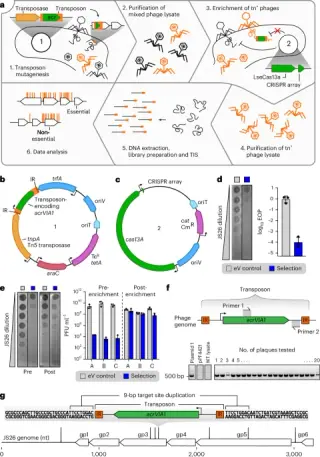
Researchers at the University of Otago developed 'phage Tn-seq,' a method that uses transposon mutagenesis and anti-CRISPR selection to identify essential genes in diverse bacteriophages. The technique also allows rapid insertion of new genetic cargo, such as fluorescent markers or anti-defense proteins, into phage genomes within days, overcoming previous barriers in phage engineering and functional genomics.
A new epigenetic therapy, CRMA-1001, has shown promise in silencing the hepatitis B virus (HBV) by adding chemical tags to viral DNA rather than cutting it. Developed by nChroma Bio and Italian researchers, the treatment targets both free-floating and integrated HBV DNA in the liver. Preclinical tests in human cells, mice, and monkeys yielded strong results with minimal side effects. A clinical trial has now begun in Hong Kong and New Zealand, with the first patient treated in January 2026. This approach aims to offer a potential cure for the 250 million people globally affected by chronic HBV, avoiding the cancer risks associated with traditional gene-editing methods.
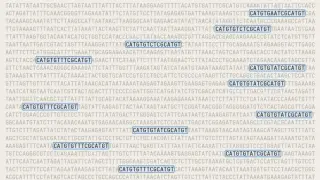
Anthropic announced that its AI model, Claude, autonomously discovered a new enzyme system in bacterial DNA that resembles the CRISPR gene-editing mechanism. The discovery, made over 21 hours by nearly 950 AI agents, is the first result from Anthropic’s new life sciences laboratory. While the system shares structural similarities with CRISPR, its function remains unproven, and experts are divided on its scientific significance.
Anthropic announced that its AI model Claude autonomously discovered a new enzyme system in bacteriophages, a finding the company compares to the development of CRISPR. The discovery, made by nearly 950 AI agents over 21 hours, is the first result from Anthropic’s new wet lab and aims to demonstrate the model’s scientific utility ahead of its public listing.
Scientists have identified VIPR, a virus-based gene-editing defense system thought to be over four billion years old, which may be the evolutionary ancestor of CRISPR and predates it by billions of years, according to two Science papers.
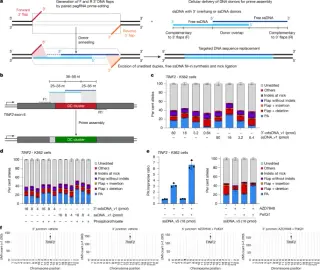
Nature reports a CRISPR-guided method called prime assembly (PA) that enables in-cell DNA assembly and site-specific integration of medium-to-large DNA fragments using RNA-programmed 3′ flap synthesis. PA works in dividing and non-dividing cells, including primary CD3+ T cells and CD34+ HSPCs, and supports exon recoding, multiple-locus transgene integration (e.g., at AAVS1, IL2RG, TRAC) and megabase-scale rearrangements, with high genome-wide specificity. It accommodates dsDNA and long or split ssDNA donors (up to 12 kb and beyond) and can perform multi-fragment assembly, megabase deletions, inversions, and translocations, sometimes enhanced by end-joining inhibitors. Compared with HDR and other nuclease-based approaches, PA often offers higher precision and broader applicability in non-dividing cells, suggesting a promising platform for therapeutic genome editing and functional genomics in human cells.
A new wave of biotechnology focuses on epigenome editing—altering chemical marks that control how genes are turned on or off—to treat or prevent disease later in life without changing the underlying DNA. By mimicking natural resets of epigenetic marks, researchers aim to rewrite the “nurture” of gene activity rather than the “nature” of the genetic code. Early results in cells and animals are promising, but major challenges remain in delivery, specificity, safety, and long-term effects, alongside ethical and regulatory considerations.
The deaths of two children in China after receiving CRISPR-based therapies have renewed concerns among scientists about the safety and ethics of delivering gene-editing medicines with viral vectors, prompting renewed calls in the US for tighter standards and oversight.
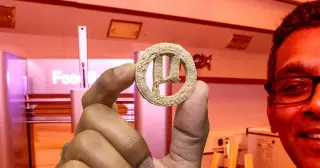
Researchers at Southern Illinois University Carbondale used CRISPR-edited yeast to convert PET plastic and plant byproducts into edible components, which are then 3D-printed into cookies called μBites. While the approach could aid food security and long-duration space missions, it remains expensive and far from scalable as a solution to global plastic waste.