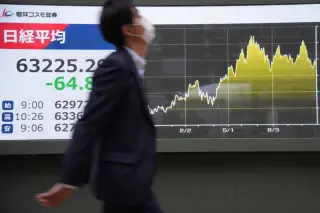
Tech stocks waver as Apple earnings test AI bubble fears amid oil dip
Global markets mixed Monday as oil prices fell on US-Iran diplomatic hopes, while tech stocks wavered ahead of Apple's earnings amid fears of an AI spending bubble.

All articles tagged with #us iran diplomacy
Global markets mixed Monday as oil prices fell on US-Iran diplomatic hopes, while tech stocks wavered ahead of Apple's earnings amid fears of an AI spending bubble.
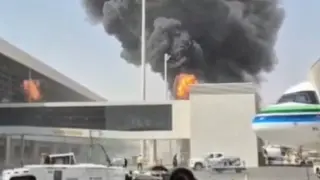
Three Saudi nationals, including a pilot, died in two Houthi attacks on Riyadh’s King Khalid International Airport on Thursday. The Saudi-led coalition vowed a 'firm response' and confirmed the destruction of three Houthi missile launchers. While hundreds of flights were canceled, airport operations returned to normal by Friday. The strikes occurred as the US postponed military action against Iran until after the November 3 midterm elections, helping ease oil prices.
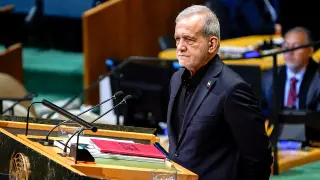
Crude oil prices dropped over 2% after Iranian officials proposed a seven-day timeline to reopen the Strait of Hormuz, contingent on US compliance with a June memorandum. While Tehran signaled willingness to dilute nuclear stockpiles, the US maintains a naval blockade, and regional tensions persist due to Houthi attacks and Chinese military support for Iran.

Crude oil prices fell for a sixth consecutive day on September 23, 2026, marking the longest losing streak since August 2025. Brent crude dropped approximately 1% to $98.30, while WTI crude declined 1.4% to $89.49. The decline was driven by optimism following the first U.S.-Iran diplomatic talks in months, held on the sidelines of the UN General Assembly in New York. Additionally, Saudi Arabia’s East-West pipeline, closed for over 10 days due to drone attacks, resumed partial operations. Aramco aims to restore flows to 4 million barrels per day within weeks, reducing supply concerns related to the Strait of Hormuz.

Crude oil prices reversed a recent downward trend, with Brent crude reaching $101.69 per barrel and WTI hitting $93.38, as markets weighed potential US-Iran peace talks against ongoing supply risks. While some analysts view the rise as a short-covering bounce, others note speculative long positions on Brent have hit their highest level since May. Meanwhile, G7 foreign ministers condemned recent Houthi attacks on Saudi infrastructure and called for an immediate cessation of military actions.
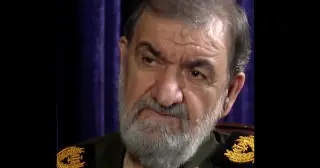
Iran’s security chief Mohsen Rezaei has publicly outlined six conditions to end the war with the United States, demanding an end to all hostilities, the release of billions in frozen funds, and the lifting of naval blockades. Tehran has transmitted these terms via Qatari mediators, signaling a shift from the collapsed June memorandum of understanding. While the core demands remain similar to previous negotiations, the public delivery and rejection of a recent Hormuz management deal indicate a hardening stance. The US has not yet responded, though President Trump cut a trip short, potentially to address the escalating crisis.

US equities surged to record highs on Monday, driven by a tech rally and falling oil prices, despite conflicting signals regarding US-Iran negotiations. The Dow Jones Industrial Average reached a new peak of 53,178.41, while the S&P 500 approached its all-time high. Brent crude initially dropped 5% after President Trump called off a planned strike on Iran but rebounded 1.4% in Asian trading as Tehran denied active talks. In Asia, South Korea’s Kospi led gains, while the yen weakened slightly following a rare joint US-Japan currency intervention. India announced a plan to sell a 6.5% stake in Life Insurance Corporation of India to raise up to $3.3 billion.
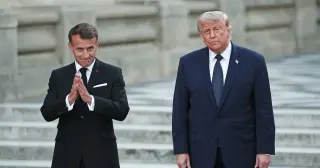
Negotiations between the U.S. and Iran have been chaotic, and the new memorandum of understanding has multiplied the confusion: conflicting signals about signing timelines, a possible signing ceremony, and whether the Strait of Hormuz will open immediately, set against ongoing strikes, shifting rhetoric from Trump, and domestic and allied skepticism about the deal’s durability.
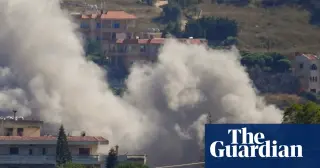
Israel and Hezbollah renewed a fragile ceasefire in Lebanon after 24 hours of intense fighting that killed four Israeli soldiers and left dozens dead in Lebanon, with Israeli airstrikes targeting Hezbollah positions in the south and Bekaa valley. The flare-up coincided with renewed US-Iran diplomacy under a memorandum of understanding that creates a 60‑day window for a broader settlement, though talks were canceled as violence escalated. Iran warned of a decisive response, underscoring the fragility of any long-term agreement amid regional tensions and domestic political pressures on Netanyahu.

CBS News obtained a two‑minute recording from inside Iran’s Evin Prison in which Iranian‑American journalist Reza Valizadeh pleads for medical treatment for himself and fellow Americans detained in Tehran, describing illnesses and limited care; U.S. officials say six Americans remain detained and, despite ongoing diplomacy, none will be released as part of the current truce. Valizadeh’s case is tied to broader hostage diplomacy, with his designation as a
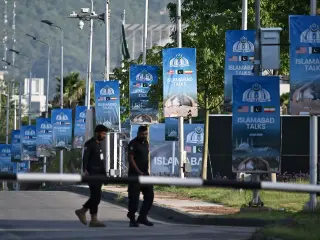
The US cancels a Pakistan-hosted round of indirect talks with Iran as Washington and Tehran remain far apart on conditions for negotiations. Iran demands lifting the blockade of Iranian ports before talks can proceed, while the US says Iran’s offers are insufficient. Pakistan remains a mediator, with Iranian officials meeting Islamabad officials and traveling to Oman and Russia. The April ceasefire largely holds, but both sides accuse each other of violations, and disputes over Hormuz navigation and Iran’s uranium enrichment keep diplomacy stalled.
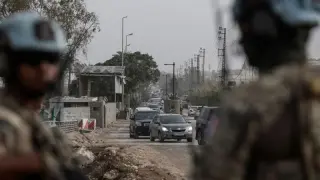
The White House says special envoys Steve Witkoff and Jared Kushner will fly to Pakistan to pursue direct talks with Iran, but Tehran has denied that any meeting is planned; Iran’s Abbas Araghchi is in Islamabad as part of mediation. The status of negotiations remains unclear amid mixed signals from both sides. In Lebanon, Israeli forces and Hezbollah renewed clashes after a three‑week ceasefire extension, with casualties and widespread destruction reported. The report also notes Iran’s ongoing internet blackout and maritime tensions around the Strait of Hormuz as part of the broader regional crisis.

Pakistan has emerged as the publicly acknowledged central mediator between Washington and Tehran, hosting extended talks in Islamabad that lasted over 20 hours but ended without an immediate deal. The process is being steered by Pakistan’s army chief, General Asim Munir, whose security-for-diplomacy role underscores Islamabad’s leverage and domestic calculations amid turmoil. Pakistan has structured multiple tracks—nuclear, sanctions, Hormuz, and regional security—and is pressing for a phased ceasefire extension and guarantees to sustain dialogue, with broader regional backing from Saudi Arabia, Turkey, and Egypt. While Tehran and Washington still face hard gaps, the talks have kept a channel open and shifted regional diplomacy, though it remains too soon to declare a winner.

The ceasefire in the region remains fragile as the US and Iran prepare to hold talks, with Israel’s leadership moving toward negotiations with Lebanon and ongoing regional tensions complicating diplomacy.

Islamabad prepares to host weekend talks between the United States and Iran, mediated by Pakistan, as part of a two-week ceasefire in a war that has drawn in regional powers and unsettled global energy markets. US Vice President JD Vance will lead the American delegation, joined by Steve Witkoff and Jared Kushner, while Iran’s side is led by Parliament Speaker Ghalibaf and Foreign Minister Araghchi. The talks, held at the Serena Hotel and potentially lasting up to 15 days, seek a settlement to the conflict and a broader arrangement over issues including Iran’s proposed 10-point plan and U.S. demands on enriched uranium. Lebanon and ongoing Israeli strikes loom as major obstacles, and deep mistrust suggests a quick breakthrough is unlikely, though Pakistan’s mediating role is central to any progress.