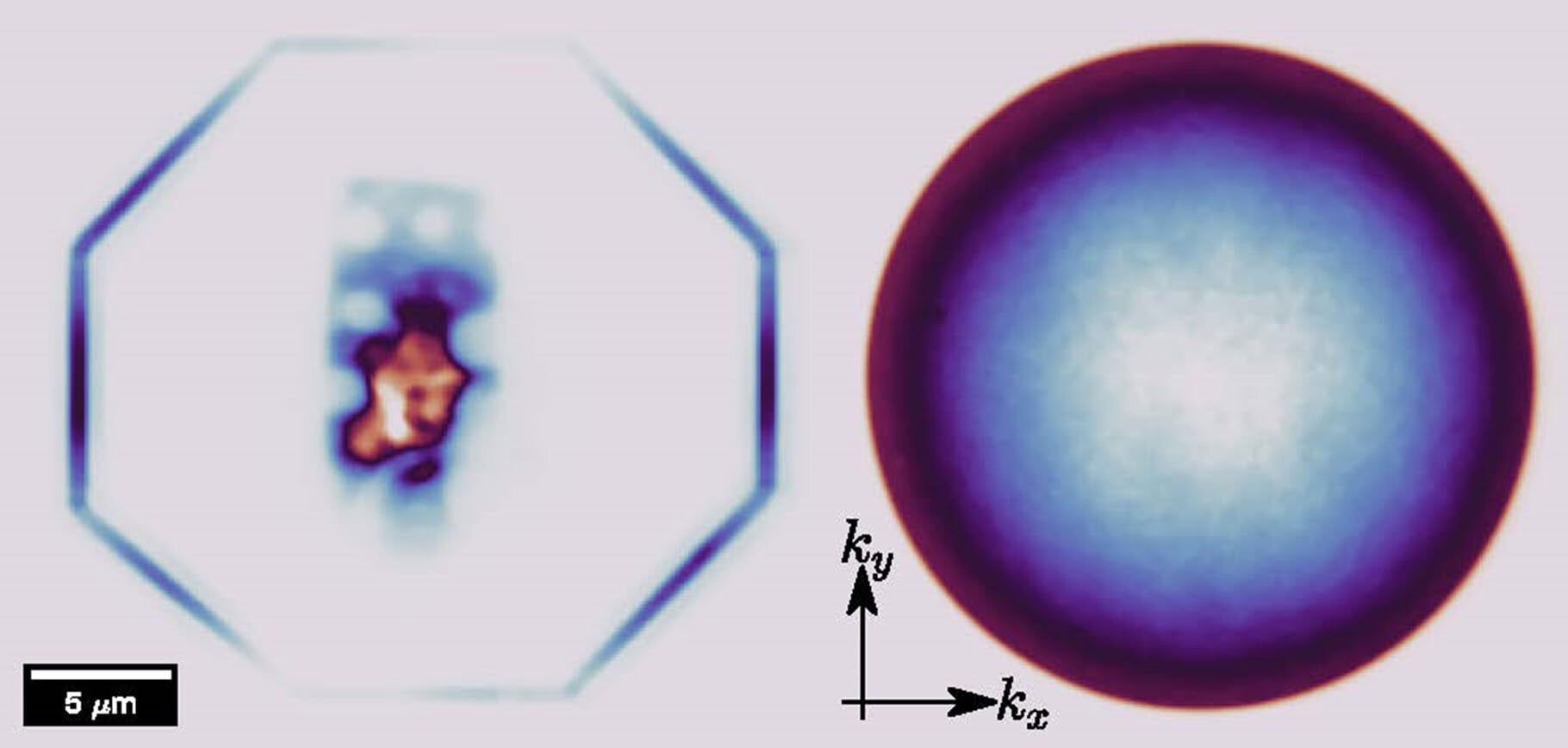
Caltech researchers have developed germano-silicate waveguides printed on silicon wafers that achieve fiber-like optical losses, especially at visible wavelengths, enabling highly coherent and energy-efficient photonic integrated circuits with potential applications in optical clocks, sensors, quantum devices, and data-center communications.
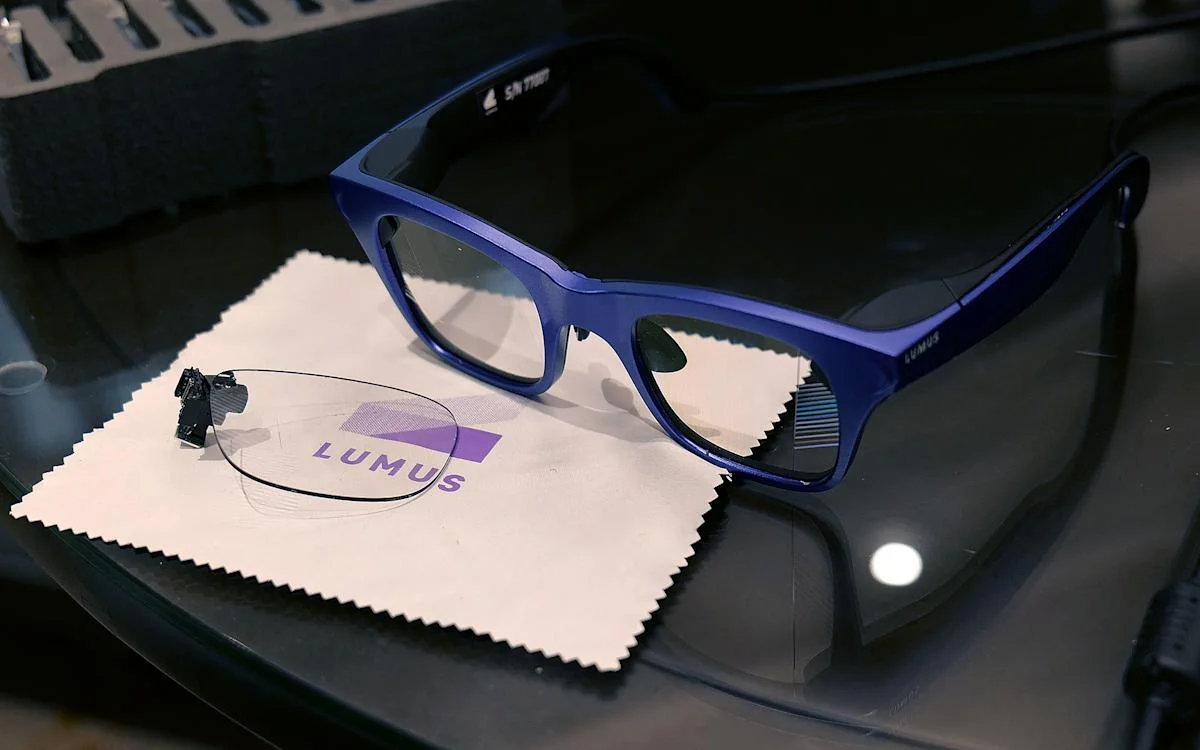
Lumus showcased advanced waveguides at CES 2026, featuring a wider 70-degree FOV, improved brightness, and thinner, lighter design, promising to significantly enhance the optical quality and usability of future high-end smartglasses.
The article discusses advancements in augmented reality (AR) lenses, highlighting how geometric reflective waveguides embedded in glass are making smart glasses lighter, brighter, and more practical, bringing AR closer to everyday use. It draws a historical parallel to Benjamin Franklin's bifocals, emphasizing the ongoing pursuit of tools that seamlessly integrate digital information into our lives.
Advancements in AR lens technology, specifically geometric reflective waveguides embedded in glass, are making smart glasses lighter, more efficient, and more practical for everyday use, bringing augmented reality closer to mainstream adoption.
Advancements in AR lens technology, specifically geometric reflective waveguides embedded in glass, are making smart glasses lighter, brighter, and more practical, bringing us closer to seamless, everyday augmented reality experiences.
Researchers at Boston University have proposed a new charging scheme for quantum batteries using rectangular hollow metal waveguides to overcome environment-induced decoherence and charging distance limitations. By leveraging principles of quantum mechanics such as entanglement and coherence, the study aims to achieve stronger charging power, higher capacity, and larger work extraction compared to classical batteries. The proposed quantum battery model utilizes waveguides to mediate energy transfer between the battery and charger, addressing challenges related to decoherence and charging efficiency. The research opens the possibility of remote-charging and anti-aging quantum batteries with improved effectiveness and durability, paving the way for lighter and thinner devices with greater facilitation.
The U.S. Naval Research Laboratory and Kansas State University have discovered slab waveguides based on the two-dimensional material hexagonal boron nitride, which can be used to enhance spectroscopy of encapsulated 2D materials. These waveguides, reported in the journal Advanced Materials, have the potential to impact the development of atomically thin electronic and optical devices, offering a way to study elusive dark excitons optically and providing a step towards interfacing 2D materials with existing platforms without damaging them.
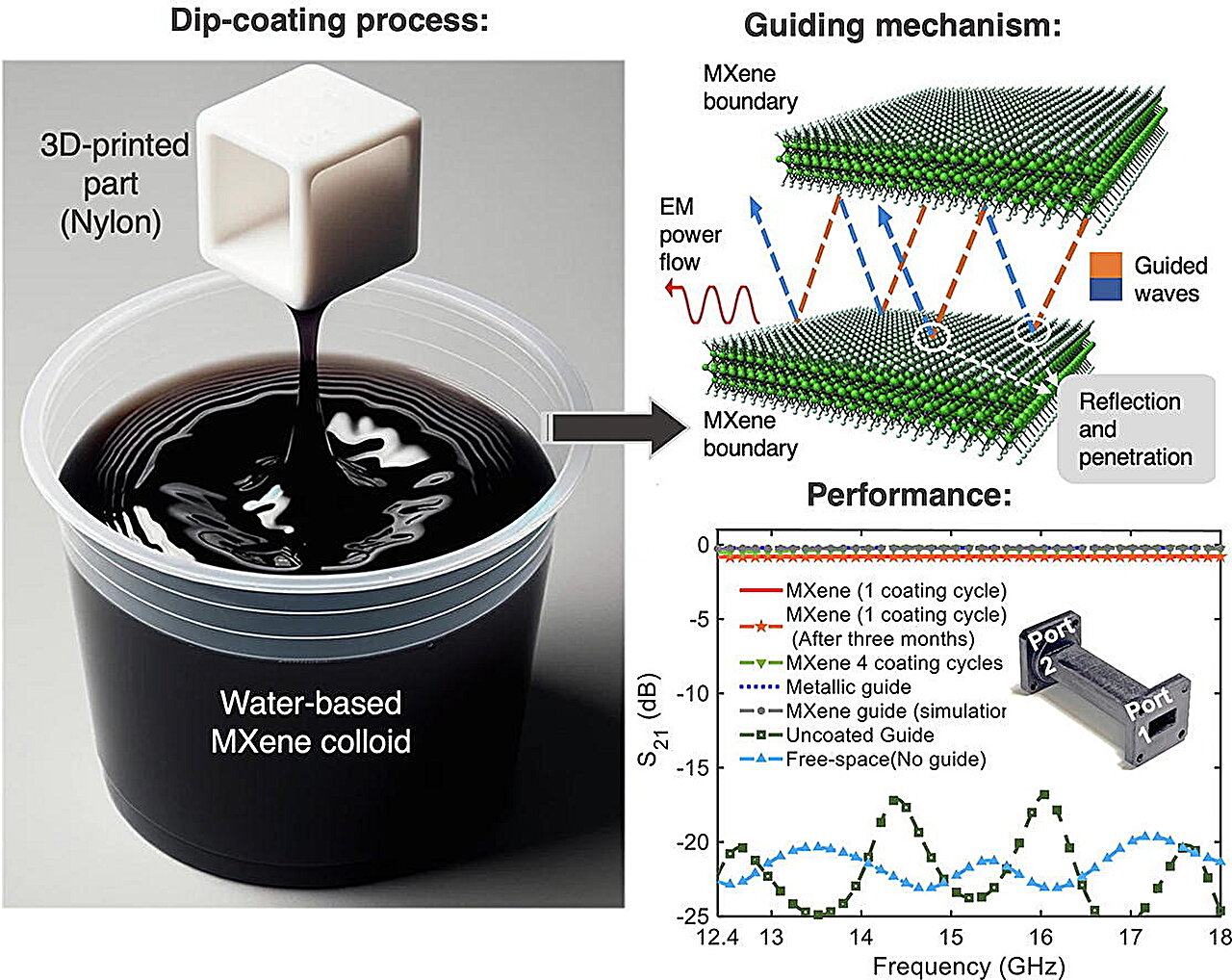
Researchers from Drexel University and the University of British Columbia have developed a lightweight waveguide made from 3D-printed polymers coated with a conductive nanomaterial called MXene, which can guide microwaves in space and potentially reduce the weight of satellite payloads. The MXene-coated waveguides weigh significantly less than standard aluminum ones and perform nearly as well, showing potential for use in space technology and other terrestrial applications.