Yahya Abdul-Mateen II says Marvel’s optics are obvious after Wonder Man was canceled and the long-gestating Blade movie stalled, arguing Disney/Marvel should focus on quality storytelling rather than being tied to controversial optics.
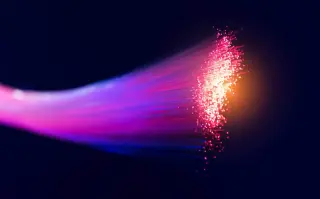
A team used a Fresnel-lens concentrator to focus sunlight onto a crystal, generating polarization-based entangled photons without a laser. The photons achieved ~94% similarity to a perfectly entangled state and violated Bell’s inequality, marking a proof-of-principle step toward cheaper, energy-efficient quantum tech for satellites and remote stations—though a practical, deployable sun-powered entangler remains to be built and improved.
UiO physicists explore what happens when you “cut” a photon by removing a reflecting mirror. The resulting state is a complex quantum superposition where the photon number can, in theory, range from zero to infinitely many, but in practice the expected count is finite and depends on how quickly the mirror is removed—the faster the removal, the more photons can appear, yet infinite photons would require an impossibly instantaneous action. The work also highlights that vacuum energy can transform into real photons near the boundary, illustrating the strange, wave‑particle nature of light in quantum regimes.
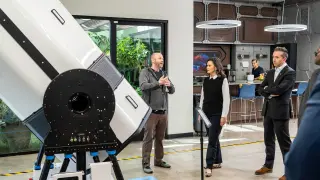
Dan Roelker, a former hacker and DARPA program manager, now leads Observable Space, where software and advanced optics are used to track satellites with sub-arcsecond precision and to enable high-bandwidth laser communications from space to Earth; the company emerged from a merge of OurSky and PlaneWave, won a Space Force contract, and just closed a $90 million Series A to scale telescope production and laser-link tech for orbital data centers and NASA’s Artemis missions.
Nvidia has asked suppliers to boost indium phosphide laser capacity by 20x through 2030 to support AI cluster networking, with suppliers countering at 12x; the InP optics market is projected to grow from about $1.9B in 2025 to $22.75B by 2030. Major players like Lumentum, Coherent, Broadcom, Mitsubishi, Sumitomo and AAOI are expanding capacity, driven by the shift to co-packaged optics that moves connections closer to chips to boost speed and cut power. Investors see optics as the next AI bottleneck, and Rosenblatt expects Coherent and Lumentum to benefit, while more speculative names like AXT and Lightwave Logic carry higher risk. In short, optics infrastructure is becoming a foundational piece of AI deployment, and Nvidia’s demand signals indicate multi-year growth, tempered by caution over overexpansion among suppliers.
NVIDIA and Corning announced a multiyear partnership to expand U.S.-based optical connectivity manufacturing by 10x and fiber capacity by more than 50%, including three new facilities in North Carolina and Texas and more than 3,000 high-paying American jobs to power AI infrastructure and hyperscale data centers.
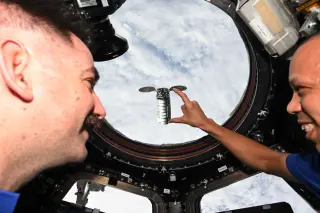
NASA astronauts Chris Williams and Jack Hathaway staged a lighthearted moment aboard the ISS on April 13, pretending Williams could 'hold' Northrop Grumman's Cygnus XL cargo spacecraft in an optical illusion from the Cupola while the two captured the vehicle with Canadarm2 after its Apr 11 launch. The Cygnus XL was delivering about 11,000 pounds of cargo and experiments to the station. The playful moment highlighted crew morale amid a high-profile cargo-ship capture and installation on the Earth-facing port.
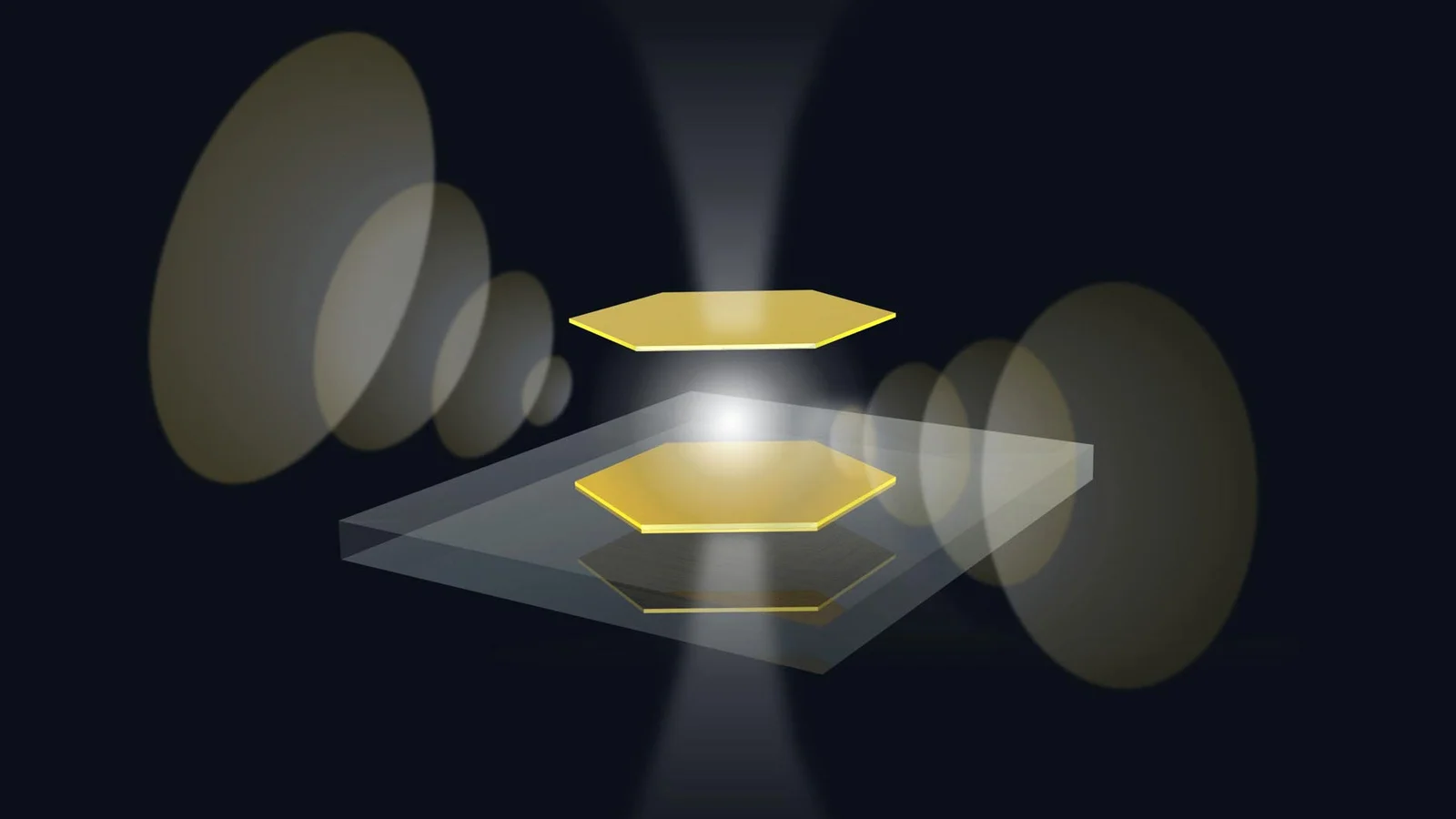
Chalmers University researchers have developed a simple platform using micrometer-sized gold flakes in a salt solution between two gold-coated glass plates. When illuminated, light trapped in nanometer-scale liquid cavities creates color changes that reveal the balance between Casimir attraction and electrostatic repulsion, enabling direct study of nanoscale surface forces and self-assembly with potential applications in medicine, biosensing, and materials science.
A team uses a continuous-wave mid-infrared laser and a needle-sharp metal tip to squeeze light into sub-atomic gaps, producing near-field optical tunneling emission that resolves atomic-scale features down to about 0.1 nanometers—roughly 100,000 times smaller than conventional diffraction-limited optics. The method works with standard lasers and could enable widespread atomic-scale optical imaging in catalysts, semiconductors, and quantum materials, with findings published in Nano Letters.
Comedian Tim Dillon, linked to the online ‘manosphere’ circle that boosted Trump, harshly criticizes the optics of a Mar-a-Lago gala for the American Humane Society, calling the lavish event at the president’s home demoralizing amid a cost‑of‑living crisis and rising global tensions.
Image-stabilized binoculars significantly enhance stargazing by providing shake-free views, making them ideal for observing deep space objects, wildlife, and for travelers. They are especially useful for beginners and those without telescopes, though they tend to be more expensive and heavier due to their stabilization systems. High-quality models from brands like Canon, Fujifilm, and Nikon offer varying degrees of stabilization and magnification, catering to different needs and budgets.
Advancements in AR lens technology, specifically geometric reflective waveguides embedded in glass, are making smart glasses lighter, more efficient, and more practical for everyday use, bringing augmented reality closer to mainstream adoption.
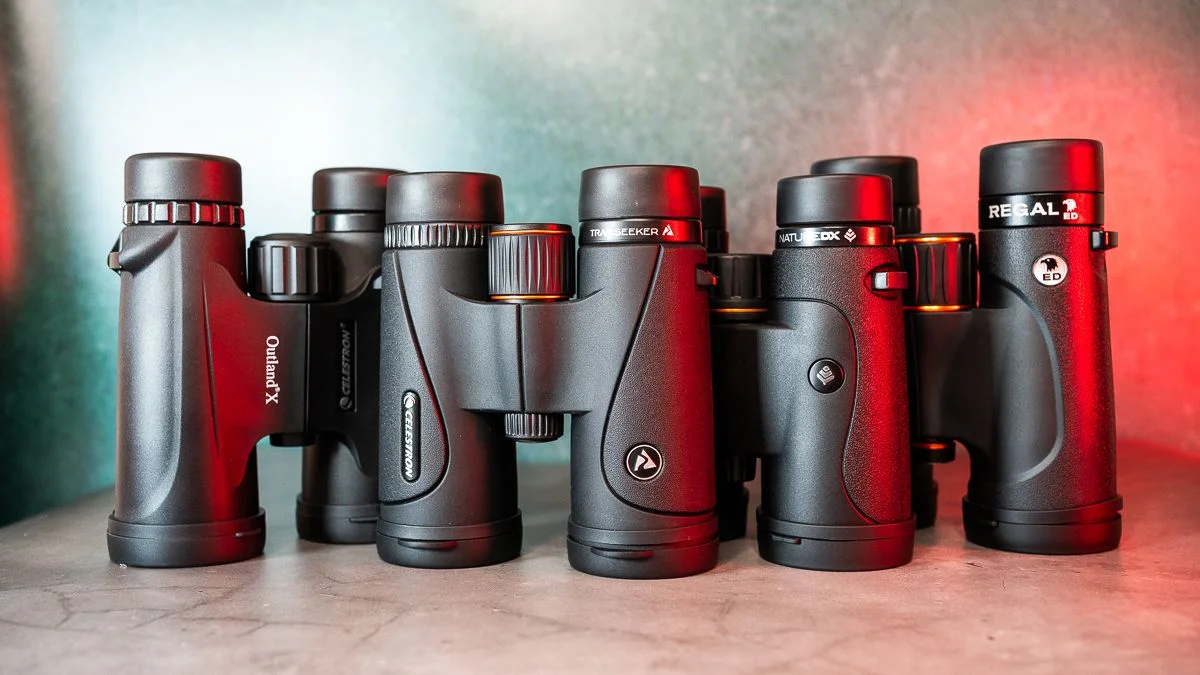
The article compares six models of Celestron's 10x42 binoculars, ranging from budget to premium, highlighting differences in coatings, glass quality, build materials, and performance, with the Regal ED emerging as the top choice for serious birders and stargazers due to its edge-to-edge sharpness and advanced features.
Advancements in AR lens technology, specifically geometric reflective waveguides embedded in glass, are making smart glasses lighter, brighter, and more practical, bringing us closer to seamless, everyday augmented reality experiences.
Nikon's 12x25 S image-stabilized binoculars are highly praised for their compact size, lightweight design, and effective stabilization, making them ideal for wildlife watching and stargazing. Currently discounted for Black Friday, they offer excellent value despite some minor optical compromises.