
Tag

Weak Gravitational Lensing

All articles tagged with #weak gravitational lensing

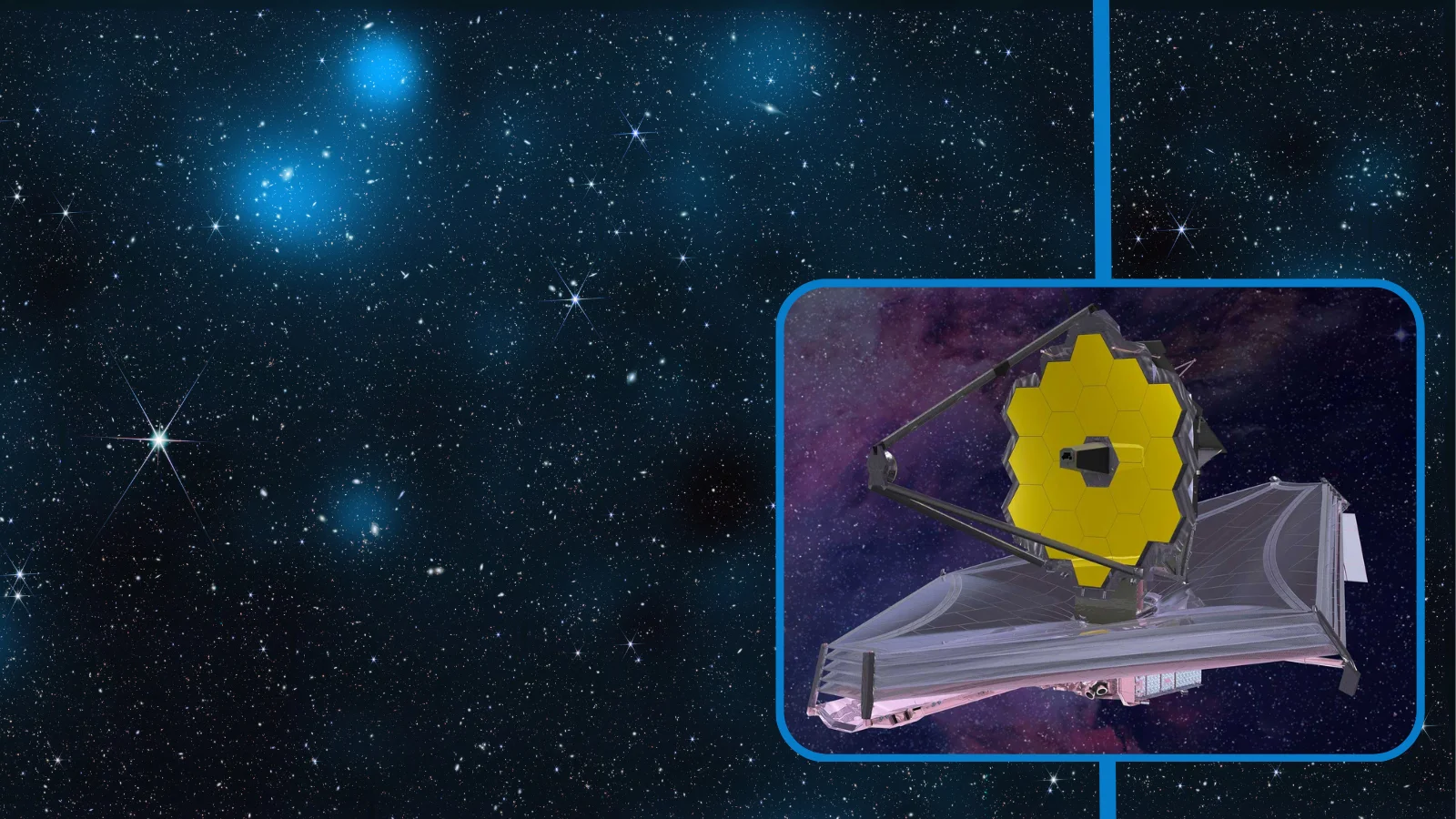
Webb maps the universe’s dark matter across 800,000 galaxies
space2 months ago

Webb maps the universe’s dark matter across 800,000 galaxies

Using the James Webb Space Telescope, astronomers built a detailed map of dark matter by analyzing subtle light distortions (weak gravitational lensing) from roughly 800,000 background galaxies in the COSMOS field. The 255-hour NIRCam observations, with MIRI distance measurements and prior Hubble data, yield the most galaxy-dense dark‑matter map to date—about ten times more galaxies than ground-based surveys and twice as many as the Hubble map—providing new insights into how dark matter shapes galaxy growth and the cosmic web.
DES six-year results largely confirm standard cosmology, with a notable caveat on galaxy clustering
physics-and-astronomy2 months ago

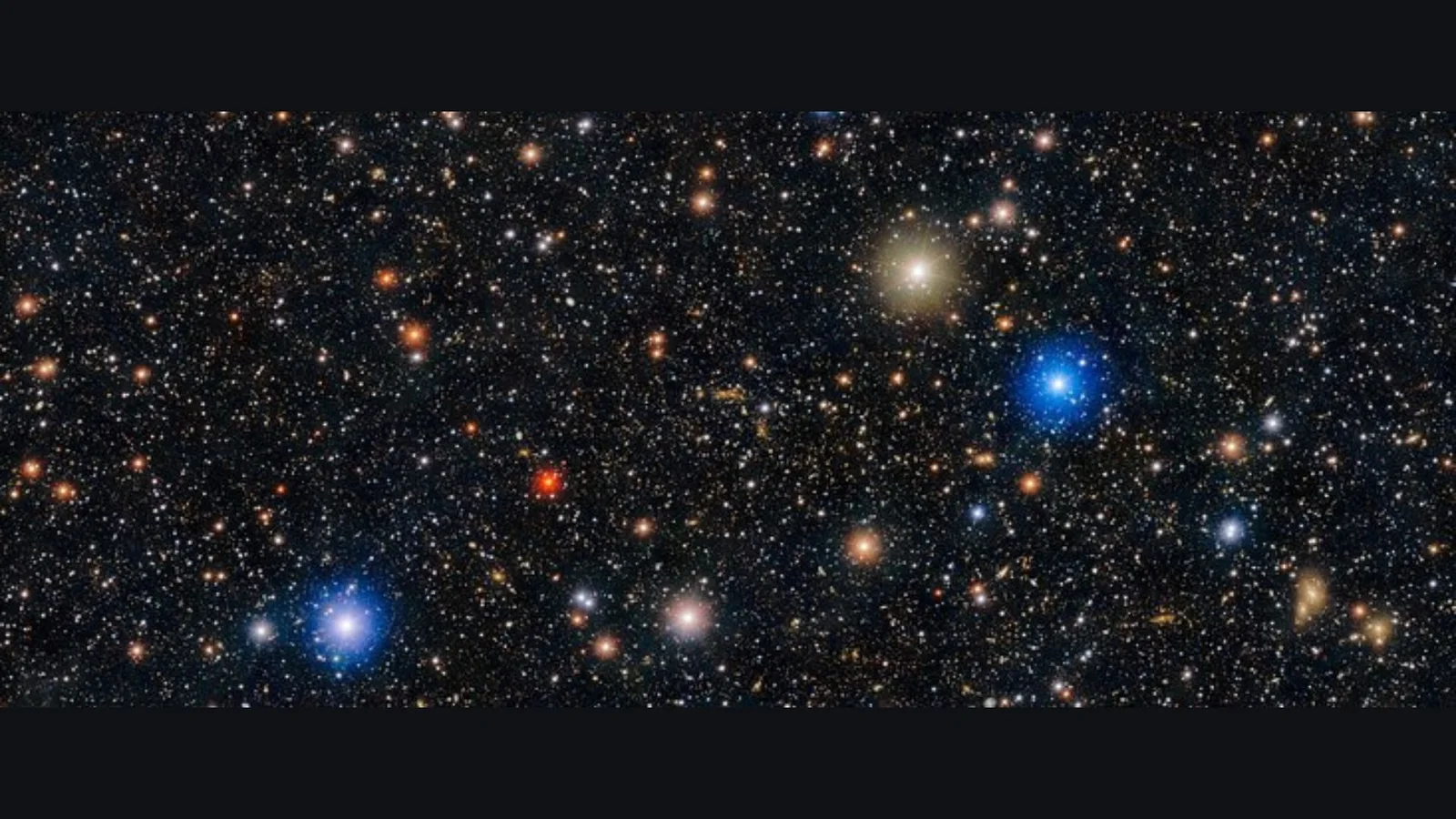
DES six-year results largely confirm standard cosmology, with a notable caveat on galaxy clustering

The Dark Energy Survey’s six-year analysis of 669 million galaxies finds results consistent with the standard cosmology, with both a constant dark-energy density and a time-varying version fitting the data comparably well. However, patterns in how galaxies cluster still show slight tensions with predictions, indicating the model is not complete. The study tightens expansion history constraints and paves the way for further tests with the Vera C. Rubin Observatory, aiming to clarify dark energy’s nature and whether new physics may be needed.

Cosmological Observations Reveal Troubling Inconsistency
physics2 years ago

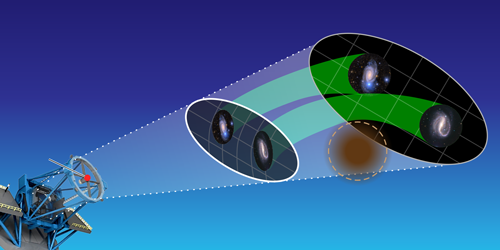
Cosmological Observations Reveal Troubling Inconsistency

A new analysis of the distribution of matter in the Universe, conducted by the Hyper Suprime-Cam Subaru Strategic Program (HSC-SSP) weak-lensing survey, has found a discrepancy in the clumpiness of dark matter in the late and early Universe. This inconsistency, which has been observed in previous surveys as well, suggests a fundamental error in the standard cosmological model. The findings indicate a possible failure of the ΛCDM model and may require the development of new cosmological models that can explain both early and later Universe data. Upcoming observational capabilities, such as the Euclid telescope and the Vera C. Rubin Observatory, will provide enhanced capabilities for further measurements and expand our understanding of the Universe.