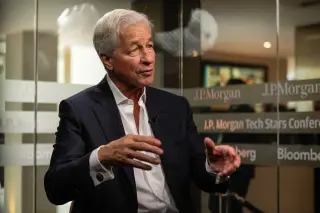
US banks posted solid loan and deposit growth in Q3 2026, but faced intense competition for deposits and volatile trading revenues. JPMorgan missed profit expectations, while Goldman Sachs and Citigroup exceeded forecasts. Rising interest rates and bond market turmoil created a mixed environment for lenders.
Wells Fargo stock declined after Q3 capital market revenues underperformed expectations, though the bank maintained its 2026 net interest income guidance. This occurred amidst a broader market downturn where major financial and tech stocks, including Bank of America and Applied Materials, saw significant drops.
The Trump administration’s Department of Housing and Urban Development (HUD) has opened a civil rights investigation into Wells Fargo, accusing the bank of violating the Fair Housing Act by using race-based criteria in its mortgage lending programs. HUD Secretary Scott Turner labeled the bank’s efforts to boost Black homeownership as 'immoral' and 'un-American,' arguing that such practices discriminate against other applicants. Wells Fargo, which pledged $150 million to reduce rates for minority borrowers, declined to comment. The probe follows a 2012 discrimination settlement and a 2020 report alleging ongoing bias. Critics, including fair housing advocates, argue the bank was following federal Special Purpose Credit Program rules designed to remedy historic exclusion. The move signals a broader federal crackdown on diversity, equity, and inclusion (DEI) initiatives in the financial sector.
The Trump administration's Department of Housing and Urban Development (HUD) has opened an investigation into Wells Fargo for alleged violations of the Fair Housing Act. The probe targets the bank's past initiatives designed to increase Black homeownership, which officials argue constitute illegal race-based discrimination. The move follows a 2012 settlement where Wells Fargo paid to resolve similar discrimination allegations.
The U.S. Department of Housing and Urban Development (HUD) has launched an investigation into Wells Fargo for alleged violations of the Fair Housing Act. The probe targets the bank’s past initiatives aimed at increasing Black homeownership, which officials argue constituted illegal race-based discrimination. Wells Fargo shares fell 1.5% following the announcement.
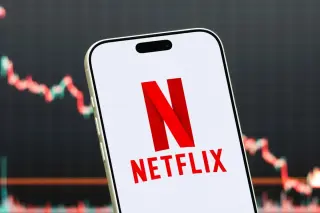
Wells Fargo downgraded Netflix to Underweight and cut its price target to $57 from $80, citing declining viewer engagement and a weak content slate. Netflix shares fell nearly 5% following the report, which highlighted a lack of major original series and potential strategic missteps.
Netflix shares fell nearly 5% on September 18 after Wells Fargo downgraded the stock to Underweight, citing declining viewer engagement and a lack of breakout original series. The bank cut its price target to $57, warning that Netflix's pivot toward diverse content formats may be hurting its core metrics.
Netflix shares fell nearly 5% after Wells Fargo downgraded the stock, citing declining viewer engagement and a lack of major original hits. The move extends a broader 2026 slump for the streaming giant.
California lawmakers amended wildfire legislation to exclude liability protections for utilities, prompting Wells Fargo and BMO to downgrade PG&E. The stock fell nearly 20% as investors feared increased financial exposure to wildfire damages.
With deregulation widening the M&A window, Citi and Wells Fargo could pursue a large regional bank deal under the 10% national-deposits cap. Five regional banks—Fifth Third, Huntington, Citizens, KeyCorp, and Regions—are highlighted as strong targets; Citi could consider First Horizon, while Wells Fargo could eye Zions. Despite executives’ emphasis on organic growth, analysts say the current climate supports scale-driven consolidation, though actual deals remain limited as banks weigh economics and integration risks.
Wells Fargo posted Q1 2026 results with diluted EPS of $1.60 (above estimates) and revenue of $21.45B (below the $21.79B consensus). Revenue grew about 6.5% year over year, driven by a 5% rise in net interest income and an 8% rise in noninterest income. The bank kept its 2026 guidance for net interest income around $50B and noninterest expenses near $55.7B. CEO Charlie Scharf emphasized resilience in the economy, while the stock fell in pre-market trading; analysts’ consensus rating is Moderate Buy with a $98.50 price target, implying roughly 14% upside.
Wells Fargo analyst Aaron Rakers says Nvidia is a buy ahead of the GTC 2026 event, noting post‑GTC outperformance historically and expectations for pipeline updates and next‑gen architectures (Kyber, Rubin CPX) and AI‑inference hardware moves, with a $265 target and a broad bullish analyst consensus.
Wells Fargo has agreed to a $56.85 million class action settlement to resolve FCRA claims that it inaccurately reported CARES Act forbearances; California mortgagors with current loans who received CARES Act forbearances may share in the net settlement, with a March 25, 2026 claim/exclusion deadline and a final approval hearing on April 17, 2026.
Six of the largest U.S. banks cut about 10,600 jobs in 2025, reducing total headcount to roughly 1.09 million—the lowest since 2021 and the biggest annual drop since 2016—with Wells Fargo leading the reductions; Goldman Sachs and Morgan Stanley added staff, while JPMorgan Chase and Bank of America relied more on attrition as executives weigh AI-driven efficiency.