The SpaceX IPO, potentially up to $80 billion, signals a shift from software dominance to space-based infrastructure—with a booming space economy, off-Earth manufacturing, and orbital data centers—reinforcing U.S. tech leadership as global competitors grow.
Uber says it exhausted its 2026 AI budget and questions whether AI investments are delivering meaningful feature improvements, noting there’s no clear link between rising token usage for Claude Code and more useful consumer features. The company spent about $3.4 billion on R&D in 2025 and has signaled it will offset AI costs by hiring fewer human workers, highlighting the challenge of justifying AI spend without a clear productivity payoff.
The piece argues that despite hints of rebuilding Cuba, any serious revival would require massive private investment, a functioning legal and banking framework, and sweeping policy changes after decades of sanctions; with no single dominant industry, a decayed private sector, and ongoing lawsuits over seized property, investors are wary, and meaningful change would likely need congressional action and significant political reform before US companies will commit.
PM Shehbaz Sharif arrives in Beijing for high‑level talks with Xi Jinping and Li Qiang, kicks off the Hangzhou Pakistan‑China B2B Investment Conference, and oversees MoUs worth $1.22 billion between Pakistani and Chinese firms; the visit aims to deepen CPEC Phase‑II cooperation across trade, energy, agriculture, and industry, including a Karachi export zone and a projected $10 billion increase in agricultural trade with China over 5–7 years.
Bezos told CNBC that even if AI investment bubbles form, the resulting funding could drive long-term progress and healthy innovation. He notes that many experiments are funded now, with good ideas eventually winning out, and mentions Prometheus—his standalone AI venture backed with about $6.2 billion and led by Vik Bajaj—aims to develop practical AI models for manufacturing, engineering, and drug design.
Broadway’s campy musical Death Becomes Her will close June 28 after 650 performances across a 20-month run, having failed to recoup its $31.5 million investment. Opened in 2024 to positive reviews, the show stars Megan Hilty and Jennifer Simard and earned 10 Tony nominations (winning for costume design). A North American tour launches this September at Cleveland’s Playhouse Square, with plans to tour the U.S. and beyond.
BlackRock is weighing a $5–$10 billion anchor investment in SpaceX’s IPO, a move that could back a record‑size offering (potentially up to $75 billion) and signals strong Wall Street confidence in Elon Musk’s space company, even as SpaceX pursues a high valuation and limited investor governance.
French President Emmanuel Macron announced 23 billion euros ($27 billion) of investment at the Africa Forward summit in Nairobi, with 14 billion from French firms and 9 billion from African partners, targeting energy transition, agriculture and AI and expected to create about 250,000 jobs across France and Africa; the push signals France's bid to revive ties with English-speaking African nations amid waning influence, and includes commitments like CMA CGM's 700 million euro port investment in Mombasa and talks on returning looted artefacts.
French President Emmanuel Macron announced a multi-billion-dollar package of new investments for Africa during the Africa Forward Summit in Nairobi, signaling a refreshed French push to deepen economic and strategic partnerships with African nations.
Propy, a blockchain-focused real estate startup, is committing $100 million to move real estate deals onto the blockchain, aiming to streamline transactions and boost cross-border transparency and speed.
LIV Golf's new CEO Scott O’Neil voiced confidence he can steer the league through looming financial headwinds after the Saudi Public Investment Fund said it would end backing after 2026, but offered few specifics beyond preserving the 13-team format and pursuing external investment; the league has restructured its board, hired Ducera Partners to help secure long-term investors, and plans to raise money in a staged approach before attracting team investors, while players weigh their contracts and futures.
Pickleball Inc., the parent of Major League Pickleball and the PPA Tour, raised $225 million from Apollo Sports Capital and Dundon Capital Partners, bringing total investment to $315 million and valuing the company at $750 million. The deal unites assets like Pickleball Central and PickleballTournaments.com under one umbrella to build the largest pickleball ecosystem, expanding media, events, and technology while Dundon and the Pardoe family remain majority shareholders. With 24 million U.S. players in 2025 and projected 2026 revenue of about $74 million (plus over $140 million in 2025 revenue for the merged verticals and $60 million in 2025 top-line), the investment underscores pickleball’s rapid growth into a professional, media-driven enterprise.
LIV Golf, funded by Saudi Arabia’s Public Investment Fund, plowed about $6 billion into a star-focused, 54-hole format with record prize money, but has racked up roughly $1.1 billion in losses from 2022–2024 and is reportedly pulling the plug this week, despite a 2026 prize pool of $1.59 billion and top players earning tens of millions.
Private equity firm KKR is investing to accelerate the growth of MLS NEXT Pro, forming Hometown Soccer Holdings with Major League Soccer to unlock new markets and boost community engagement for the development league.
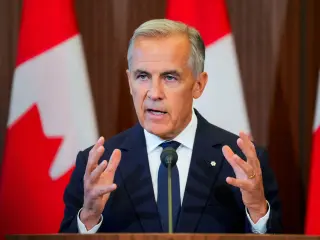
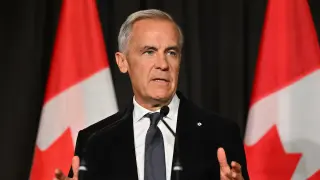
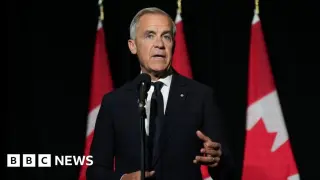
Canada will create a sovereign wealth fund open to citizens to invest in infrastructure and energy projects in an effort to reduce its reliance on the United States, a plan pushed by Prime Minister Mark Carney that he says will be a “people’s fund” modeled after Norway. The fund would back pipelines, nuclear generation, and a high‑speed rail network, signaling a more independent path amid tensions with Trump’s U.S. government.