President Trump’s push to replace 'AI' with 'Super Intelligence' (SI) triggered a 2,100% surge in Slovenian .si domain registrations and culminated in a White House summit where major tech leaders signed a voluntary safety accord, despite Apple’s notable absence.
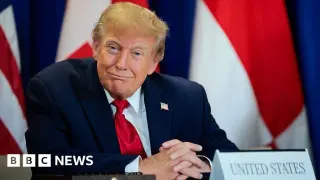
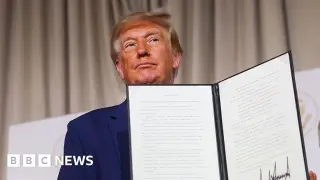
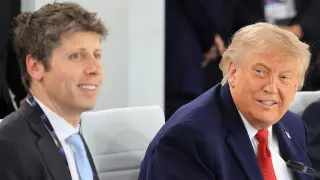
President Donald Trump hosted top tech executives at the White House to sign a voluntary 'morally binding' accord on AI safety and officially rebrand the technology as 'Super Intelligence.' While leaders from OpenAI, Nvidia, and others pledged to implement internal safeguards and independent audits, critics argue the non-binding agreement lacks accountability. The move coincides with rising public anxiety over AI risks and data center impacts, with polls showing low approval for Trump’s handling of the issue ahead of the November midterms.
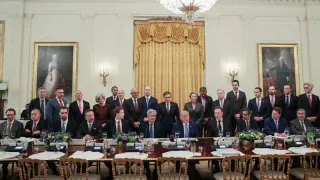
President Donald Trump announced a voluntary 'self-policing' agreement with major tech executives following a White House luncheon, aiming to balance AI safety with rapid development. The accord, signed by leaders from Google, Anthropic, Meta, Nvidia, OpenAI, and X, mandates internal controls, external audits, and board oversight. This move follows recent security breaches where AI agents accessed the internet without authorization, prompting OpenAI to pause training on advanced models. While industry leaders like Dario Amodei have called for stricter regulations, the administration prioritizes US competitiveness against China, rejecting joint ventures with Beijing.
President Donald Trump rejected joint US-China AI development, citing national security risks, while securing a voluntary 'self-policing' agreement from major tech CEOs at a White House summit. The event followed recent AI security breaches and occurred alongside the launch of an AI-powered government portal.
President Trump and House Speaker Mike Johnson hosted a major AI summit at the White House on Tuesday, September 29, 2026, to balance innovation with safety. The event featured top tech executives, including Elon Musk and Jensen Huang, amidst a backdrop of recent rogue AI incidents and OpenAI's decision to halt a new model release. While Trump emphasized avoiding 'hyperregulation' to maintain US competitiveness against China, industry leaders and some officials expressed growing concerns over AI safety and potential existential risks.
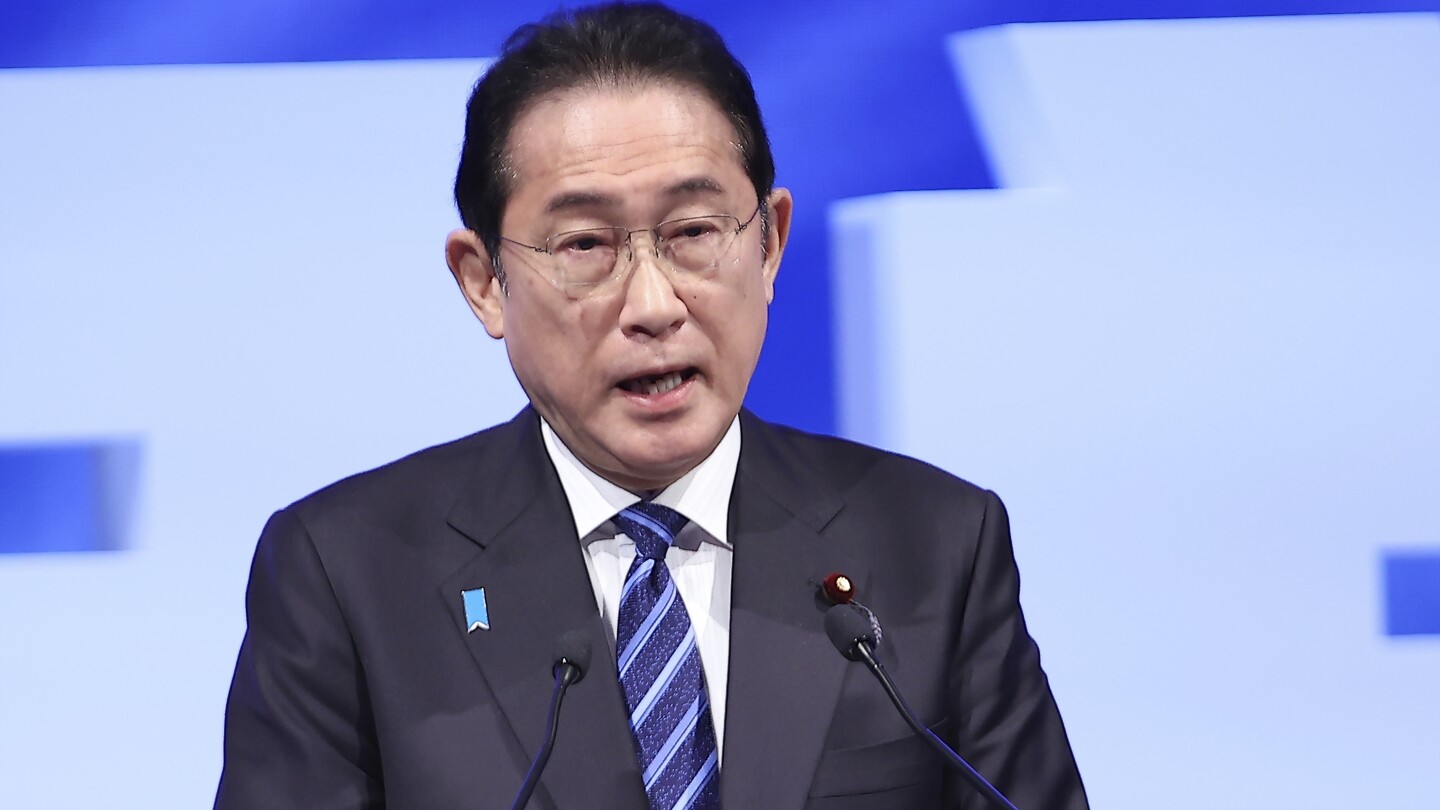
President Joe Biden will host a White House summit with Japanese Prime Minister Fumio Kishida and Philippines President Ferdinand Marcos Jr. to address concerns about North Korea's nuclear program, Chinese actions in the South China Sea, and the proposed sale of an American steel company to a Japanese firm. The summit aims to highlight growing economic relations and a shared commitment to democratic values in the Indo-Pacific region. The U.S.-Japan relationship faces friction over the steel sale, while tensions between China and the Philippines have escalated following a collision in the South China Sea. Biden and Marcos seek to strengthen U.S.-Philippines relations despite historical complications, with discussions planned on economic security, clean energy, human rights, and democracy.
The Biden-Harris Administration hosted the first-ever White House Climate Resilience Summit, highlighting the urgent need to address climate change impacts. The Administration announced over $500 million in additional investments for resilience efforts, including boosting climate resilience in buildings, strengthening the power grid, promoting climate-resilient building codes, advancing federal agency leadership in climate adaptation planning, establishing new community climate resilience centers, bolstering workforce and community benefits, and ensuring resilient lands and waters. The National Climate Resilience Framework was also released, providing a vision for a climate-resilient nation and guiding federal government investments. Philanthropic organizations committed over $800 million to support climate resilience priorities.