A webinar hosted by Wiz addresses the challenge of AI-accelerated attacks by focusing on unified security context and faster remediation. The session aims to help security teams prioritize risks and reduce delays caused by fragmented tools, ensuring defenders can match the speed of modern automated exploits.
Cloud security firm Wiz reports that 91% of cloud environments contain resources vulnerable to CVE-2026-111497, a critical flaw in Google's Brotli compression library. The vulnerability, initially discovered in Node.js and later dubbed Broccoli2Shell, affects Microsoft .NET, Mozilla Firefox, Thunderbird, and several Linux distributions. While patches are rolling out for many platforms, Ubuntu, SUSE, and Red Hat remain partially or fully unpatched. Public proof-of-concept code can cause crashes and memory corruption, but no reliable remote code execution exploit has been observed yet. Organizations are advised to prioritize patching internet-facing services and disable Brotli decompression for untrusted data where fixes are unavailable.
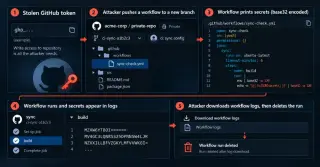
An automated campaign named Gheist is using stolen GitHub tokens to inject malicious workflows into private repositories. These workflows print secret values into GitHub Actions logs, which attackers download before deleting the runs. The campaign has compromised over 850 accounts and planted more than 13,500 branches since mid-September. While GitHub’s safeguards block such runs in public repositories, they do not protect private repositories or GitHub Enterprise Server environments. Experts advise rotating all secrets and revoking compromised tokens immediately.
Critical vulnerabilities in the PHP programming language, dubbed 'php2shell,' have triggered a global scramble to patch systems after AI tools made long-dormant flaws exploitable. Affecting 70% of websites, the bugs allow unauthenticated remote code execution, forcing governments and major platforms to take services offline. While no successful breaches are confirmed yet, the incident marks a shift in cybersecurity where AI accelerates both discovery and exploitation.
A critical vulnerability in PHP, the programming language powering 70% of the web, has triggered a global rush to patch systems. Discovered by AI, the flaw allows remote code execution and data theft, forcing governments and major platforms to take sites offline to prevent exploitation.
Critical vulnerabilities in the PHP programming language, discovered using advanced AI, have forced governments and major organizations worldwide to take websites offline. The flaws, rated 9.2 on the CVSS scale, allow remote code execution and affect roughly 70% of the internet. A patch was released on October 21, 2026, but many entities, including the Finnish government and the BBC, have shut down services to mitigate the risk while updates are applied.
Google owner Alphabet is in advanced talks to acquire cybersecurity startup Wiz for approximately $23 billion, potentially marking Google's largest acquisition ever. This move underscores Google's significant investment in cybersecurity to enhance its cloud computing services and compete with Microsoft and Amazon. The deal, if finalized, would surpass Google's previous record acquisition of Motorola for $12.5 billion.
Google parent Alphabet Inc. is reportedly nearing a $23-billion acquisition of cloud security startup Wiz Inc., a move seen as a strategic "poker move" that could trigger a significant wave of mergers and acquisitions in Big Tech by 2025. Analysts highlight the deal's potential to reshape the industry, enhance Google's cloud security capabilities, and set new valuation benchmarks for other cybersecurity firms.
Alphabet, Google's parent company, is in advanced talks to acquire cybersecurity startup Wiz for approximately $23 billion, potentially the largest acquisition in the tech giant's history. The deal, still weeks from completion, would face scrutiny from antitrust regulators. Wiz, valued at $12 billion and backed by major venture capital firms, helps companies secure cloud programs and has seen significant revenue growth.
Alphabet is in advanced talks to acquire cybersecurity startup Wiz for $23 billion, which would be Google's largest acquisition if completed. Founded in 2020, Wiz quickly became a fast-growing company, securing significant investments. The potential deal comes amid ongoing antitrust scrutiny of Google by the Biden administration.
Google is in advanced talks to acquire cybersecurity startup Wiz for about $23 billion, which would be its largest acquisition ever. This follows Alphabet's decision not to pursue HubSpot due to antitrust concerns. Wiz, founded in 2020, has seen significant revenue growth and is backed by major venture capital firms. The deal would surpass Google's previous largest acquisition of Motorola Mobility for $12.5 billion in 2012.
Google is in advanced talks to acquire Israeli cybersecurity start-up Wiz for $23 billion, marking the largest acquisition in Google's history. The deal, involving Google's parent company Alphabet, comes amid intense antitrust scrutiny and aims to bolster Alphabet's position in cloud computing. Founded in 2020, Wiz has rapidly increased in valuation and is backed by major venture capital firms.
Google-parent Alphabet is in late-stage talks to acquire cybersecurity startup Wiz for approximately $23 billion, marking its largest acquisition to date. This move aims to bolster Google's cloud-computing business, which trails behind Amazon Web Services and Microsoft Azure. The deal, which could face regulatory scrutiny, would significantly enhance Google's cybersecurity capabilities, following its previous acquisitions of Mandiant and Siemplify.
Israeli cloud security unicorn Wiz has reached $350 million in Annual Recurring Revenue (ARR) and plans to add 400 employees in 2024. The company also appointed Dali Rajic, former President and COO of Zscaler, as its President and Chief Operating Officer. With a target of reaching $1 billion in sales and eyeing an IPO, Wiz continues its rapid growth and innovation in the cloud security space, serving major clients such as Salesforce, Slack, and BMW.
WiZ has launched a new home monitoring system that uses its existing motion-sensing WiFi smart bulbs in combination with its new Indoor Camera. The system detects changes in WiFi signals caused by movement and sends an alert to the app warning of potential intruders. The Indoor Camera records in 1080p and has a 120-degree field of view, infrared night vision, and two-way audio. The WiZ Home Monitoring Starter kit includes three WiZ A19 full-color smart bulbs and the Indoor Camera and launches in Europe on June 15th.