physics-and-mathematics108.905 min read
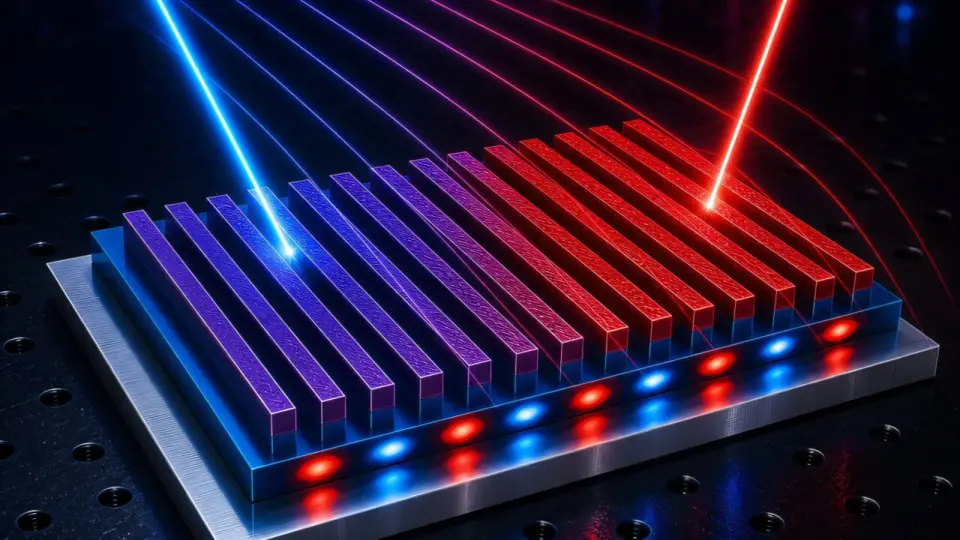
Programmable heat routing could steer infrared heat flow
2 months ago•Source: livescience.com

The latest physics and mathematics stories, each synthesized from multiple sources with added background and context.
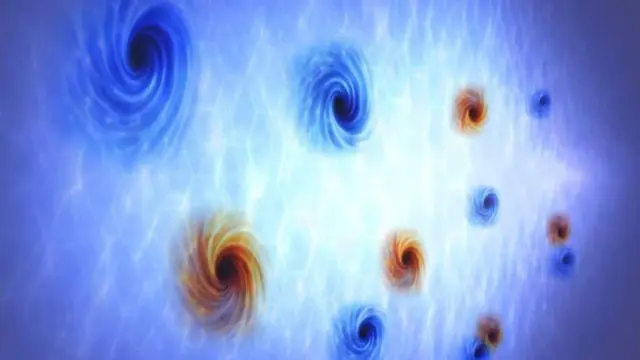
Physicists using ultrafast electron microscopy observed empty voids (singularities) in phonon-polariton waves inside a thin boron nitride sample that move faster than light. Because these voids contain no information, their superluminal motion does not violate special relativity, and the work reveals universal laws of wave dynamics with potential to advance ultrafast studies across physics and materials science.
Live Science•6 months ago
Live Science•7 months ago
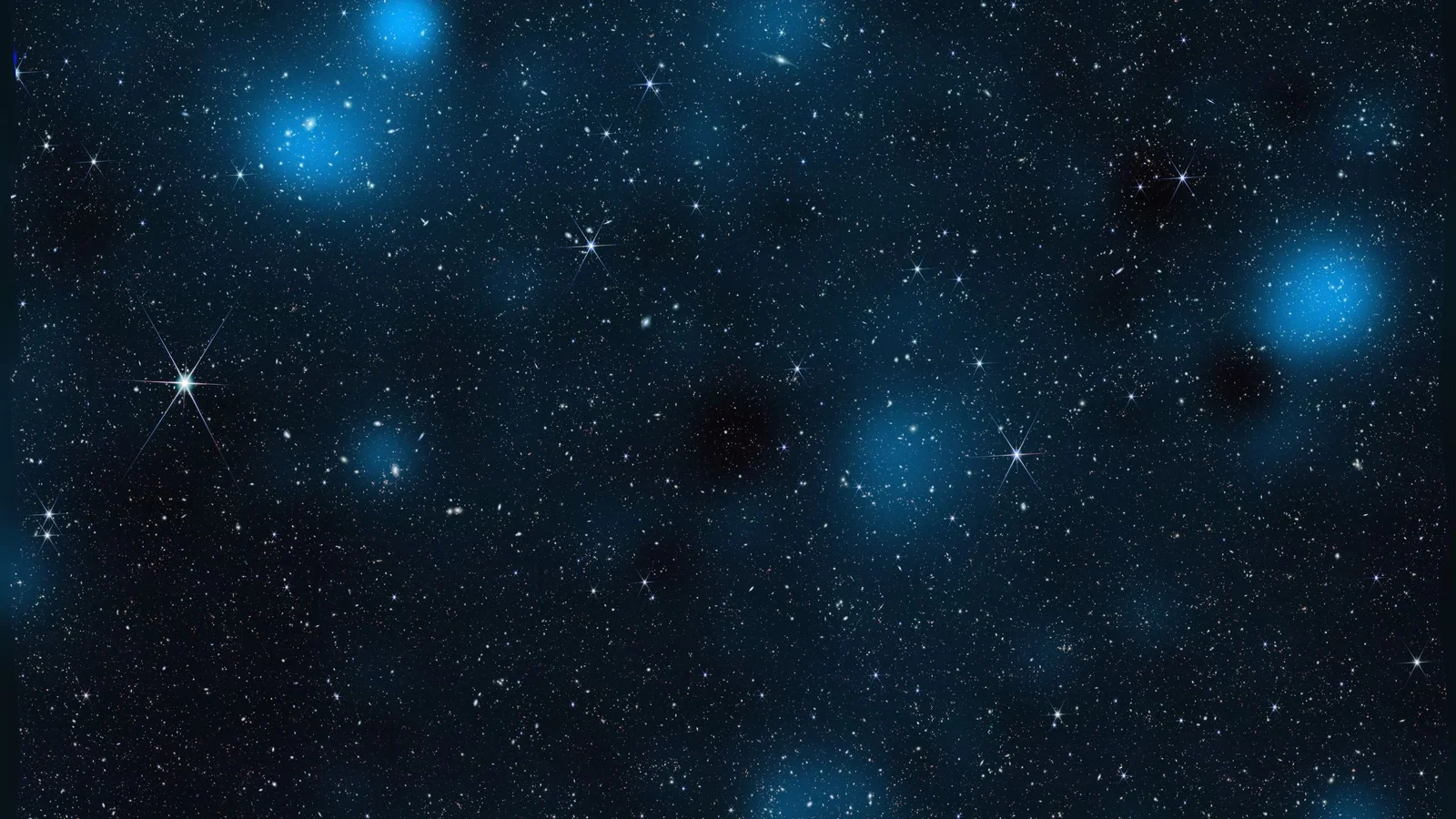
Astronomers using the James Webb Space Telescope produced the most detailed map of dark matter yet, revealing how its gravity shapes ordinary matter in a patch of the Sextans constellation and uncovering about 800,000 galaxies; the findings, published in Nature Astronomy from 255 hours of JWST observations, demonstrate dark matter as the universe's scaffolding and hint at how cosmic structure formed, with plans to expand mapping using NASA's Roman Space Telescope.
Physicists demonstrated a macroscopic quantum superposition by sending a beam of 7,000-atom sodium nanoparticles through a narrow slit, which produced an interference pattern and set a new record for the size of objects observed in quantum states; the result points toward future experiments with larger, even biological, molecules in quantum superpositions.
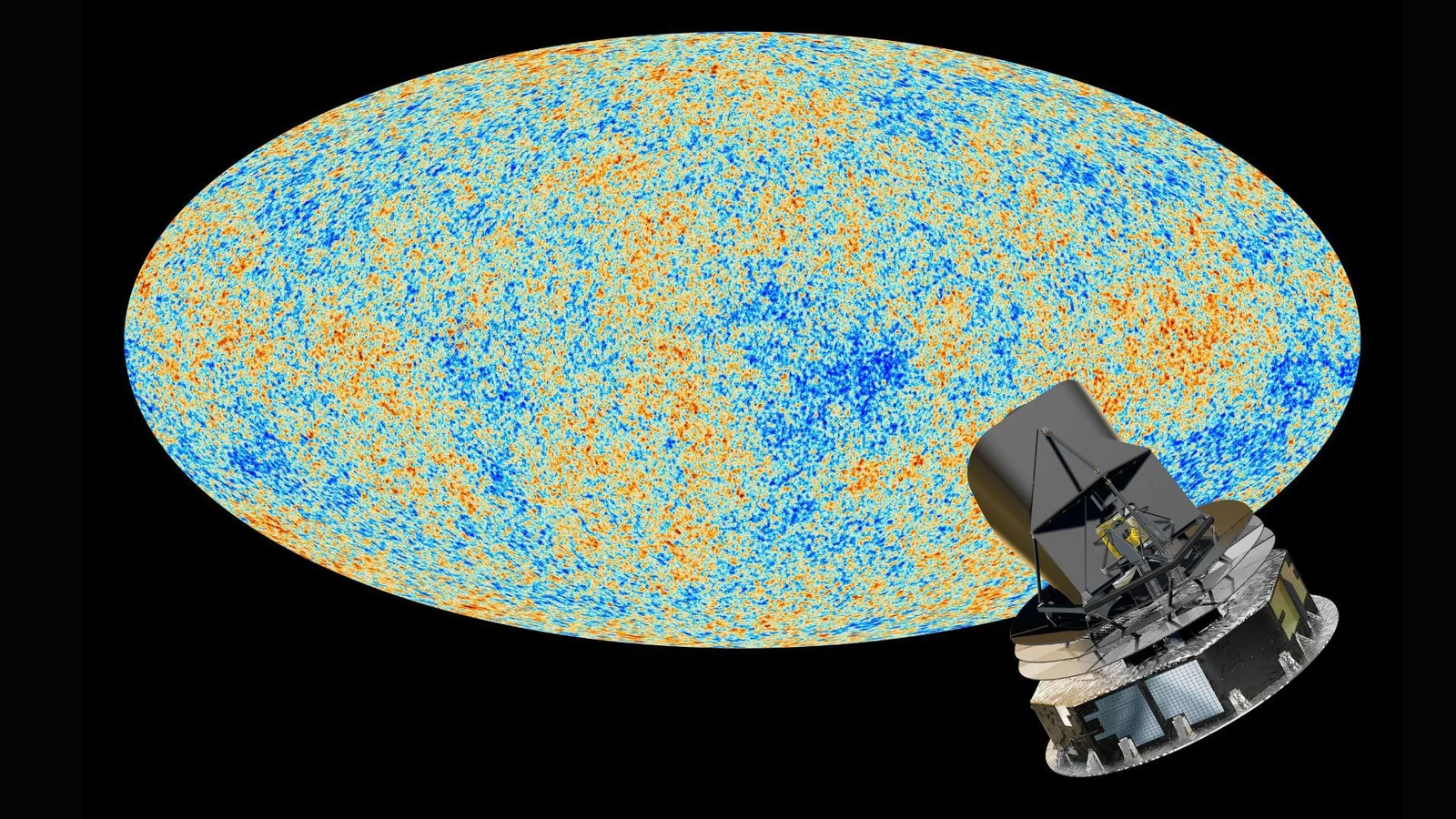
Researchers report a 3-sigma hint that dark matter and neutrinos may interact, transferring momentum and potentially reducing the universe’s observed clumpiness. If confirmed, this could require updates to the lambda-CDM model and help address the S8 tension between early- and late-universe measurements. The finding combines Planck/ACT early-universe data with BAO and cosmic-shear observations and simulations, but it remains unproven and will hinge on forthcoming data from surveys like the Vera Rubin Observatory for confirmation. A confirmed interaction would constitute a fundamental breakthrough in cosmology and particle physics.
A new arXiv preprint proposes space may have bulk viscosity, effectively making the vacuum a viscous medium with spatial phonons that could slow cosmic expansion and better align DESI observations with reality. If true, this viscous-space model would challenge the standard Lambda-CDM cosmology and the cosmological constant, potentially redefining our understanding of dark energy. However, the idea is unreviewed and data-driven, with questions about whether viscosity is fundamental or a measurement artifact; upcoming data from Euclid and further DESI analyses will be crucial to test this hypothesis.