Tag

Nanoparticles

All articles tagged with #nanoparticles

Adelaide Researchers Use Smart Nanoparticles to Reprogram Tumor Immune Cells
science2 months ago

Adelaide Researchers Use Smart Nanoparticles to Reprogram Tumor Immune Cells

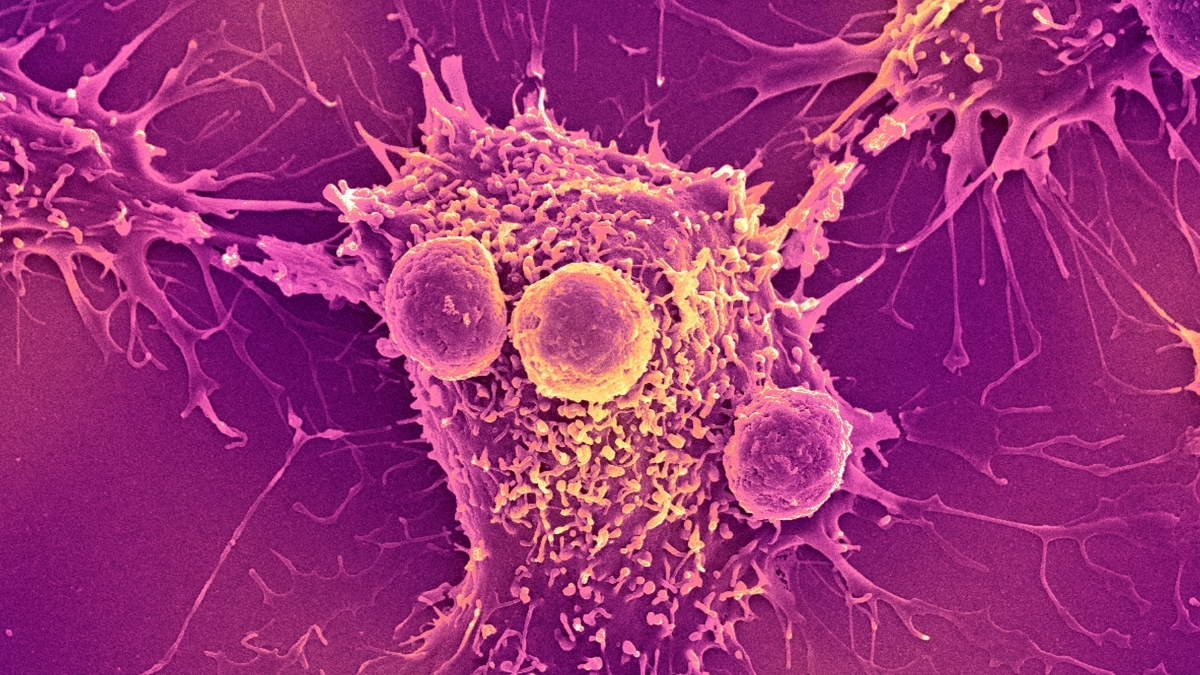
A team at the University of Adelaide has developed targeted lipid nanoparticles that deliver mRNA directly to tumor-associated macrophages, reprogramming them to recruit cancer-fighting T cells. Published in Science Advances, the approach uses antibodies to bind TREM2 proteins on macrophages, ensuring precise delivery. In mouse models with aggressive breast cancer, the treatment reduced immunosuppressive macrophages by 63% and increased CXCL9 signals fourfold. While combining the therapy with checkpoint inhibitors did not further shrink tumors, it enhanced T-cell diversity and memory, suggesting potential for durable immune responses. The researchers emphasize this is a proof-of-concept requiring further safety studies before human trials.


Purdue Study: Scented Cleaners Create Invisible Nanoparticle Pollution Rivaling Highway Smog
health-and-science2 months ago

Purdue Study: Scented Cleaners Create Invisible Nanoparticle Pollution Rivaling Highway Smog

Research from Purdue University indicates that using scented cleaning products indoors generates billions of ultrafine nanoparticles through reactions between terpenes and ozone. These particles, ranging from 1 to 30 nanometers, are small enough to bypass standard air monitors and penetrate deep into lung tissue, potentially exposing users to respiratory doses comparable to or exceeding those found on busy city streets.

Sugar-Coated Nanoparticles Deliver mRNA to Brain Tumors in Mice
science4 months ago

Sugar-Coated Nanoparticles Deliver mRNA to Brain Tumors in Mice

Researchers at Oregon State University used mannose-cholesterol coated lipid nanoparticles to cross the blood–brain barrier and deliver tumor-suppressing PTEN mRNA to glioblastoma in mice, greatly reducing tumor burden and extending survival without detectable organ toxicity. While promising, the results are preclinical and in animals, but the approach could become a general platform for brain-targeted mRNA therapies and other neurological applications.

Tiny silica nanoparticles spark tumor death and boost immunotherapy in mouse prostate cancer
health-and-medicine4 months ago

Tiny silica nanoparticles spark tumor death and boost immunotherapy in mouse prostate cancer

Researchers engineered ultrasmall silica nanoparticles (Cornell Prime dots) that target prostate tumors, trigger ferroptosis (iron-driven cell death), and remodel the tumor immune environment to a more active state. In mouse models of aggressive prostate cancer, these particles alone modestly improved survival, but when combined with immune checkpoint therapy they produced complete or near-complete remissions and indefinite survival in 4 of 10 mice, rising to 5 of 10 with an added CSF-1R blockade. The treatment localized to tumors with no observed toxicity in healthy tissues. If safety and efficacy translate to humans, this approach could move toward clinical trials as a multi-pronged cancer therapy that enhances immunotherapy effectiveness.

Ultrasmall silica nanoparticles kill prostate cancer cells and awaken antitumor immunity
science5 months ago

Ultrasmall silica nanoparticles kill prostate cancer cells and awaken antitumor immunity

A preclinical study shows PSMA-targeted ultrasmall silica nanoparticles (Cornell Prime dots) directly kill prostate tumor cells by ferroptosis and reprogram the tumor microenvironment to an active antitumor state, enhancing responses to immunotherapies. In mouse models, the particles achieved complete or near-complete remissions, especially when combined with immune checkpoint blockade and CSF-1R blockade, while sparing healthy tissues and showing potential for clinical trial exploration.

Nanoparticles Restore Brain Cleanup, Reversing Alzheimer’s Signs in Mice
science6 months ago

Nanoparticles Restore Brain Cleanup, Reversing Alzheimer’s Signs in Mice

Researchers used supramolecular nanoparticles that act as drugs to repair the brain's blood-brain barrier and restart its waste-clearance system. In mice with high amyloid-β, three injections reduced brain Aβ by 50–60% within an hour, with months-long vascular and cognitive improvements; the approach leverages the LRP1 transport system to reset clearance. While promising, the work is in animal studies and human trials remain years away.

Metal Nanoparticles Demonstrate Quantum Superposition at Near-Macroscopic Scale
science7 months ago

Metal Nanoparticles Demonstrate Quantum Superposition at Near-Macroscopic Scale

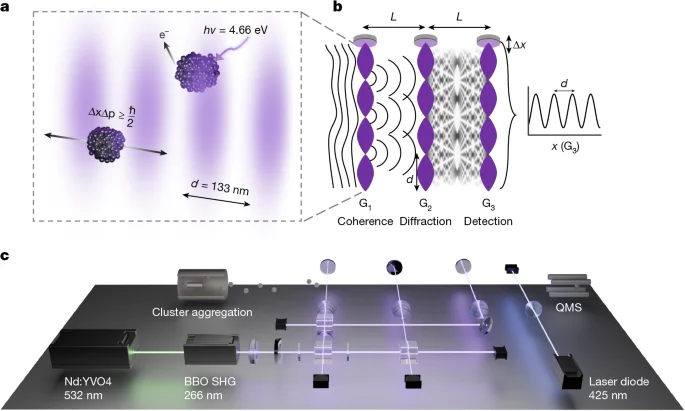
Vienna and Duisburg-Essen researchers show that sodium nanoparticle clusters (~8 nm, >170,000 amu) can exhibit quantum interference, existing in a superposition as they pass through three UV-laser diffraction gratings. Achieving a macroscopicity value of μ = 15.5, the experiment extends quantum behavior toward larger scales and opens the door to studying bigger particles and precision sensing.

Macroscopic quantum state realized with 7,000-atom sodium nanoparticles
physics-and-mathematics9 months ago

Macroscopic quantum state realized with 7,000-atom sodium nanoparticles

Physicists demonstrated a macroscopic quantum superposition by sending a beam of 7,000-atom sodium nanoparticles through a narrow slit, which produced an interference pattern and set a new record for the size of objects observed in quantum states; the result points toward future experiments with larger, even biological, molecules in quantum superpositions.

Quantum interference observed in sodium nanoclusters at 0.17 MDa
science10 months ago

Quantum interference observed in sodium nanoclusters at 0.17 MDa

Researchers demonstrate quantum interference of sodium clusters containing thousands of atoms (mass >170 kDa) in a near-field Talbot–Lau interferometer using three UV gratings, achieving fringe visibilities that align with quantum predictions and yielding a macroscopicity value of μ = 15.5—the highest reported to date. This shows the quantum superposition principle persists at this unprecedented mass/size and provides a platform to test macrorealist modifications of quantum mechanics, with future work aiming to reach even larger masses (MDa range) as experimental techniques improve.