
Law firm probes Tyson Foods for potential WARN Act violations after mass plant closures
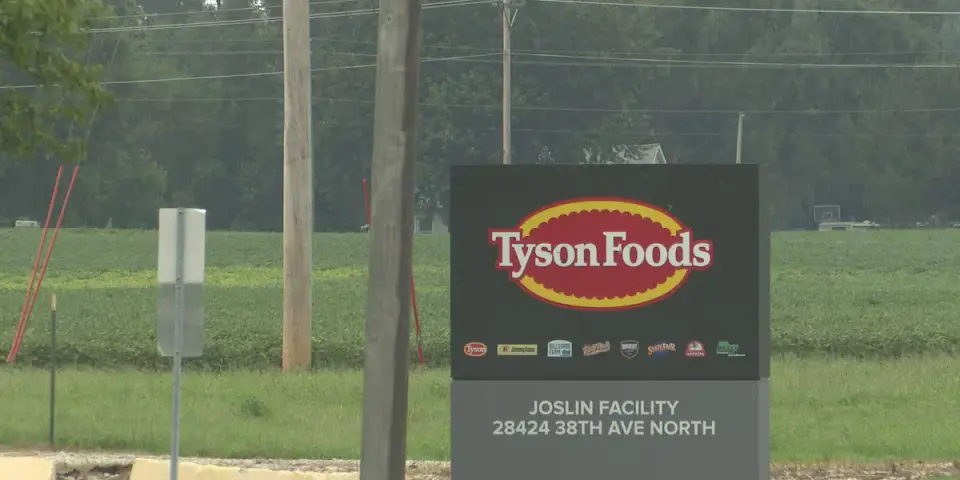
Chicago law firm Strauss Borrelli PLLC is investigating Tyson Foods for potential violations of the federal Worker Adjustment and Retraining Notification (WARN) Act following the sudden closure of its Joslin, Illinois, and Eagle Mountain, Utah, plants. The closures, announced on August 13, 2026, affect over 3,400 workers and are attributed by the company to a historic national cattle shortage. While Tyson claims it is optimizing its network, local farmers and officials report immediate economic shocks, including falling cattle prices and increased transport costs, as the company shifts capacity to facilities in Nebraska, Kansas, and Texas.
Key points
- Strauss Borrelli PLLC launched an investigation into Tyson Foods on August 17, 2026, to determine if the company violated the WARN Act, which mandates 60 days' notice for mass layoffs or plant closings.
- Tyson Foods announced the permanent closure of its Joslin, Illinois, facility (affecting over 2,500 workers) and its Eagle Mountain, Utah, plant (affecting 723 workers) on August 13, 2026.
- The company cited a historic national cattle shortage as the primary reason for the restructuring, stating it is consolidating beef processing into three facilities in Dakota City, Nebraska; Holcomb, Kansas; and Amarillo, Texas.
- Local cattle farmers in Iowa reported a 10-dollar-per-hundredweight drop in market prices within hours of the announcement, while others face increased transport costs of $50 to $60 per head to reach the nearest remaining facility.
- The Salt Lake Tribune reported that the Eagle Mountain plant, which opened in 2021, is closing just five years after its launch, highlighting the rapid shift in Tyson's operational strategy.
Background
This development follows earlier reports from August 14, 2026, detailing the immediate impact of the Joslin closure on 2,700 workers and the broader regional economy. Previous coverage noted that Tyson was also considering the sale of its Pasco, Washington, facility and ramping up a second shift in Amarillo, Texas, to maintain processing capacity despite the anticipated decline in beef production.
How outlets are covering it
KWQC and KCRG emphasize the legal and economic fallout, focusing on the potential WARN Act violation and the negative ripple effects on local cattle markets and family farms. The Salt Lake Tribune highlights the abruptness of the closure in Utah, noting the plant was only five years old. KUTV focuses on the human impact, with families in Eagle Mountain weighing relocation due to the loss of employment. While Tyson frames the move as a necessary efficiency measure amid a cattle shortage, local stakeholders describe the transition as chaotic and financially damaging.
Why it matters
The investigation by Strauss Borrelli PLLC could set a precedent for how large corporations handle mass layoffs during supply chain disruptions. If found in violation of the WARN Act, Tyson Foods could face significant legal penalties and compensation claims from thousands of displaced workers. Additionally, the closures signal a major shift in the U.S. beef processing landscape, potentially altering market dynamics and increasing costs for small-scale cattle producers who rely on nearby processing facilities.
What to watch
The outcome of the Strauss Borrelli PLLC investigation will determine whether Tyson Foods faces legal action for failing to provide the required 60-day notice. Workers in Joslin and Eagle Mountain will continue to seek resources and support from local officials and unions. Cattle farmers will monitor market prices and transport costs as they adapt to the new processing network, while Tyson Foods will focus on stabilizing its operations in the three remaining beef facilities.
- Chicago law firm launches WARN Act investigation into Tyson Foods Joslin KWQC
- Too Many Plants, Not Enough Cattle: Inside the Beef Packing Capacity Squeeze drovers.com
- A U.S. food giant that expanded to Utah just 5 years ago is now laying off more than 700 workers The Salt Lake Tribune
- Eagle Mountain families weigh relocation after Tyson plant closure KUTV
- Local cattle farmers brace for Tyson closures’ ripple effect KCRG
Want the full story? Read the original reporting
Read on KWQC