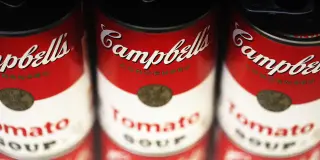
Campbell Soup cuts its quarterly dividend to 25 cents a share and sees a 2%–4% year-over-year net sales decline, while Tyson Foods lowers its fiscal 2026 revenue-growth forecast, underscoring ongoing weakness in food stocks as inflation weighs on consumer spending.
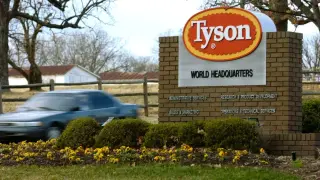
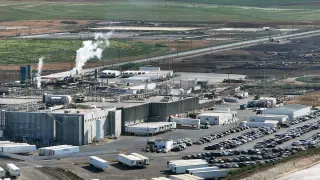
Tyson Foods announced it is pursuing a sale of its Pasco-area beef plant—the Pacific Northwest's largest—while pivoting its beef operations toward plants in Nebraska, Kansas and Texas; Washington farmers say state costs, taxes and regulation helped push the facility toward sale and warn that losing it would halve regional slaughter capacity and hurt ranchers and local consumers.
Tyson Foods is closing two facilities (Illinois and Utah) and selling a Washington plant, with hundreds of layoffs, amid a 75-year low in cattle supplies. Economists say these closures won’t meaningfully lower beef prices soon because the U.S. has excess processing capacity and beef demand remains strong; the broader price trend is driven more by demand and inventory levels than Tyson’s actions. In the longer run, closures could influence producer decisions and industry capacity, but immediate meat prices are unlikely to be affected.
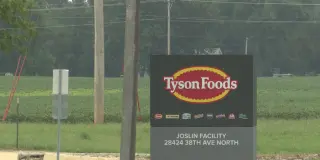
A Chicago law firm has launched a WARN Act investigation into Tyson Foods after the Joslin, Illinois plant announced a permanent closure, affecting more than 2,500 workers, to determine whether the company provided the required 60 days’ notice to employees, their representatives, and government authorities.
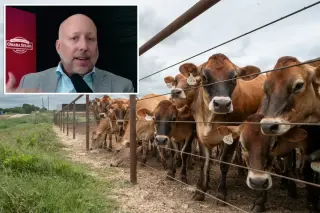
America faces one of its most historic cattle shortages, with the U.S. cattle herd at about 86.2 million in 2026—the smallest since the early 1950s—driven by prolonged drought that has depleted pastures and forced ranchers to shrink herds. Tyson Foods is closing beef facilities in Illinois and Utah and exploring the sale of another in Washington as it reshapes its beef business amid ongoing supply constraints. The reduced herd has helped push beef prices higher, with retail Choice beef up roughly 23% from August 2024 to July 2026, and relief is unlikely soon since rebuilding the cattle herd could take years.
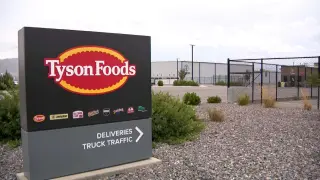
Tyson Foods is closing its Eagle Mountain beef and pork facility in Utah, affecting 723 workers, as part of a broader restructuring to consolidate beef operations amid a historic cattle shortage. The plant opened in 2021 with a $300 million investment and was expected to contribute about $44 million annually in local payroll. Tyson will shift capacity to other facilities in Dakota City (NE), Holcomb (KS) and Amarillo (TX), with plans to ramp up a second shift at Amarillo as cattle supplies improve, and will assist affected employees in transitioning to open roles at other Tyson plants.
Tyson Foods will close its Eagle Mountain, Utah case-ready meat facility by Oct. 12, eliminating 723 jobs as the company restructures in response to a historic cattle shortage; officials say they will support affected workers and help them transition to open roles at other plants, with Tyson also closing a plant in Illinois and exploring the sale of a Washington state facility.
Tyson Foods announced a company-wide restructuring that closes its Joslin, Illinois and Eagle Mountain, Utah beef facilities and puts the Pasco, Washington plant up for sale, directing beef production to Dakota City, Nebraska; Holcomb, Kansas; and Amarillo, Texas, a move tied to a cattle shortage and market pressures, with the Tri-Cities Wallula plant remaining a major local employer.
Tyson Foods is permanently closing its Joslin, Illinois beef processing plant, affecting about 2,700 workers who’ll be paid through October but will lose health insurance and steady employment as the facility shutters, with management citing market-driven losses and high livestock costs; state and local officials are offering support and resources to displaced workers.
Tyson Foods announced the closure of its Joslin, Illinois beef facility, informing employees their duties end around Aug. 14–15, 2026, with some workers able to stay through Oct. 12 and be paid. About 2,500 union workers will lose their jobs. The company also plans to close its Eagle Mountain, Utah facility and consider selling its Pasco, Washington facility, shifting capacity to other locations and ramping a second shift at Amarillo, Texas as cattle become available. Local officials and business groups expressed concern but urged resilience while Tyson cites a need to optimize a more efficient network amid an expected beef-production decline and an anticipated operating loss.
Beef prices are rising due to a persistent cattle shortage, even as demand remains mixed, squeezing Tyson Foods’ profits. Tyson cut its profit outlook after reporting a $707 million beef-division loss over the last nine months, with beef volumes down 15.9% and prices charged up 12.1% in the latest quarter. The U.S. cattle herd remains near all-time lows, though it’s starting to edge higher, and a potential reopening of Mexican cattle imports could help later, but won’t immediately close the gap in beef losses.
Tyson Foods expands its partnership with the University of Arkansas by adding jersey patches on all 19 Razorback varsity teams and serving as the Official Protein under a multi-year deal starting with the 2026-2027 season.
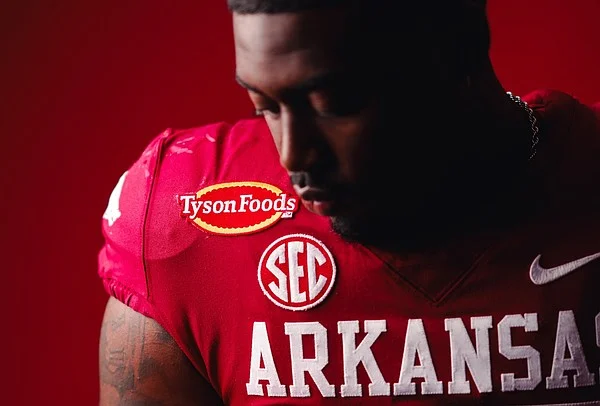
Arkansas announced a five-year, all-sport jersey-patch sponsorship with Tyson Foods, placing the company's logo on the Razorbacks' uniforms starting in 2026 and across other branding; roughly 90% of the deal's revenue is expected to flow to student-athletes via NIL opportunities, with Tyson becoming the exclusive jersey partner for all 19 Razorbacks sports and gaining branding across courts and fields.
Arkansas announced a five-year sponsorship with Tyson Foods, placing Tyson logos on jersey patches for all 19 Razorbacks sports beginning in 2026-27 and on campus playing surfaces, with terms undisclosed and the athletics director calling it the most lucrative corporate sponsorship in college athletics.
Arkansas announced an exclusive, multi-faceted sponsorship with Tyson Foods that will place Tyson’s logo on all 19 Razorbacks varsity teams’ uniforms starting in the 2026-27 season, with logos on fields and broadcast backdrops and brand-ambassador programs. Terms haven’t been disclosed, but the deal is billed as the most comprehensive sponsorship in college sports history and involves Razorbacks donor John Tyson, signaling a major shift toward outside investment in college athletics.