
Bank of England Hikes Rates to 4% Amid Iran War Inflation
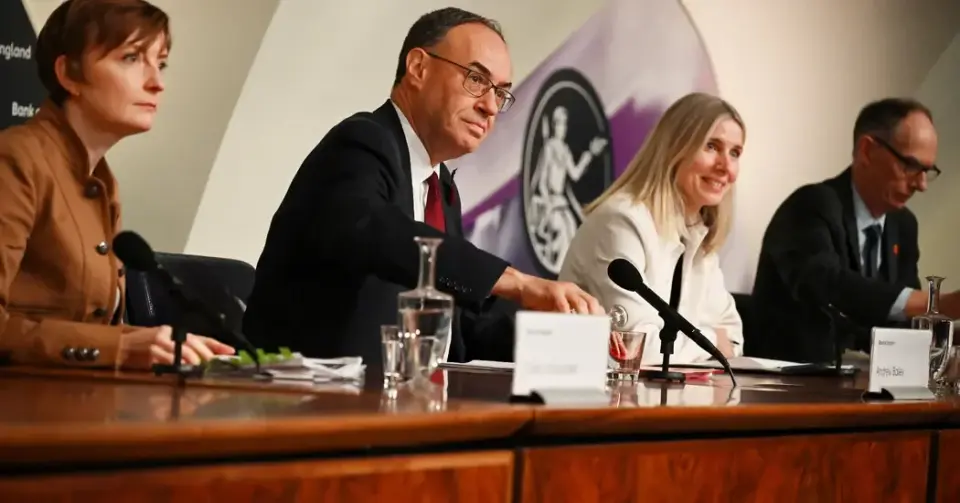
The Bank of England raised its base rate by 25 basis points to 4% on Thursday, marking the first increase in over three years. Policymakers cited the ongoing conflict in the Middle East as the primary driver for resurgent inflation, which is forecast to reach approximately 5% by mid-2027. The decision was widely anticipated, with markets pricing in a near-certain hike. While the move aims to curb rising energy costs, it introduces uncertainty for borrowers and savers, with mortgage rates already at three-year highs.
Key points
- The Monetary Policy Committee voted 8-1 to raise the base rate from 3.75% to 4%, with one member advocating for a 50 basis point increase.
- Inflation is projected to peak near 5% in mid-2027 before declining as energy price impacts fade, according to the central bank.
- The U.K. is particularly vulnerable to energy shocks as a net importer, with September inflation already jumping to 3.5% due to fuel costs.
- Governor Andrew Bailey indicated potential for further rate increases if the conflict continues, though he suggested a conditional approach dependent on energy data.
- The British pound reached a post-Brexit high against a basket of currencies, while government bond yields edged higher following the announcement.
Background
This decision follows a period of six consecutive rate holds and comes after U.K. inflation reached 3.5% in September 2026. Earlier this month, average five-year fixed mortgage rates had already spiked to 6% due to bond market turmoil, even before the base rate change. The current economic environment contrasts with early 2026 expectations of rate cuts, as the Iran war has driven oil prices to average $108 a barrel in recent forecasts.
How outlets are covering it
The New York Times and CNBC both highlight the direct link between the Middle East conflict and the rate hike, noting the Bank of England is the last major central bank to begin tightening this year. The Guardian focuses on the immediate impact on households, detailing how tracker mortgage holders will see immediate payment increases, while fixed-rate borrowers remain shielded for now. BBC analysis suggests the hike may be a one-off precaution, with the committee split on whether further increases are necessary, noting that oil prices have actually fallen recently due to diplomatic expectations. JPMorgan strategist Scott Gardner described the move as a '180-degree turn' from earlier expectations of rate cuts, warning of potential second-round inflation effects.
Why it matters
The rate hike signals a shift in monetary policy as central banks prioritize fighting inflation driven by geopolitical conflict over supporting economic growth. For households, it means higher borrowing costs for variable-rate products and potential future increases for those renewing fixed deals. For savers, it may lead to higher returns on easy-access accounts, though banks may delay passing on the full increase. The decision also reflects the U.K.'s vulnerability to external energy shocks, with the pound's strength potentially helping to offset import costs.
What to watch
Markets are pricing in a one-in-four chance of a further rate hike in December, with some analysts expecting a potential increase in February 2027. The Bank of England will monitor energy prices and inflation dynamics, with Governor Bailey indicating he could support further hikes if the conflict continues. The outcome will depend on whether the Iran war escalates or de-escalates, as well as the impact of U.S. midterm election results on global energy markets.
- Bank of England Raises Rates as Iran War Pushes Up Prices The New York Times
- Bank of England hikes interest rate for the first time since Iran war, warns inflation will near 5% CNBC
- What does interest rate rise mean for homeowners and savers? The Guardian
- Faisal Islam: How high will interest rates go? BBC
- Bank of England Sees 5% Inflation Next Year WSJ
Want the full story? Read the original reporting
Read on The New York Times