
Canada’s Ambassador Warns Tariff Uncertainty Is Raising U.S. Investment Costs
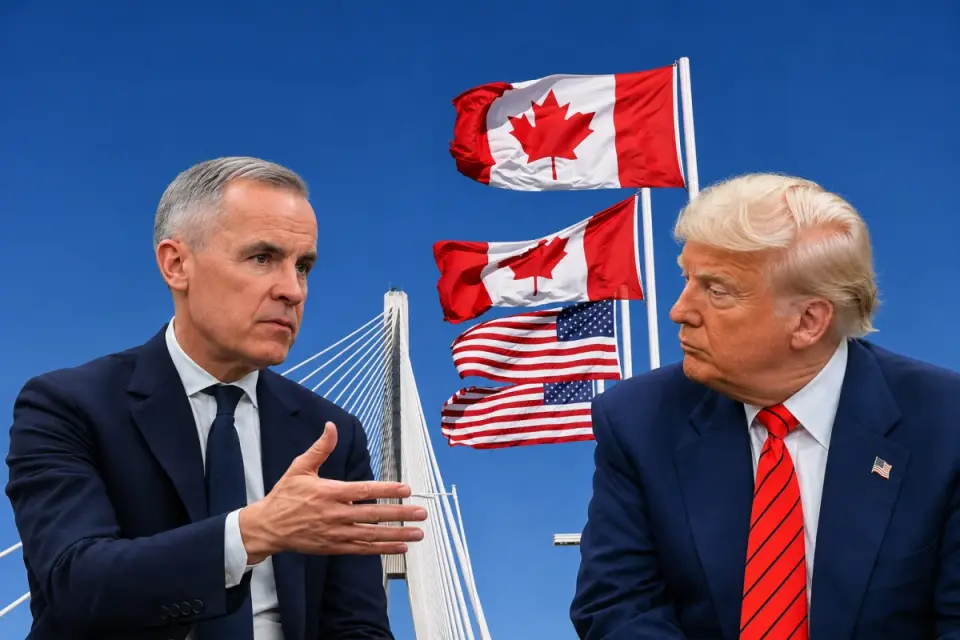
Canada’s ambassador to the U.S. warned that tariff uncertainty is raising capital costs and discouraging long-term investment. He urged a return to free trade, noting that businesses need predictability to commit to factories and research. While U.S. officials vowed to maintain current policies, new data shows significant cost increases for American importers and shifting trade volumes.
Key points
- Mark Wiseman, Canada’s ambassador to the U.S., stated at the B20 summit that uncertainty surrounding trade policies increases the cost of capital, making it harder for companies to commit to new plants, equipment, or R&D.
- U.S. customs duties on Canadian imports rose to approximately $10 billion in 2025, a 25-fold increase from $400 million in 2024, according to the Congressional Research Service.
- New York Fed research indicates that roughly 90% of tariff costs have been passed to U.S. importers, with further consumer price pressures expected in 2027.
- The U.S. and Canada exchanged roughly $570 billion in goods during the first nine months of 2026, a figure lower than comparable periods under the previous administration, despite an increase from the same period in 2025.
- U.S. Trade Representative Jamieson Greer confirmed ongoing negotiations with Canada, while White House official Jim Goyer stated the administration intends to maintain its tariff approach for the remainder of the presidency.
- A Leger survey found that 48% of Canadians expect U.S. midterm election results to make trade negotiations easier, though 38% still view the U.S. as an enemy.
Background
This dispute follows a series of escalating measures, including 50% tariffs on selected Canadian products imposed in August 2026 and retaliatory duties on $20 billion in U.S. goods in September. Recent exemptions for specific Canadian agricultural and forestry products, timed ahead of the midterms, were viewed by critics as political concessions to mitigate voter anger over high prices. The USMCA remains in force but faces expiration in 2036 unless renewed.
How outlets are covering it
Newsweek and CNBC emphasize the immediate economic impact, citing rising capital costs and consumer price pressures. Wiseman’s comments highlight the need for stability to secure long-term investment, a view echoed by European ambassadors at the B20 summit who cited an 'ever-changing regulatory environment.' In contrast, AgUpdate offers a broader geopolitical perspective, arguing that trading partners like Canada are actively diversifying relationships and improving production capacity rather than waiting for Washington. While U.S. officials like Jim Goyer defend the tariffs as necessary for protecting manufacturers, former adviser Gary Cohn characterized them as a 'consumption tax' on American households. The sources differ in tone: official channels focus on negotiation and protection, while business leaders and analysts focus on the tangible costs of uncertainty and the risk of losing market share to other nations.
Why it matters
The ongoing trade dispute threatens to disrupt supply chains for critical goods, including crude oil, steel, and lumber, which are deeply integrated into the U.S. economy. As Democrats prepare to challenge tariff policies in the new Congress, the stability of the U.S.-Canada relationship will influence inflation rates, investment decisions, and the future of the USMCA. The shift in Canadian public opinion, with a majority viewing the U.S. as an enemy, signals a potential long-term erosion of the bilateral relationship that has underpinned North American trade since 1988.
What to watch
U.S. and Canadian officials are currently engaged in negotiations focused on reducing tariffs on steel and automobiles. Democrats are expected to introduce legislation to challenge Trump’s trade policies when Congress convenes in January, though the president retains veto power. Further consumer price increases are anticipated in 2027 as tariff costs continue to be passed to importers. The outcome of these negotiations will determine whether the U.S. and Canada can restore the stability needed for long-term investment or if the trade relationship will continue to fragment.
- Trump Tariffs Backfire as Canada Warns of Damage to US Economy Newsweek
- Canada’s ambassador warns Trump tariffs are driving up costs, threatening U.S. investment CNBC
- Canada's ambassador warned Trump's tariffs are raising the cost of investment Quartz
- What we lose in a trade war: Partners moving on as we argue AgUpdate
- News | Tariff concerns help push Canadian industrial developer into US CoStar
Want the full story? Read the original reporting
Read on Newsweek