
China’s Q3 Growth Hits 4.5% Amid Export Boom and Domestic Weakness
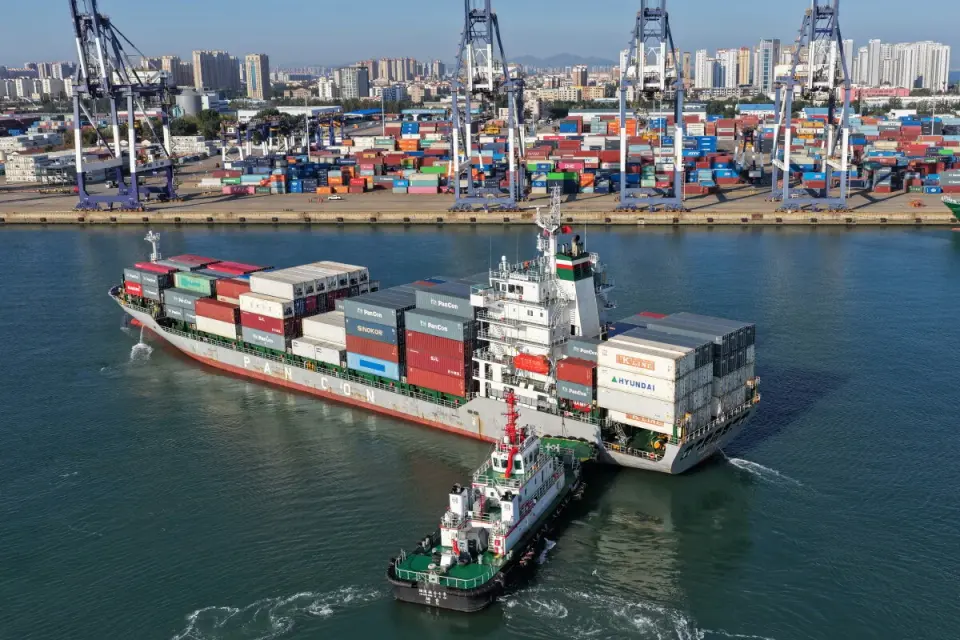
China’s economy expanded by 4.5% in the third quarter, driven by a surge in AI-related exports and a trade surplus that reached a record $133.5 billion in September. While external demand remains strong, domestic consumption is weak, leading to rising protectionism from the EU and other partners. Beijing insists it is not seeking a large surplus and is committed to boosting internal demand, though analysts warn that trade imbalances will persist.
Key points
- China’s GDP grew 4.5% in the July-September quarter, according to AP News.
- September exports surged 36.3% to $447.18 billion, driven by AI technology and a weak yuan.
- The trade surplus hit a record $133.5 billion in September, with Chinese exports to the EU up 16% for the first nine months of the year.
- The EU reached an agreement with China to roughly halve hybrid vehicle imports, but the bloc runs a daily trade deficit with China exceeding $1.1 billion.
- China’s central bank governor Pan Gongsheng stated that China is committed to expanding domestic demand and does not seek a large trade surplus.
Background
Recent archive data shows China’s September producer price index jumped 5% year-on-year, while consumer prices rose only 0.9%, indicating persistent weakness in domestic demand. This contrasts with the external strength seen in the latest trade figures, where exports of cars, solar panels, and AI components have outpaced imports. The current quarter’s growth follows a period of slow domestic consumption and rising global concerns over AI valuations and chip competition.
How outlets are covering it
AP News emphasizes the structural tension between China’s export-driven growth and its domestic consumption slump, highlighting the EU’s impatience with the trade imbalance. CNN frames the 4.5% growth as a result of an AI export boom, noting that the domestic slump remains a significant drag on the overall economy. Both outlets agree that while China is negotiating deals to avoid broad tariffs, such as the hybrid vehicle agreement with the EU, the fundamental trade imbalance is difficult to resolve quickly. AP cites Natixis and ING economists who argue that China can maintain market access through targeted deals, while CNN focuses on the divergence between external strength and internal stagnation.
Why it matters
The divergence between robust exports and weak domestic consumption highlights the fragility of China’s economic model. As trade surpluses grow, global partners like the EU are likely to increase protectionist measures, potentially disrupting supply chains and market access for Chinese firms. Beijing’s commitment to boosting domestic demand is critical to balancing this growth, but the pace of internal consumption recovery remains a key risk for global markets.
What to watch
Watch for further EU and US policy responses to China’s trade surplus, including potential tariffs on high-value sectors. Monitor China’s domestic consumption data and central bank actions to see if Beijing implements new counter-cyclical measures to stimulate internal demand. The outcome of ongoing trade negotiations, particularly regarding hybrid vehicles and AI components, will determine whether trade tensions escalate or are managed through bilateral agreements.
- China’s economy accelerated in the July-September quarter on robust exports AP News
- China’s Export Boom Masks Deep Economic Problems at Home WSJ
- China's economy grew 4.5% in the third quarter, beating forecasts on export surge Quartz
- China economy grows thanks to AI export boom but domestic slump remains a drag CNN
- Strong Exports Stabilize China’s Economic Growth in Official Statistics The New York Times
Want the full story? Read the original reporting
Read on AP News