
Fed Officials Signal Likely Rate Hike by Year-End as Inflation Sticks
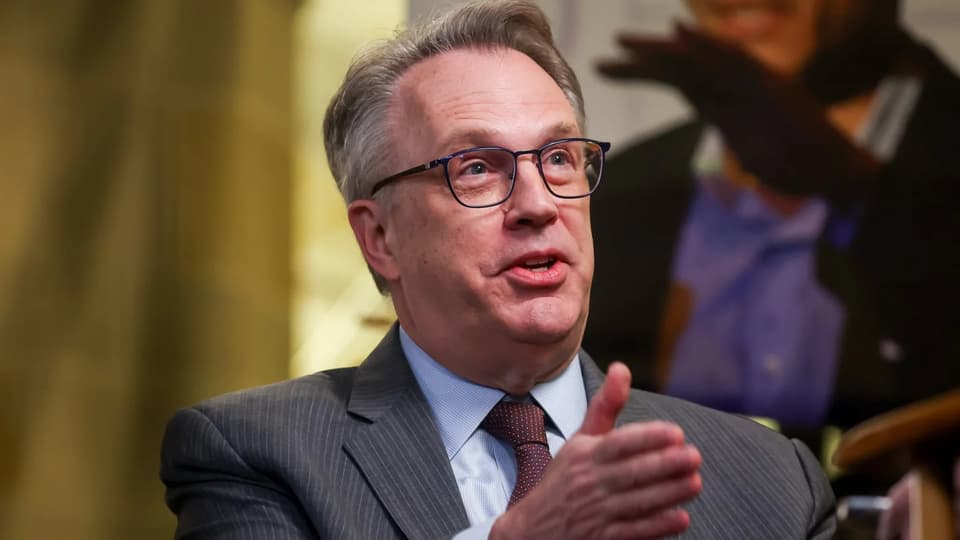
New York Fed President John Williams stated it is reasonable to expect another interest rate hike before the end of 2026. He emphasized that the Federal Reserve has abandoned explicit forward guidance, opting instead to assess incoming data before making decisions. Market expectations have shifted sharply, with the probability of an October rate increase rising to 77.5%. This stance follows a recent 25-basis-point hike that placed the benchmark rate at 3.75%-4.00%, driven by persistent inflation above the 2% target and a strong economy.
Key points
- John Williams, President of the Federal Reserve Bank of New York, called another rate hike by year-end a 'reasonable' expectation based on current investor sentiment.
- Williams confirmed that the Federal Reserve has ended its practice of explicit forward guidance, aligning with Chair Kevin Warsh's approach of reacting to data rather than signaling future moves.
- CME Group’s FedWatch tool showed the probability of an October rate hike jumping to 77.5% on Thursday, up from approximately 53% the previous day.
- The Federal Reserve recently raised its benchmark interest rate by 25 basis points, setting the target range for the overnight funds rate at 3.75%-4.00%.
- Boston Fed President Susan Collins warned of an increased likelihood that inflation will remain notably above the 2% target, while Fed Governor Michael Barr indicated further policy adjustments are likely needed to bring inflation down in a timely fashion.
Background
Recent archive coverage highlights the broader financial environment driving these policy shifts. In mid-September 2026, the 10-year US Treasury yield reached a 19-year high of 5.02% as oil prices surged past $100 per barrel due to Middle East tensions, intensifying inflation concerns. Concurrently, mortgage rates hovered near 7%, with the 30-year fixed rate at 7.02%, reflecting the impact of higher yields on borrowing costs. Earlier forecasts suggested mortgage rates would remain elevated through 2027, with the 10-year yield projected to ease slowly to around 3.9% by 2027, but current market volatility has accelerated expectations of tighter monetary policy.
How outlets are covering it
CNBC focuses on the shift in Federal Reserve communication strategy, highlighting Williams' statement that explicit forward guidance is 'over' and that policymakers will now rely on data collection, similar to the approach between July and September. This contrasts with the market's rapid repricing, where the probability of an October hike surged from 53% to 77.5% in a single day. The secondary source from Yahoo Finance, though largely obscured by technical errors, references Paulson as the latest Fed official to suggest more rate hikes may be needed, reinforcing the consensus among central bank officials that inflation remains a persistent challenge. While CNBC emphasizes the procedural change in Fed communication, the broader narrative across outlets points to a unified stance on the need for further tightening to address inflation that remains above 3%.
Why it matters
The Federal Reserve's pivot away from forward guidance and its open-ended stance on future rate hikes introduce significant uncertainty for financial markets and consumers. With inflation persisting above the 2% target and the economy remaining strong, the likelihood of further rate increases could lead to higher borrowing costs across mortgages, loans, and credit cards. The sharp rise in market expectations for an October hike, coupled with warnings from multiple Fed officials, suggests that the central bank is prepared to prioritize price stability over economic growth, potentially impacting consumer spending and investment decisions in the coming months.
What to watch
The Federal Reserve will continue to collect and assess incoming economic data before deciding on future rate moves, as stated by John Williams. The next key decision point is the October meeting, where markets currently price a 77.5% chance of a rate hike. Investors and consumers should monitor upcoming inflation and employment data, as these will likely determine whether the Fed follows through on its hawkish stance. The absence of forward guidance means that market expectations could shift rapidly in response to new data, leading to potential volatility in bond and equity markets.
- New York Fed’s Williams says it's 'reasonable' to expect another rate hike by year-end cnbc.com
- Fed’s Paulson Says Modest Further Tightening May Be Needed Bloomberg.com
- Fed’s Barr Says More Rate Hikes Likely Needed to Return Inflation to Target WSJ
- Paulson is latest Fed official to say more rate hikes may be needed finance.yahoo.com
- Fed again hoping for a pain-free landing from current inflation spike Reuters
Want the full story? Read the original reporting
Read on cnbc.com