
Fed Pauses Rate Hikes Before Midterms, Betting on Data Over Political Pressure
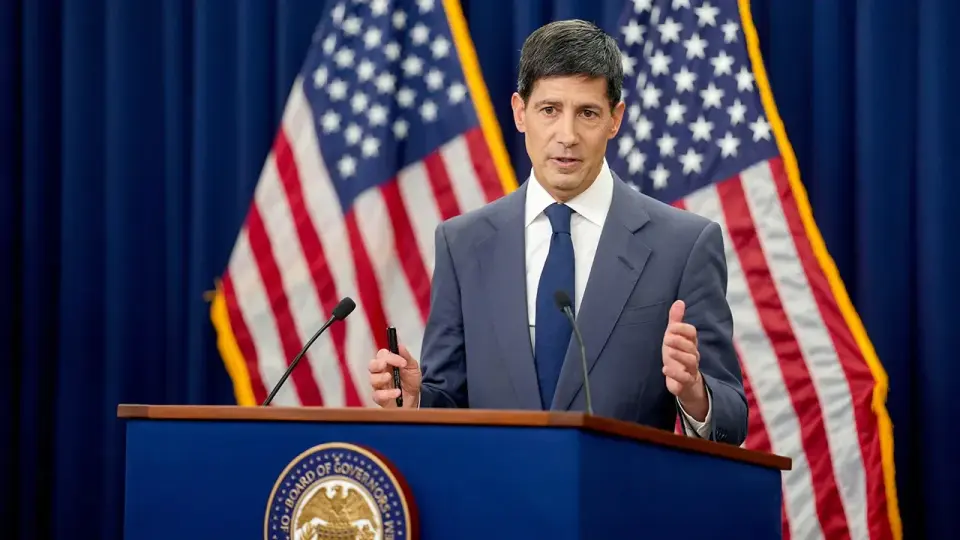
The Federal Reserve held its benchmark interest rate steady at 3.75% to 4.0% on Wednesday, voting 10-2 to pause after a September hike. Chair Kevin Warsh stated that political considerations played no role in the decision, emphasizing the need for more data before acting. Two officials dissented, favoring a 25-basis-point increase. Markets now price an 82.6% chance of a hike in December, while Warsh announced changes to the FOMC meeting schedule for 2027 and 2028 to focus on strategic deliberations.
Key points
- The FOMC voted 10-2 to keep rates at 3.75%-4.0%, with Cleveland Fed President Beth Hammack and Governor Lisa Cook dissenting in favor of a hike.
- Chair Kevin Warsh stated that politics played no role in the decision, noting that the labor market is positive but inflation remains above the 2% target for nearly six years.
- The Fed noted that economic activity is expanding at a strong pace, but inflation remains elevated, requiring more information to determine the appropriate policy stance.
- Warsh announced that one 2027 meeting and two 2028 meetings will focus exclusively on monetary policy strategy, without rate votes or policy statements.
- The CME FedWatch tool indicates an 82.6% probability of a 25-basis-point rate hike at the December 8-9 meeting, up from 78.3% prior to the decision.
Background
This pause follows a 25-basis-point rate hike in September, the Fed’s first increase since July 2023. Prior to this meeting, analysts expected a hold due to upcoming midterm elections and mixed economic signals, including a strong labor market but persistent inflation. The Fed had previously raised rates aggressively in 2022 to combat inflation that peaked at 9.1%, a move that slowed the economy without causing a recession.
How outlets are covering it
Fox Business highlighted Warsh’s dismissal of political influence and his focus on 'interrogating reality' through data, noting market optimism regarding the Fed’s commitment to price stability. CNN argued that the Fed’s decision to hold rates could be a mistake, comparing it to the 2021 'transitory' inflation error, and warned that delayed action could force larger hikes later if energy prices rise due to geopolitical conflicts. CNBC provided a redline comparison of the FOMC statement, noting changes in language regarding economic activity and inflation, though specific textual differences were not detailed in the source. Goldman Sachs’ Kay Haigh predicted a December hike, while Principal Asset Management’s Seema Shah argued the Fed has time to wait, citing anchored inflation expectations.
Why it matters
The Fed’s decision to hold rates signals a cautious approach to balancing inflation control with economic growth, particularly before a politically sensitive election. The dissenting votes and rising odds of a December hike indicate internal divisions and market expectations for further tightening. Warsh’s changes to the FOMC schedule suggest a shift toward longer-term strategic planning, which could influence future monetary policy flexibility and market stability.
What to watch
The FOMC’s next meeting is scheduled for December 8-9, where markets expect a 25-basis-point rate hike. Warsh indicated that 2027 will include one strategy-focused meeting, and 2028 will have two, allowing for deeper deliberations on monetary policy. The Fed will continue to monitor inflation data, labor market trends, and geopolitical developments, particularly oil prices, to determine future policy actions.
- Federal Reserve makes interest rate decision ahead of midterms Fox Business
- Did the Fed just make a huge mistake? CNN
- Here is what changed in the new Fed statement CNBC
- Fed leaves rates unchanged to wait for more data on inflation – as it happened Reuters
- Tracking Trump: Fed keeps interest rates steady; Iran war cost update; RFK Jr.’s peptide plan; and more The Washington Post
Want the full story? Read the original reporting
Read on Fox Business