
Inflation, Not Nvidia Leadership Crisis, Poses Greater 2027 Risk, Fed Officials Warn
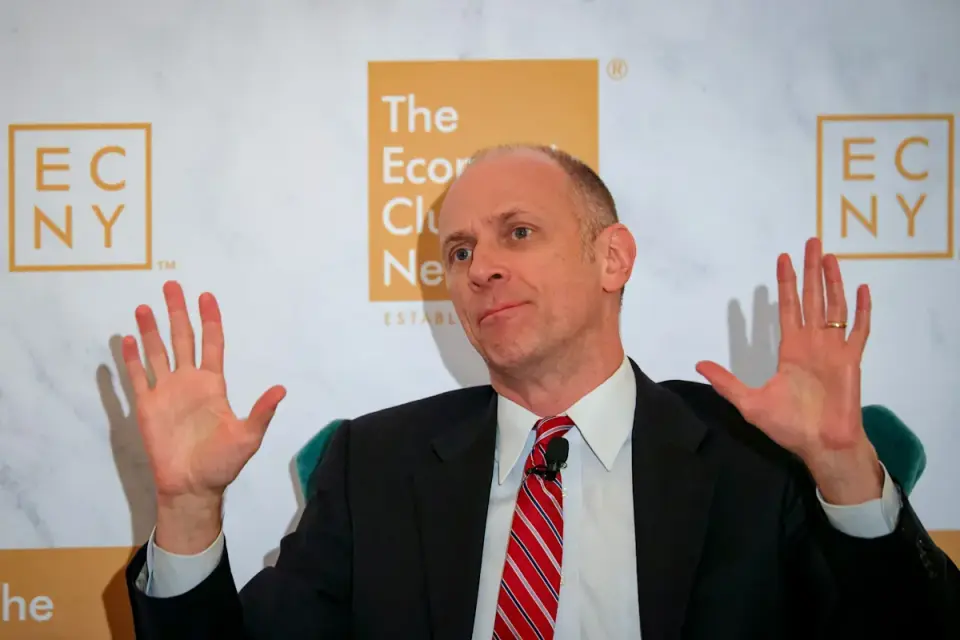
While Nvidia’s market value dropped below $4 trillion following CEO Jensen Huang’s resignation, Chicago Fed President Austan Goolsbee argues that persistent inflation, not the chipmaker’s leadership vacuum, is the primary economic threat for 2027. Inflation remains stubbornly high in services and healthcare, forcing the Federal Reserve to consider further rate hikes. Goldman Sachs forecasts two more 25 basis point increases in 2026 and a third in early 2027, delaying potential rate cuts until late 2027. Although some investors bought Nvidia shares at a discount, analysts note the stock’s volatility and the broader market’s focus on inflationary pressures.
Key points
- Chicago Fed President Austan Goolsbee stated that persistent inflation in services and healthcare is a more disturbing risk than Nvidia’s leadership changes.
- Nvidia’s market cap fell below $4 trillion for the first time since July 2025 after CEO Jensen Huang resigned amid personal scandals.
- Core CPI rose 0.3% in October, marking the third consecutive month at that pace, while core PCE inflation stood at 3.1% in September.
- Goldman Sachs expects the Federal Reserve to hike rates by 25 basis points in December 2026 and again in March 2027.
- Retail investors poured $111 million into Nvidia in the first 30 minutes of trading Thursday, viewing the 35% drop from its peak as a buying opportunity.
Background
Recent months have seen global markets waver due to AI sector volatility and inflation fears. In October 2026, South Korean equities crashed as AI chip rallies collapsed amid global inflation concerns. Meanwhile, ultra-wealthy investors have shifted 60% of their portfolios to alternative assets, driven by inflation fears and AI boom volatility. The current situation follows a period where Nvidia was the biggest contributor to S&P 500 gains, making its recent decline particularly significant for market sentiment.
How outlets are covering it
Yahoo Finance emphasizes that inflation is the dominant risk for 2027, citing Goolsbee’s warning about a potential wage-price spiral and the Fed’s failure to meet its 2% target. Bloomberg focuses on the retail investor reaction to Nvidia’s drop, highlighting the debate over whether buying the dip is strategic or gambling, with some investors netting $111 million in purchases. CNBC provides the factual backdrop of the leadership crisis, noting that Huang’s resignation triggered a 12.75% weekly stock decline and the appointment of CFO Colette Kress as interim CEO. While Yahoo and Bloomberg frame the story around macroeconomic risks and investment strategies, respectively, CNBC centers on the corporate governance shock. All three sources agree that Nvidia’s valuation has suffered significantly, but they differ on whether this is a temporary dip or a sign of deeper structural issues in the AI sector.
Why it matters
The divergence between corporate leadership crises and macroeconomic inflation risks highlights the complexity of current market dynamics. If the Federal Reserve hikes rates further to combat sticky inflation, it could dampen the AI infrastructure boom that Nvidia leads. Investors must decide whether to chase discounted tech stocks or prioritize protecting portfolios from rising interest rates and persistent price pressures in essential services.
What to watch
The Federal Reserve is expected to announce a 25 basis point rate hike in December 2026. Goldman Sachs forecasts a third hike in March 2027, with rate cuts potentially beginning in December 2027. Nvidia will operate under interim CEO Colette Kress while the board investigates the leadership transition. Investors will watch November and December inflation reports to gauge whether price pressures are easing or accelerating, which will determine the Fed’s future policy path.
- Why the biggest risk for investors in 2027 isn't Nvidia — it's inflation Yahoo Finance
- Nvidia and Jensen Huang fallout: Here’s everything we know after a momentous week Yahoo Finance
- Nvidia’s Scandal Is Poking Real Holes in the AI Trade. That Doesn’t Mean It’s Over. Barron's
- Nvidia’s Stock Drop Made a Tempting Case to ‘Buy the Dip’ Bloomberg.com
- Nvidia closes below $4T market cap for first time since July 2025 in Huang fallout CNBC
Want the full story? Read the original reporting
Read on Yahoo Finance