
Record Diesel Prices Threaten U.S. Economy as Refining Bottlenecks Persist
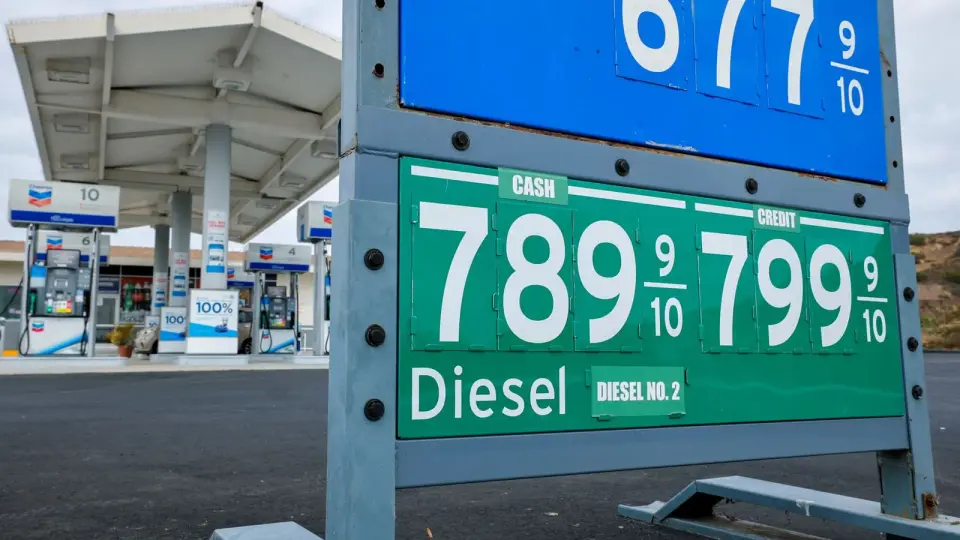
U.S. diesel prices hit an all-time high of $6.31 per gallon, driving up costs for freight, heating, and consumer goods. Experts warn that limited refining capacity, not just crude oil prices, is causing a prolonged price surge that will ripple through the economy for months.
Key points
- U.S. diesel prices reached a record $6.31 per gallon on Wednesday, with California prices nearing $8.00.
- Global refining capacity is nearly maxed out, with approximately 20% of world capacity offline due to conflicts in Russia and the Middle East.
- Home heating oil costs in the Northeast could rise by 31% this winter if current diesel levels persist.
- Trucking companies are facing significant financial headwinds, with J.B. Hunt reporting at least $10 million in losses from fuel costs.
- The Federal Reserve cited the 'crack spread' between crude and refined products as a key factor in recent interest rate decisions.
Background
This price surge follows a steady climb since early 2026, when diesel first hit $5.85 per gallon in September. Previous reports indicated that daily transportation costs had already increased by roughly $700 million compared to the prior year. The current spike exacerbates inflationary pressures, with producer prices rising 0.4% in August, driven largely by a 24.1% jump in diesel costs.
How outlets are covering it
CNBC emphasizes the broad economic ripple effects, noting that diesel is a universal input affecting everything from food delivery to home heating. OilPrice.com highlights the structural nature of the crisis, pointing out that global inventories have dropped by 507 million barrels since February, and that prices may not fall significantly even if geopolitical conflicts end. The Independent notes that while the U.S. administration views the spike as temporary, experts warn that the lack of refining capacity will keep prices elevated well into the winter. There is a consensus across sources that the pain will be felt most acutely by small businesses and consumers, though large carriers and refiners may see margin gains.
Why it matters
The sustained high price of diesel threatens to trigger a broader inflationary spiral, impacting grocery prices, delivery fees, and winter heating costs. With no immediate solution to the refining capacity bottleneck, consumers and businesses face prolonged financial strain, potentially affecting consumer spending and economic growth in the coming months.
What to watch
Analysts expect diesel prices to remain elevated through the winter, with some predicting they could reach $6.60 per gallon in the coming days. The Federal Reserve is monitoring the 'crack spread' closely, and policymakers are debating whether to increase federal heat assistance funding. Any further geopolitical disruptions or weather events could push prices even higher.
- How record diesel prices will rip through the U.S. economy. Trucks and rails are only the start CNBC
- Mississippi diesel prices hit $6, a record high, as gas prices climb Yahoo
- 'How are we gonna get through this?' Americans face tough decisions as diesel and gas prices rise ABC News - Breaking News, Latest News and Videos
- Oil Above $100 Pushes U.S. Fuel Prices to New Records Crude Oil Prices Today | OilPrice.com
- Diesel and gas prices are spiking and hitting record levels. Experts say it’s going to get worse The Independent
Want the full story? Read the original reporting
Read on CNBC