
U.S. Credit Card Balances Reach Record $1.29 Trillion Amid Rising Costs
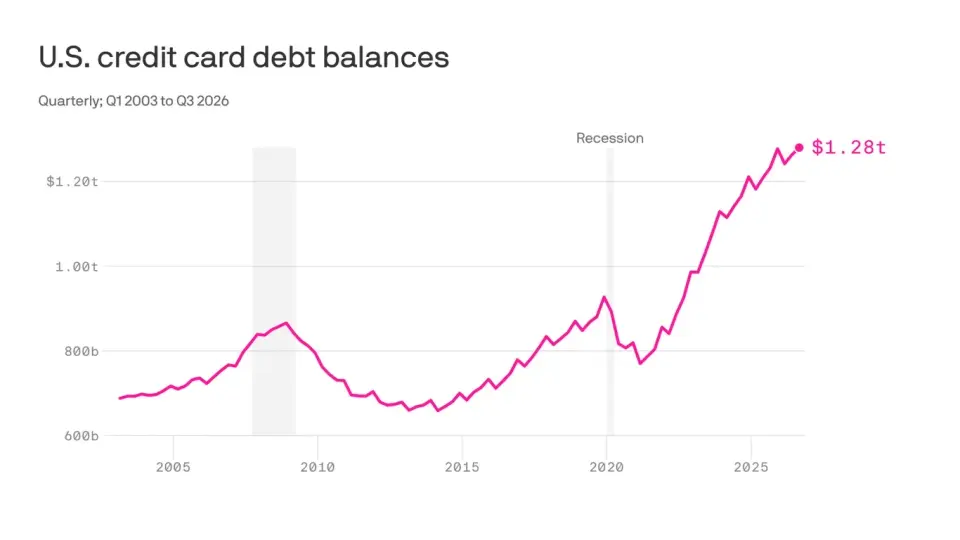
U.S. credit card debt has reached a record high of $1.29 trillion in the third quarter, driven by rising living costs and accessible borrowing. While total household debt stands at $19.1 trillion, mortgage stability provides a buffer for many homeowners, even as lower-income groups face increasing financial strain and delinquency.
Key points
- U.S. credit card balances hit a record $1.29 trillion in the third quarter.
- Total household debt reached $19.1 trillion.
- Rising costs and accessible borrowing are driving the increase in credit card debt.
- Mortgage stability buffers many homeowners against financial distress.
- Lower-income groups are facing increasing financial strain and delinquency.
Background
This development follows earlier reports of widening credit splits in European junk bond markets and rising credit card defaults in the UK, which have driven demand for debt advice and exposed vulnerabilities in consumer financial health. The current record high in U.S. credit card debt underscores a broader trend of consumer distress amid rising costs, even as mortgage stability provides some relief for homeowners.
Why it matters
Record-high credit card debt signals growing financial strain among consumers, particularly lower-income groups, and may indicate broader economic vulnerabilities. The contrast between mortgage stability and credit card delinquency highlights the uneven impact of rising costs on different segments of the population.
What to watch
Monitor trends in consumer delinquency and debt advice demand, as well as potential regulatory responses to rising credit card defaults and scams targeting vulnerable consumers.
- Credit card debt hits record high as Americans struggle with cost-of-living Axios
- Data Show Households Still Managing to Meet Their Monthly Debts The New York Times
- Credit card debt mounts amid Democrats’ push to cap interest rates The Hill
- Troubled US debt levels ticked up in third quarter, New York Fed report says Reuters
- US Household Delinquencies Rise Slightly, NY Fed Report Shows Bloomberg.com
Want the full story? Read the original reporting
Read on Axios