
July Jobs Report Sparks Market Volatility and Fed Policy Debate
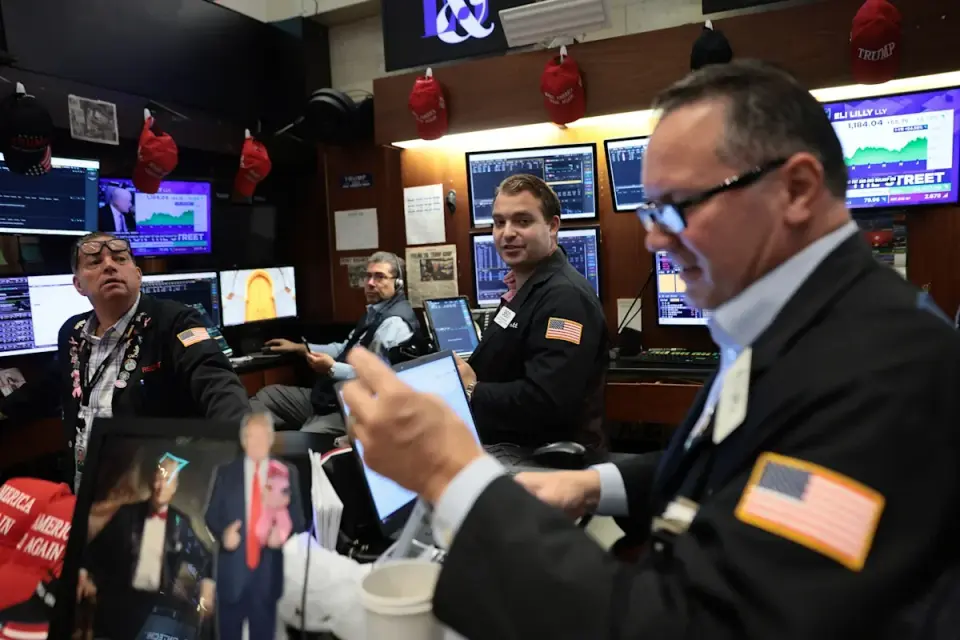
The US economy shed 23,000 jobs in July, a surprise that triggered a stock market rally and intensified debate over Federal Reserve policy. While the unemployment rate fell to 4.1%, analysts argue this reflects a shrinking labor force rather than hiring strength. The weak data has complicated the Fed's decision on interest rates, with some economists suggesting the current strategy of relying on bond market yields may be insufficient.
Key points
- The Bureau of Labor Statistics reported a loss of 23,000 jobs in July, contradicting expectations of solid growth.
- The unemployment rate dropped to 4.1%, but this is attributed to a decline in labor force participation, which fell to 61.4%, a 50-year low.
- Stock markets rallied, with the S&P 500 rising 0.62% and the Nasdaq gaining 1.30%, as investors interpreted the weak data as a signal for potential rate cuts.
- Inflation remains at 3.5%, creating a 'stagflation' risk where the Federal Reserve must balance high prices with a slowing job market.
- Federal Reserve Chair Kevin Warsh is facing pressure to define his 'reaction function' for future rate hikes, as bond yields have risen to act as a quasi-rate hike.
Background
This development follows a period of data skepticism, where analysts previously questioned the reliability of June jobs figures due to World Cup anomalies. The current labor market weakness contrasts with the strong performance of AI-driven sectors, where banks like Goldman Sachs recently posted record revenues. The July report adds to a narrative of economic uncertainty, where consumer sentiment has diverged from hard data, with surveys indicating labor market weakness before official statistics confirmed it.
How outlets are covering it
Yahoo Finance highlights the immediate market reaction, noting that stocks jumped despite the poor jobs data, suggesting investors view the weakness as a precursor to monetary easing. CNN focuses on the policy dilemma for Federal Reserve Chair Kevin Warsh, debating whether his strategy of letting bond markets dictate rates is effective or if it risks market turbulence. USA Today emphasizes the structural issue of labor force participation, arguing that the falling unemployment rate is misleading because it results from people leaving the workforce entirely, potentially due to burnout or return-to-office mandates, rather than successful hiring.
Why it matters
The divergence between falling unemployment and job losses signals a potential shift toward stagflation, where high inflation coexists with economic slowdown. This complicates the Federal Reserve's ability to manage the economy, as raising rates to fight inflation could further weaken the labor market, while cutting rates could exacerbate inflation. The decline in labor force participation also indicates long-term structural issues that could slow economic growth and affect consumer spending.
What to watch
The Federal Reserve's next meeting is expected to be a critical decision point, with odds of a rate hike currently estimated at 50%. Analysts will watch for clarity on Warsh's 'reaction function' to gauge future policy direction. Additionally, further data on labor force participation and inflation will be crucial to determine if the July report was a statistical anomaly or a sign of a deeper economic slowdown.
- 'Very little to like': Wall Street assesses surprise July jobs report as stocks jump Yahoo Finance
- The Fed was expected to hike interest rates in September. Don't bet on that now, economists say. CBS News
- Labor Market Shifts Into Reverse as Employers Balk at Hiring nytimes.com
- How the weak jobs report could make inflation harder to manage cnn.com
- Unemployment rate is falling, but for 'the wrong reason,’ experts say usatoday.com
Want the full story? Read the original reporting
Read on Yahoo Finance