
US Polysilicon Tariffs Set to Raise Global Solar Costs
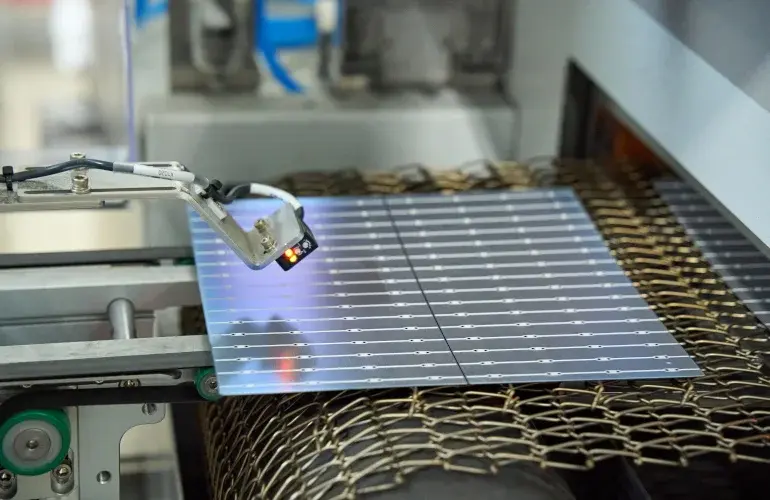
The U.S. government has finalized Section 232 trade measures for the polysilicon industry, imposing a 15% tariff on all imported solar components and setting minimum import prices. These measures, effective December 4, 2026, aim to protect domestic manufacturers from Chinese competition and boost U.S. production of solar panels and semiconductors.
Key points
- A 15% tariff applies to all imported polysilicon, wafers, cells, and finished panels, regardless of country of origin.
- Minimum import prices are set at $21/kg for polysilicon, $100/kg for ingots/wafers, 22¢/W for cells, and 38¢/W for panels.
- The measures take effect on December 4, 2026, following a 120-day implementation period.
- The U.S. currently has only two major polysilicon producers, Hemlock and Wacker, while China holds 93.5% of global market share.
- Domestic solar panel costs are currently higher than imports, with U.S. panels averaging 31¢/W compared to 14¢/W for India and 27¢/W for Southeast Asia.
Background
The U.S. Department of Commerce launched a Section 232 investigation into the polysilicon industry in July 2025. Prior to this, U.S. polysilicon production had declined significantly due to trade wars with China, with market share dropping from $1 billion in 2011 to $107 million in 2018. Recent archive coverage from August 2026 confirmed the initial announcement of these tariffs and minimum prices, highlighting the administration's focus on reshoring supply chains for both solar and semiconductor sectors.
How outlets are covering it
Solar Power World emphasizes the economic impact on domestic manufacturers, noting that the new minimum prices will help U.S. assemblers compete against cheaper imports. CNBC highlights the positive market reaction, with solar stocks like First Solar rising 6% after the announcement. The Guardian frames the move as part of broader U.S.-China trade tensions, noting China's criticism of the U.S. for abusing state power and disrupting normal trade. Politico focuses on the strategic goal of eliminating Chinese choke points in the supply chain, with Commerce Secretary Howard Lutnick stating the move will bring the supply chain to the U.S. and prevent Chinese dumping.
Why it matters
The new tariffs and minimum prices aim to level the playing field for U.S. solar and semiconductor manufacturers by preventing Chinese companies from dumping cheap products. This could lead to increased domestic investment and production, potentially reducing reliance on foreign supply chains. However, it may also raise costs for consumers and businesses relying on imported solar panels.
What to watch
The tariffs and minimum prices will take effect on December 4, 2026. The U.S. Department of Commerce is authorized to establish an incentive program for companies investing in polysilicon production. The administration expects these measures to encourage more gigawatt-scale polysilicon efforts in the U.S. and support the growth of established manufacturers.
- Sec. 232 polysilicon results: The price of all imported solar panels is going up solarpowerworldonline.com
- Solar stocks shine after Trump extends China tariffs to polysilicon products cnbc.com
- Trump orders new 15% tariff on key material for solar panels and microchips The Guardian
- Trump unveils trade actions to compete with China on solar and chips Reuters
- Trump announces tariffs on key component for solar panels and semiconductors Politico
Want the full story? Read the original reporting
Read on solarpowerworldonline.com