
Global Oil Reserves Hit Critical Low as IEA Releases 100 Million Barrels
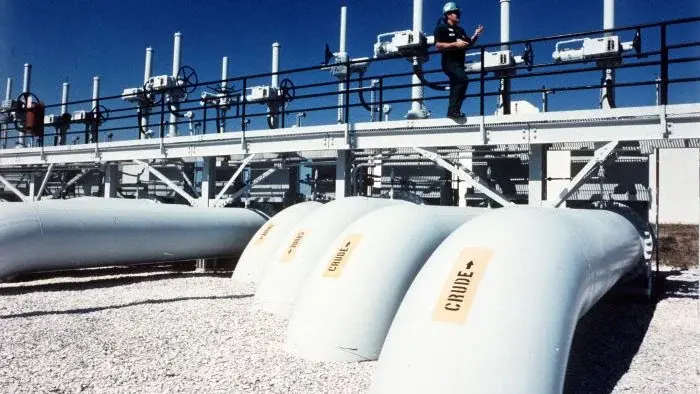
The International Energy Agency (IEA) has released an additional 100 million barrels of oil and refined fuels to address the ongoing supply crisis caused by the closure of the Strait of Hormuz. This move is part of a broader 400-million-barrel plan announced in March. However, global inventories are nearing operational minimums, with the U.S. Strategic Petroleum Reserve (SPR) falling to 331.2 million barrels, its lowest level since 1983. Aramco CEO Amin Nasser warned that replenishing these stocks could take up to two years after the strait reopens, leaving the global market vulnerable to further shocks.
Key points
- The IEA announced a 100-million-barrel release of diesel, gasoline, and crude oil, part of a 400-million-barrel plan initiated in March to mitigate the Hormuz crisis.
- The U.S. Strategic Petroleum Reserve (SPR) has dropped to 331.2 million barrels, approaching the operational minimum of 250–300 million barrels, risking infrastructure damage.
- Global oil inventories fell by 95 million barrels in August, with total draws since February reaching 507 million barrels.
- Aramco CEO Amin Nasser stated that replenishing global inventories could take up to two years after the Strait of Hormuz reopens, with less than 6 billion barrels of commercial inventories remaining.
- Southeast Asian governments are pursuing joint stockpiling efforts to enhance energy security, but high oil prices make replenishment costly.
Background
This development follows a series of supply disruptions in the Middle East, including the closure of Saudi Arabia's East-West pipeline in September and ongoing tensions in the Red Sea. In early October, oil prices dipped briefly as the G7 agreed to the reserve release, but Brent crude remains above $100 per barrel due to persistent supply risks. The current crisis is part of a broader geopolitical conflict involving the U.S., Israel, and Iran, which has led to over 1 billion barrels of crude being drawn from inventories since the war began.
How outlets are covering it
OilPrice.com emphasizes the immediate risk to storage infrastructure as the U.S. SPR approaches its operational minimum, highlighting the danger of further draws. Aramco, through CEO Amin Nasser, focuses on the long-term implications, warning that the 'supply resilience cushion is scarily thin' and that replenishment could take two years. The Financial Times, while behind a paywall, highlights warnings from Vitol about a potential tanker shortage and the risk of oil prices reaching $200 per barrel, suggesting a more severe market disruption than currently priced in. The IEA, via Fatih Birol, attempts to reassure markets by noting that 1.1 billion barrels of emergency stocks remain, but this may not alleviate concerns given the proximity to operational minimums.
Why it matters
The depletion of global oil inventories threatens the stability of the global energy market, potentially leading to higher prices and supply shortages. The operational minimum of the U.S. SPR and the two-year replenishment timeline indicate that the current crisis could have long-lasting effects on global energy security, particularly for countries in Asia that rely heavily on Middle Eastern oil imports. The situation also raises concerns about the affordability of energy, with the IMF modeling a scenario where global economic growth falls to 2% and inflation rises above 6% if the disruption continues.
What to watch
The IEA may release more emergency stocks if required, but the focus will shift to replenishing inventories once the Strait of Hormuz reopens. Countries in Southeast Asia are expected to continue their efforts to build oil stockpiling systems, though high prices will make this challenging. The market will closely monitor any further developments in the Middle East, as well as the impact of the current crisis on global economic growth and inflation.
- Emergency Oil Releases Risk Draining the World's Last Supply Cushion Crude Oil Prices Today | OilPrice.com
- Vitol chief warns of tanker shortage and risk of $200-a-barrel oil Financial Times
- Remarks by Amin H. Nasser at the 2026 Energy Intelligence Forum in London Aramco
- The world has nearly burned through its oil stockpile buffer, executives say Reuters
- World's biggest oil CEO shares stark oil price warning as pressure builds and supplies run dry TheStreet
Want the full story? Read the original reporting
Read on Crude Oil Prices Today | OilPrice.com