
IMF Focus Shifts to Developed Nations as Debt Crisis Deepens
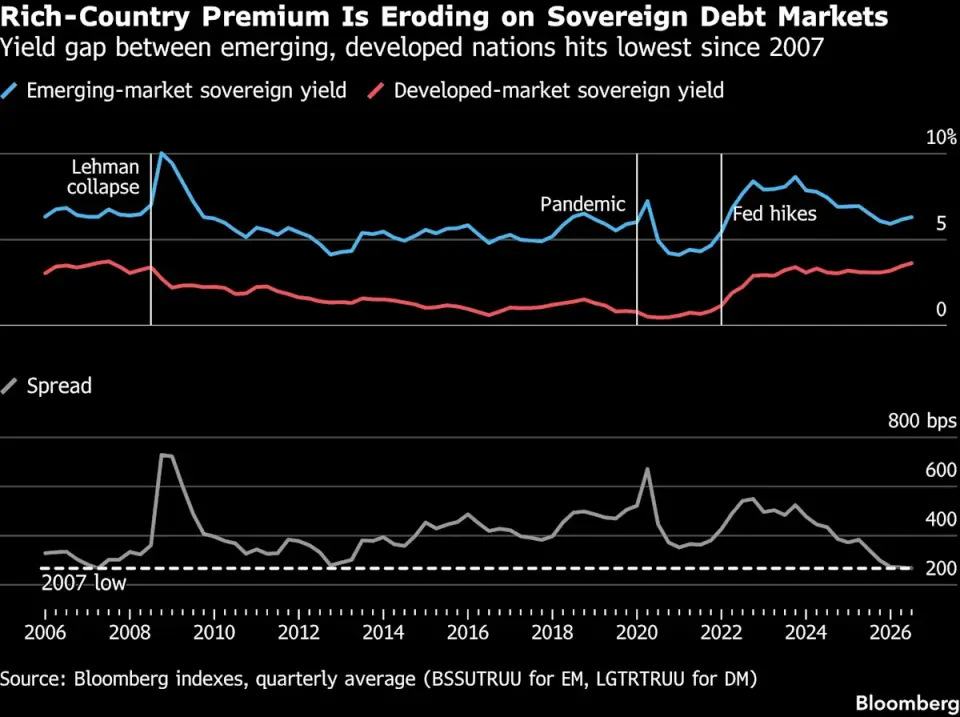
The International Monetary Fund is facing a new challenge as wealthy nations struggle with soaring borrowing costs and historic debt levels. This shift marks a departure from the IMF's traditional focus on emerging-market debt crises, highlighting a growing risk that financial instability in developed economies could spill over into the global system.
Key points
- The IMF and World Bank annual meetings in Bangkok will focus on debt issues in developed countries, including the US, Europe, and Japan.
- Borrowing costs in these wealthy nations have reached multi-decade highs, driven by inflation linked to the US conflict with Iran.
- High interest rates force governments to spend more on debt servicing, leading to further borrowing and creating a potential vicious cycle.
- IMF chief Kristalina Georgieva identified developed nations as the 'worst offenders' in terms of debt accumulation.
- The situation contrasts with the IMF's recent focus on post-Covid struggles in weaker economies and the historical emerging-market crisis in Thailand.
Background
This development follows a period of heightened geopolitical and economic uncertainty, including the Netherlands relocating gold reserves due to rising risks and ongoing debates over EU migration policies. The current debt crisis in developed nations represents a significant shift in global financial priorities, moving away from the post-Covid recovery challenges faced by emerging markets.
Why it matters
The financial stability of developed nations is crucial for the global economy. If these countries cannot manage their debt, it could trigger a broader crisis, affecting emerging markets and global growth. The IMF's focus on this issue signals a potential shift in international financial policy and support mechanisms.
What to watch
The IMF and World Bank meetings in Bangkok will likely result in new policies or recommendations to address the debt crisis in developed nations. The outcomes of these meetings could influence global financial stability and the future of international economic cooperation.
Want the full story? Read the original reporting
Read on Yahoo Finance