
S&P 500 Faces Longest Losing Streak Since 2020 Amid AI Profitability Fears and Geopolitical Risks
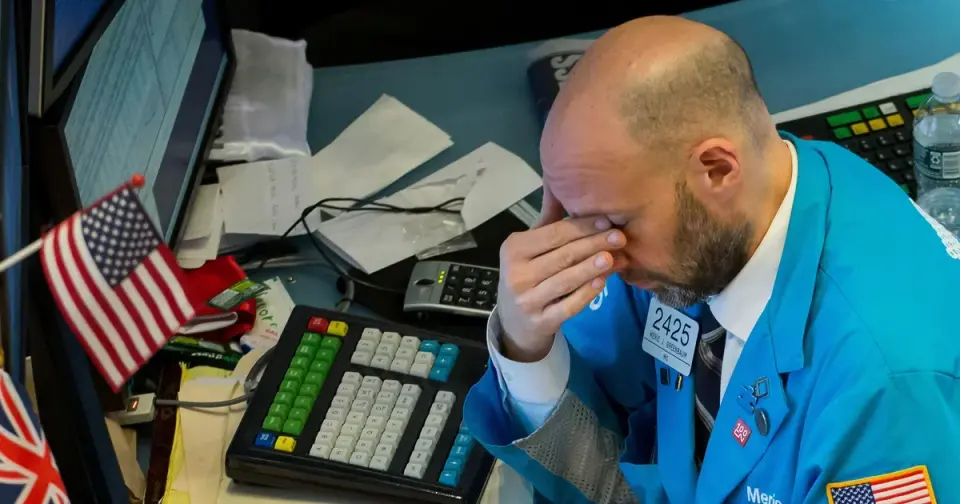
The S&P 500 is on track for its seventh consecutive day of losses, marking its longest losing streak since the early pandemic. The Nasdaq fell 3.5% on Friday, driven by concerns over AI profitability, potential interest rate hikes, and geopolitical tensions. Experts advise against panic selling, noting that long-term investors should view such volatility as noise, while others warn of a broader market mood shift.
Key points
- The S&P 500 dropped 2.1% and the Nasdaq fell 3.5% on Friday, with the index losing 865 points. This marks the seventh consecutive day of losses for the S&P 500, its longest streak since February 2020.
- Investors are concerned that massive AI infrastructure spending may not yield profits. Anthropic, the first AI lab to go public, reported approximately $104 billion in losses for the first nine months of 2026, despite rapid revenue growth.
- The Federal Reserve is expected to raise interest rates at its December meeting, as inflation remains above the 2% target. Chicago Fed President Austan Goolsbee stated that inflation is not on a path to 2% without central bank intervention.
- Geopolitical risks include potential new hostilities between the U.S./Israel and Iran, which could spike oil prices. Additionally, the Commerce Department is moving to restrict advanced AI chip exports to China following revelations regarding former Nvidia CEO Jensen Huang.
- Political shifts in Congress may lead to anti-data center legislation, potentially slowing AI buildout. A government shutdown risk looms as lawmakers face a December 11 funding deadline, with some Democrats opposing funding for the Iran war.
Background
The current market turmoil follows a period of strong job growth, with October adding 165,000 jobs, triple the monthly average. However, inflation remains a concern, with average hourly earnings rising 3.1% while headline inflation is up 3.7%. The Fed held rates steady in October but faced internal dissent, with markets pricing in a 70-75% chance of a December hike. Previous market tops in November 2025 and October 2026 have been followed by significant corrections, with the Nasdaq 100 losing $2.3 trillion in a single day recently.
How outlets are covering it
CBS News attributes the sell-off to six specific factors: AI profitability doubts, potential anti-data center laws, Fed rate hikes, chip export restrictions, Iran tensions, and government shutdown risks. It advises investors not to panic sell, citing historical recoveries. Afford Anything emphasizes that long-term investors should view the sell-off as noise, noting that a few AI giants like Nvidia and Alphabet heavily influence the Nasdaq 100. It highlights the strong job market and divided Fed as key economic indicators. Dennis Elam of Odessa American argues that the media focuses on news events, but the real issue is a shift in market mood from buying to selling. He uses Elliott Wave Theory to suggest a downward trend and warns that the market usually precedes economic changes by eight to twelve months. Elam notes that while a bounce may occur, the overall sentiment is negative, affecting stocks, real estate, and political office holders.
Why it matters
The stock market decline affects retirement savings, investment portfolios, and broader economic confidence. AI profitability concerns could impact tech sector valuations and future innovation funding. Geopolitical tensions and potential interest rate hikes may increase borrowing costs and inflation, impacting consumer spending and business investment. Government shutdown risks could disrupt federal services and economic stability. Understanding these factors helps investors make informed decisions and manage risk in a volatile market.
What to watch
Investors should monitor the Federal Reserve's December meeting for interest rate decisions. Watch for potential anti-data center legislation in Congress and any developments in U.S.-Iran relations. The government shutdown deadline on December 11 will be critical for federal funding. Long-term investors should maintain their strategies, while short-term traders may see increased volatility. The market may experience a bounce, but the overall trend depends on AI profitability, inflation, and geopolitical stability.
- 6 reasons stocks are falling, and what you should do about it CBS News
- Stock Market Today: Dow, S&P 500 fall, Nasdaq wipes out 2026 gains as stocks head for worst week since 'liberation day' MarketWatch
- Why is the stock market down today? 5 reasons US stocks crashed on November 20 as Nasdaq, S&P 500 and Dow The Economic Times
- #765: First Friday: Stocks Crashed. Jobs Boomed. Now What? Afford Anything
- ELAM: The stock market melt Odessa American
Want the full story? Read the original reporting
Read on CBS News