Tag

Imf

All articles tagged with #imf

Venezuela quake toll surpasses 5,000 as IMF unlocks emergency funds
world1 month ago

Venezuela quake toll surpasses 5,000 as IMF unlocks emergency funds

The June 24 twin earthquakes in Venezuela have killed 5,069 people, injured about 16,740 and displaced around 20,000, as rescue efforts continue. The IMF released $346 million in emergency financing to support relief, while Reuters reports highlight early rescue delays and coordination issues that critics say hampered the response, a claim the government rejects.

IMF warns inflation risk could derail global recovery
world1 month ago

IMF warns inflation risk could derail global recovery

The IMF’s latest World Economic Outlook warns that renewed Middle East tensions could push inflation higher and disrupt supply chains, with global inflation projected to rise to about 4.7% this year before easing to 3.9% in 2027, while global growth slows to around 3% before rebounding to 3.4% in 2027. The euro area is expected to keep inflation above the ECB’s 2% target until 2028, suggesting more rate hikes could be on the horizon for major central banks, even as AI-driven gains support some economies. The report also highlights risks to energy and food security if disruptions persist, underscoring that inflation remains the primary threat to a smoother global recovery.

Hidden Icebergs Behind JWST’s Little Red Dots
astronomy2 months ago

Hidden Icebergs Behind JWST’s Little Red Dots

JWST’s Little Red Dots appear far brighter and more common at early cosmic times than simple star-formation models would allow. Explanations span instrumental effects (JWST’s higher throughput), high-resolution simulations revealing rare overdense regions, bursty star formation that can exceed steady-state limits, and possible contributions from active galactic nuclei or exotic energy sources. A hotter, denser early universe could shift the stellar mass distribution toward fewer low-mass stars (a bottom-light IMF), potentially lowering inferred masses; yet observations of ancient globular clusters challenge extreme bottom-light IMF scenarios. No single explanation fits all observations, so the true nature likely involves a mix of stars, black holes, and other processes, awaiting further study.

Oil windfall can't shield Russia from weakening economy, IMF chief says
world2 months ago

Oil windfall can't shield Russia from weakening economy, IMF chief says

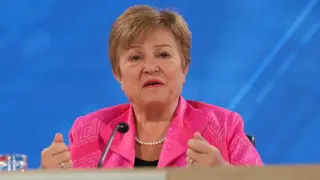
IMF Managing Director Kristalina Georgieva says Russia's economy is weakening despite a windfall from higher oil prices, with IMF projections showing around 1% growth for 2026—below prewar potential—while inflation remains high and buffers are depleted. She points to three main drags: demographic decline, sanctions that bite tech upgrades, and a damaged global standing that undermines long-term prospects.

Brussels ties Ukraine’s loan to Kyiv’s tax reform drive
politics3 months ago

Brussels ties Ukraine’s loan to Kyiv’s tax reform drive

The European Commission said part of a 90-billion-euro loan to Ukraine will be conditioned on improving revenue collection, spending efficiency, and reform measures such as taxing digital-platform income, setting sectoral public-investment plans, and updating the customs code. If Kyiv meets the criteria, an initial tranche of about 3.2 billion euros could be disbursed in June as part of roughly 8.35 billion in micro-financial aid, amid IMF-aligned reform pressure and a slow reform pace blamed on wartime constraints and political resistance.

IMF urges BoE to stay flexible, ready to cut rates as UK growth improves
economy3 months ago

IMF urges BoE to stay flexible, ready to cut rates as UK growth improves

The IMF lifted its 2026 UK growth forecast to about 1% and said the Bank of England should remain ready to cut rates if needed, even as holding at 3.75% may be appropriate to limit second-round inflation effects. With energy prices pushing inflation higher in the near term and then easing, the IMF expects inflation to return to target by end-2027 as growth gradually recovers, arguing for data-driven, meeting-by-meeting policy decisions.

Japan's yen defense runs into the gravity of global rates
business3 months ago

Japan's yen defense runs into the gravity of global rates

Japan reportedly intervened in the yen during Golden Week after it slipped past 160 per dollar, with a second suspected move in early May; the yen jumped briefly but subsequently weakened again. Analysts say such interventions offer only temporary relief against a sustained pull from a wide interest-rate gap with the U.S. and rising import costs, and IMF notes that Japan can only use a few more interventions before affecting its free-floating status; the BOJ faces a policy dilemma between raising rates to defend the yen and supporting growth.

Japan obtains first Russian crude since Hormuz crisis as Middle East tensions escalate
world3 months ago

Japan obtains first Russian crude since Hormuz crisis as Middle East tensions escalate

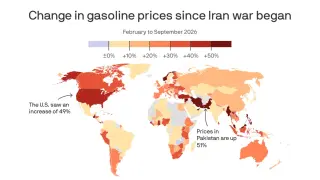
Japan received its first shipment of Russian oil since the Hormuz strait closure amid escalating US-Iran tensions. The US-led effort to reopen the strait (Project Freedom) continued as Iran warned of escalation and attacks on the UAE persisted. Global markets fell on renewed risk, with the IMF warning that a protracted conflict could worsen inflation and push oil prices toward $125 a barrel, potentially yielding a much worse outcome if the war drags into 2027.

Europe Pushes Growth and Energy Security in DC, but US Keeps Its Eye on China
world4 months ago

Europe Pushes Growth and Energy Security in DC, but US Keeps Its Eye on China

European finance officials pressed Washington during the IMF-World Bank spring meetings to advance growth, energy security, Ukraine support, and a more integrated EU financial market, but the U.S. response centered on growth and a China-focused strategic rivalry, making Europe feel sidelined and prompting concerns about cross-Atlantic cooperation amid financial and geopolitical tensions.

Hormuz Crisis May Trigger Global Energy Shortages, Qatar Warns
world4 months ago

Hormuz Crisis May Trigger Global Energy Shortages, Qatar Warns

Qatar’s finance minister warned at the IMF Spring Meetings that the Strait of Hormuz disruption could trigger a broader energy and commodities shock in coming months, potentially causing shortages in fertilisers, helium, healthcare and semiconductors. The Ras Laffan LNG facility damage underscores longer-term disruption for global LNG markets, but Qatar says it has buffers and targeted support to weather the immediate impact.

Global energy shock tests economy as UK growth defies expectations
business4 months ago

Global energy shock tests economy as UK growth defies expectations

IMF chief Kristalina Georgieva warns the world economy is being tested by a large energy-price shock from Middle East tensions, saying everyone will feel the pain and urging governments not to cushion demand with subsidies. Amid the turmoil, UK February GDP rose 0.5%—suggesting momentum before the conflict weighed on prospects—while Europe faces warnings of jet-fuel shortages as energy costs surge. The disruption shows up across markets and firms, from airline cutbacks to Nigeria’s Dangote refinery boosting jet-fuel exports, highlighting the global spillovers of the energy squeeze.

IMF warns Iran conflict could push global debt toward postwar highs
economy4 months ago

IMF warns Iran conflict could push global debt toward postwar highs

The IMF warns that escalating Iran-related conflict could push global debt toward 100% of GDP by 2029 as energy and food prices rise, raising borrowing costs and slowing growth. It urges targeted, temporary support for those most affected and avoiding new borrowing to protect fiscal space, warning that missteps could destabilize debt markets and spark a global recession, with the UK highlighted for market sensitivity to fiscal slippage.

IMF urges targeted cash aid over broad fuel subsidies amid energy shock
economy4 months ago

IMF urges targeted cash aid over broad fuel subsidies amid energy shock

The IMF cautions that war-driven energy price spikes strain public finances and urges governments to drop broad fuel subsidies in favor of targeted, temporary cash transfers to preserve price signals and curb inflation, warning debt levels are rising and could reach about 100% of GDP by 2029; policymakers should still plan medium-term consolidation once the crisis subsides.