
Supertanker Values Surge as Gulf Buyers Chase Record Freight Rates
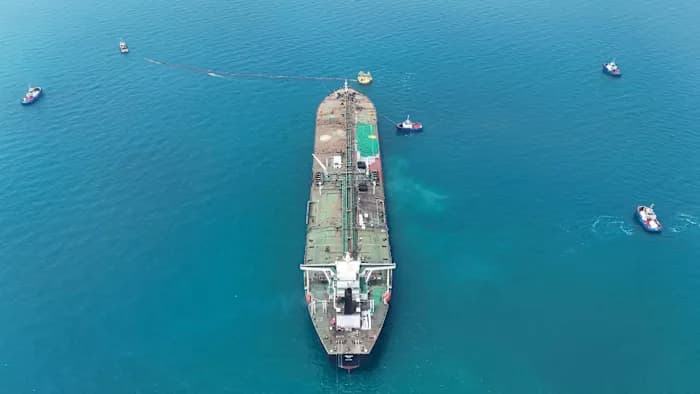
The value of older supertankers has surpassed that of new builds for the first time in recorded history, driven by record-high freight rates in the Gulf. Buyers are prioritizing immediate delivery over vessel age, with several pre-2016 ships selling for over $150 million. Middle Eastern state oil companies and traders are acquiring fleets to secure control over exports amid volatile shipping costs.
Key points
- Freight rates for very large crude carriers on the Middle East-to-Asia route have reached a record $1.2 million per day, driving up asset prices.
- Vessel prices are now determined by delivery speed rather than age, with brokers describing the market as 'bananas' due to rapid deal closures.
- A recently built tanker owned by Dynacom sold for $200 million with prompt delivery, while another vessel fetching $169 million is set for October delivery.
- Middle Eastern state-owned oil companies, including Abu Dhabi’s Adnoc and Kuwait’s national oil company, are buying supertankers to control exports through the Strait of Hormuz.
- South Korea’s Sinokor has purchased approximately $6 billion worth of tonnage this year, while traders like Trafigura are acquiring ships to protect margins against daily rate fluctuations.
Background
This surge follows a period of heightened geopolitical tension in the Middle East, which has disrupted shipping routes and increased the strategic value of owning private fleets. Previous market analyses indicated that while freight rates are currently at historic highs, some owners are holding off on selling to capitalize on these earnings, creating a shortage of available vessels. The broader economic backdrop includes a narrow tech rally in the S&P 500 and rising U.S. rents, but the shipping sector is experiencing a distinct, isolated boom driven by energy logistics rather than general market trends.
Why it matters
The inversion of vessel values, where older ships cost more than new ones, signals a critical shift in global energy logistics. It highlights the urgency of securing physical transport capacity for oil exports in a volatile geopolitical environment. This trend could lead to long-term structural changes in how oil is moved, with state actors and traders increasingly owning fleets rather than chartering them, potentially insulating them from future rate spikes but also concentrating market power among fewer entities.
What to watch
Market participants are watching for signs of a correction if a peace deal reopens the Strait of Hormuz, which could lower freight rates. However, legal experts note that even if rates drop to $200,000 a day, they would remain structurally higher than pre-crisis levels. The immediate focus is on the pace of acquisitions by Gulf state oil companies and the potential listing of Trafigura’s supertanker arm, which may signal further institutionalization of the market.
- Value of old supertankers soars past new builds as market goes ‘bananas’ ft.com
- Tanker rates are on the crest of a wave The Economist
- Soaring Freight Costs Make Japan's Crude Imports the World's Most Expensive Crude Oil Prices Today | OilPrice.com
- Gulf nations have found ways to keep oil flowing through the Iran war, but the costs are mounting AP News
- Supertanker Rally Lures Investors as War Squeezes Vessel Supply Bloomberg
Want the full story? Read the original reporting
Read on ft.com