Oil prices hovered around levels seen before the Iran conflict as OPEC+ agreed to lift output targets from August and Saudi price cuts signaled more supply, with Brent near $72 and WTI around $68 amid recovering Gulf exports and ongoing Hormuz shipping talks.
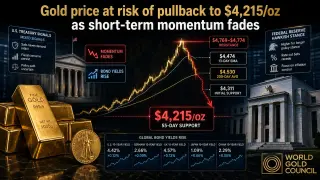
Gold slipped below $3,943 per ounce, its lowest since November, as bets on higher interest rates and fading retail enthusiasm push the metal toward its worst quarter in more than a decade. After a January peak near $5,595, prices have been pressured by ETF outflows, a stronger dollar, and Chinese trading restrictions, though central-bank demand could provide a floor.
Oil prices climbed about 0.9% to around $73.21 a barrel for August delivery as renewed U.S.–Iran strikes raised concerns about shipping through the Strait of Hormuz, a key oil conduit. Analysts say the market has re-priced a war premium after a weekend flare-up, with Asian equities showing mixed moves as investors weigh potential ceasefire talks and the lack of enforcement details in any agreement.
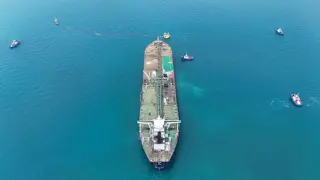
Crude prices slid more than 3% on Friday as more tankers moved through the Strait of Hormuz, easing supply concerns after a vessel was hit near Oman. Brent settled at $71.99 a barrel and WTI at $69.23, with weekly losses around 11% and 10% respectively. Analysts said flows exiting Hormuz are rising again, helped by Saudi Aramco resuming Ras Tanura loading and two VLCCs loading. The day also saw reports of a vessel hit by an unknown projectile near Oman, prompting the UN shipping agency to suspend its evacuation scheme; U.S. officials said Iran fired on the cargo ship while it passed through Hormuz, and Iran reiterated its claim to shipping through the strait. Despite the ceasefire reopening the waterway, overall traffic remains below pre-war levels, and Russia signaled a diesel export ban as it faces refinery damage.
Oil prices fell to their lowest levels since early March as a potential U.S.-Iran peace deal raised expectations of higher global crude supply, with Brent around $78 and WTI near $75; a large U.S. stock draw supported near-term demand, but uncertainty over deal implementation kept further losses in check.
Despite Iran-related disruption that knocked roughly 14 million barrels a day off global supply, oil markets have not collapsed thanks to ample pre-war inventories, added supply from non-Gulf producers, and greater flexibility from both producers and consumers. Demand has softened modestly, particularly in aviation and petrochemicals, and inventories are being drawn down, but for now the cushion holds. The situation remains temporary and contingent on stockpiles lasting and ongoing resilience elsewhere, especially from US shale and alternative suppliers.
Oil prices jumped about $5 a barrel after Iran halted indirect talks with the U.S. and signaled it could block the Strait of Hormuz, underscoring supply-disruption risks amid Middle East tensions; Brent traded around $95.92 and WTI around $92.82 a barrel as traders weighed disruption risks against diplomacy developments.
Oil prices jumped after Iran said it would stop communicating with the U.S. via intermediaries and move to fully block the Strait of Hormuz, signaling a potential disruption to global crude supplies.
SPI Asset Management’s Stephen Innes argues the gold selloff was a liquidity crisis driven by forced sovereign sales amid the oil shock, not a collapse in demand. As inflation cools and growth slows, central banks may ease policy, potentially setting up a new long-term gold bull run with gold serving as monetary insurance in a fractured, underinvested global economy—an outlook reinforced by China’s reserve diversification strategy.
JPMorgan cut its 2026 gold price forecast to $5,243/oz from $5,708 due to softer near-term demand, but keeps a bullish longer-term view with a year-end target around $6,000/oz; the pullback is seen as a pause, with demand expected to reaccelerate in H2 as inflation tail risks ease after potential Iran-related D/E developments and a possible Strait of Hormuz reopening. The bank also trimmed its 2026 central-bank purchases to 640 tonnes and ETF inflows to about 400 tonnes, while warning that a strong U.S. jobs market and higher inflation could prompt Fed rate hikes and ETF outflows. Gold remains range-bound near $4,340–$4,730, with catalysts including geopolitical developments and policy signals shaping the path to a recovery.
Analysts warn that the oil market could reach a critical turning point within a month, with the risk of sharp, non-linear price spikes and panic buying if supply constraints or geopolitical tensions tighten the market.
Despite a major Middle East supply disruption and the Strait of Hormuz closure, oil prices have remained relatively flat as the United States boosts exports and China reduces imports, aided by high inventories and inventory-driven destocking by traders. Morgan Stanley notes US seaborne exports rose to about 8.9 million barrels per day while China’s net imports fell sharply, helping shield the world from the supply shock. The base case projects a partial reopening of flows by late summer and full normalization by year-end, likely keeping Brent near current levels; a prolonged outage could trigger demand destruction and push Brent toward roughly $130–$150 a barrel if the disruption persists.
Silver surged to its strongest weekly gain of the year as yields fell, the dollar weakened, and oil cooled, but Tuesday’s CPI report will determine whether the rally continues or reverses. A softer inflation print and lower yields could carry XAG toward the $83.06–$83.61 area, while a hotter-than-expected CPI could lift yields and the dollar, signaling a pullback toward $78.72 and potentially toward the $72–$70 zone if selling accelerates. The piece emphasizes the rally is driven by rate dynamics and industrial demand, with price volatility likely as inflation data and Fed expectations remain in play.
Jeff Gundlach, the 'Bond King' and DoubleLine Capital CIO, recommends a portfolio with about 20% cash and 20% real assets (including commodities and gold) as he expects no Fed rate cuts in 2026; he warns that stocks look pricey given upside risk to rates and advises avoiding risk assets until rate paths become clearer, noting gold could be bought aggressively if it falls below $3,500/oz and that gold trades around $4,750/oz today.
With the Strait of Hormuz closed, oil trades above $100 as stockpiles and floating storage cushion the market, but buffers are fading. Analysts warn inventories could reach operational floors by June, turning a gradual adjustment into a forced squeeze that could drive prices much higher, potentially to $150 a barrel, if the disruption persists.