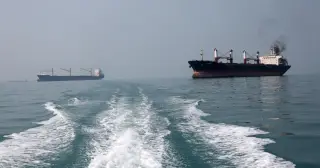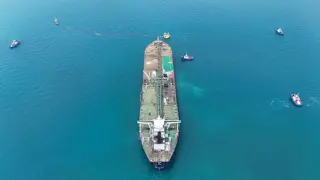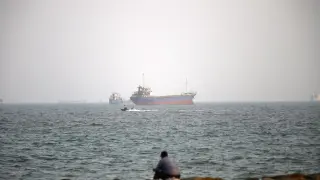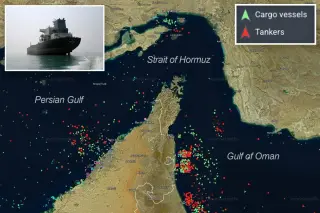
Iran and Oman say they’re close to a framework for a temporary navigational corridor and a joint mine-clearing project in the Strait of Hormuz, while the U.S. holds back on broad secondary sanctions amid China’s retaliation threats; oil prices dip as traffic through Hormuz remains subdued and negotiations on a permanent corridor and information-sharing mechanisms continue.
Iran shows no clear sign of mass unrest despite decades of sanctions, but economists warn living standards are deteriorating as purchasing power declines. While oil sales to China provide a potential lifeline, Tehran’s leverage—most notably its stance on the Strait of Hormuz—coupled with a UAE move to sever trade could reshape the economic fallout. Analysts say many Iranians rely on digital assets and gold to protect savings, and while sanctions are intensifying pressure and shaping diplomacy, there are still no widespread protests yet; the global response and timing of U.S. pressure remain pivotal.
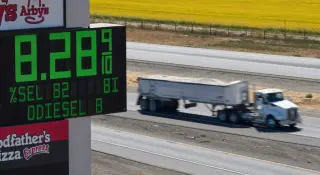
Oil prices fell about 3% as the U.S. shifts to economic pressure on Iran, with Brent near $89 and WTI around $82, as Washington calls its campaign the 'economic D-Day.' Tehran says it can withstand the sanctions, diplomats may return to the region, and China warns against unilateral measures, underscoring China as the key constraint on sanction effectiveness.
The US rolled out a broad sanctions package aimed at isolating Iran’s financial networks—covering digital assets, tech, gold, aviation and shipping—while warning of broader penalties for partners. Iran says it’s prepared and views the measures as the “same old talk,” but the choke points on oil exports and imports already bite, and Tehran must decide whether to concede to Washington or press on. Whether the sanctions succeed depends on whether China and regional neighbors cut ties, something Beijing opposes, and the regime could respond with hardline resistance or risk renewed diplomacy. The impact on ordinary Iranians is painful: inflation worsens, the rial weakens, and daily life shrinks as imports cost more. The situation links Washington’s political timing (midterms) to Iran’s economic clock—waiting could be costly if oil trade shrinks further, while a deal under pressure could embolden hardliners or produce a negotiated end to the war.
China denounces US threats of secondary sanctions on its Iran trade and vows to defend its interests, as Beijing remains Iran’s major oil customer. The US imposed sanctions on 60 entities tied to Iran but did not target Chinese financial institutions, signaling caution ahead of a Xi–Trump meeting. Analysts warn China could retaliate via financial markets or export controls, heightening risks to Hormuz shipping and global oil prices as the standoff shifts from military to economic pressure.
Gold rose to its highest in three months as traders weigh US inflation and ongoing bond-market jitters, with spot gold near $4,650 an ounce after the Treasury expanded long‑dated debt purchases. Global stocks opened higher on tech optimism ahead of Nvidia results and US inflation data, while Brent crude hovered just under $90 a barrel. Other headlines include resilient US house prices with slowing momentum, Lego's strong half-year sales, Vistry’s £350m affordable-homes grant, and the liquidation of First Brands Group, alongside warnings from veteran investors about attempts to suppress yields amid mounting debt concerns.
The weekend breakdown in US-Canada talks led Washington to impose a 50% tariff on a wide range of Canadian goods, but crude oil is exempted, underscoring how tightly the two economies are tied: Canada supplied about 63% of US crude last year and the US buys roughly 90% of Canadian exports. Imposing tariffs on energy would raise costs for US refiners and could force price changes, while Canada would struggle to find alternative buyers beyond the US, given existing pipelines and connections. The oil relationship is powerful but risky to weaponize, making crude a costly lever in the dispute for both sides.
Fortune argues the SPR’s buffer is vanishing against physical and legal limits: with about 293 million barrels stored in salt caverns and a statutory floor of 252.4 million, only roughly 41 million barrels remain usable; rapid draws risk cavern collapse, salt creep, and sludge formation, so operations must slow to a conservative rate and be spread across multiple caverns while policy clarifies when a full emergency release is warranted.
The US is signaling sanctions on countries that buy Iranian oil, with China—the world’s largest energy consumer and Iran’s top buyer—likely to feel the most pressure. Analysts say roughly 90% of Iran’s exported oil goes to China, though Chinese imports have fallen recently as demand and refinery runs slow; India and others have also reduced purchases. Because shipping under sanctions is hard to track and the market is sensitive to price shifts, the actual impact on global oil and US energy costs remains uncertain.
Global equities rose modestly as new U.S. sanctions tightened Iran’s economy, contributing to volatility in energy markets (Brent around the high $80s and U.S. crude near $83). Iran’s rial hit a record low, while the U.S. dollar strengthened against the yen and the euro hovered around $1.167, as investors awaited Fed chair Kevin Warsh’s remarks in Jackson Hole for clues on inflation and policy.
The United States unveils an 'economic D-Day' plan to choke Iran off the global economy by penalizing enablers and key trading partners, spotlighting China’s oil link, the UAE as Iran’s main transshipment hub, and Turkey, Iraq, and India as major but exposed partners. With Tehran’s currency sliding toward 200,000 toman per US dollar, enforcement details remain murky, but the move could spur realignments in Iran’s trade as partners weigh financial exposure against dollar access.
Under heavy U.S. sanctions and war, Iran’s economy is crumbling: the rial has collapsed, inflation is surging (IMF projects about 69% in 2026; July CPI up 87.9%), oil exports have collapsed due to the blockade, and IMF forecasts a roughly 5% GDP contraction this year as the country leans on non-oil revenue to fund the war. Analysts warn the economic pain could threaten domestic stability and provoke further tensions, while Tehran weighs concessions as China watches to avoid escalation.
Oil prices fell by more than $2 a barrel as investors booked profits after gains, despite the US expanding secondary sanctions on Iran. Brent settled at $92.17 a barrel and WTI at $85.01, with Morgan Stanley forecasting Brent could reach about $100/bbl later in the year. Analysts say the sanctions may have limited immediate impact on Iran’s oil revenues unless Tehran’s trading partners cut purchases, and they note ongoing congestion through the Strait of Hormuz as a supporting factor for prices.
Treasury Secretary Scott Bessent unveiled a broad sanctions drive called 'Operation Economic Outcast' aimed at severing Iran from the global financial system by closing loopholes and widening secondary sanctions, pressuring fellow governments and banks to cut Tehran off from oil revenue. The plan comes amid a stalled conflict, threats from Tehran, and disruptions around the Strait of Hormuz, with critics noting sanctions have mixed results and no clear deadline has been set.
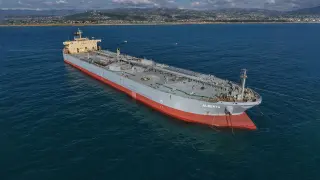
Iran’s Strait of Hormuz Authority blacklisted 45 tankers for alleged transit violations, warning they could be fined, detained, or have their cargo—oil or LNG—confiscated, with other vessels linked to the blacklisted ships also at risk. The move comes as US sanctions pressure intensifies and a naval blockade constrains Iranian oil exports, underscoring Hormuz’s role as a key global oil chokepoint amid ongoing conflict and economic measures.