
US-Iran impasse drives global bond yields to 20-year highs
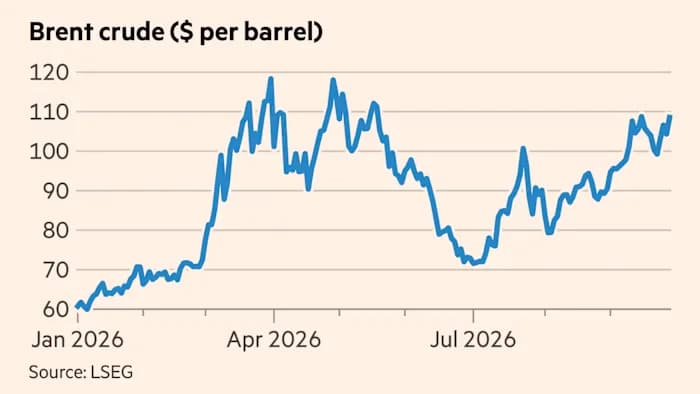
Global bond markets faced a severe sell-off on Monday as the US rejected Iran’s proposal to reopen the Strait of Hormuz, causing oil prices to spike and pushing the 10-year US Treasury yield to 5.27%, its highest level since 2007. The move reflects persistent inflation fears and a lack of resolution in the US-Iran conflict, with analysts warning that energy price shocks will continue to pressure borrowing costs through 2027.
Key points
- Brent crude oil prices surged over 4% to a high of $108.83 per barrel after President Donald Trump rejected Iran’s offer to reopen the Strait of Hormuz, later settling around $105.
- The 10-year US Treasury yield rose by 0.09 percentage points to 5.27%, marking the highest level in nearly two decades, while the 2-year yield reached 4.96%.
- UK 10-year gilt yields hit 5.44%, their highest since 2007, and French 10-year yields reached their highest level since 2008, indicating a broad global bond rout.
- The Federal Reserve raised interest rates earlier this month for the first time since 2023, and futures markets now price in two additional quarter-point increases by January, reversing previous expectations of rate cuts.
- Stock markets reacted negatively, with the S&P 500 falling 0.5% and the Nasdaq 100 dropping 0.8% by midday in New York.
Background
This escalation follows a series of bond market tremors in late August and September, where yields had already climbed due to Middle East tensions and rising oil prices. In August, mortgage rates jumped to 6.87% as bond yields rose, and by September 11, the 30-year Treasury yield approached 5.38%. The current sell-off represents a deepening of that trend, driven by the failure of diplomatic efforts to resolve the US-Iran conflict.
How outlets are covering it
The Financial Times emphasizes the direct link between the failed US-Iran deal and the global bond sell-off, citing analysts who note that energy price shocks will persist through 2027 as global energy reserves erode. TheStreet Pro offers a more structural view, arguing that the bond and oil markets are 'stuck' because the US and Iran are negotiating different issues: Iran focuses on reopening the Strait of Hormuz, while the US prioritizes Iran’s nuclear program. TheStreet Pro also highlights the Federal Reserve’s dilemma, noting that while AI-driven inflation is rising, rate hikes would harm softer sectors like housing and small businesses, creating a 'two-tiered' economic pressure that no single data point can resolve.
Why it matters
The surge in bond yields signals a shift in global monetary policy expectations, moving from anticipated rate cuts to potential hikes. This increases borrowing costs for governments and corporations worldwide, potentially slowing economic growth. For investors, the sustained high yields in oil and bonds suggest that inflationary pressures from the US-Iran conflict are not yet resolved, requiring a reassessment of risk in both fixed-income and equity markets.
What to watch
Markets will closely watch the front-month crude oil contract, which is trading in backwardation, indicating physical supply constraints. If the US and Iran do not reach a deal on the Strait of Hormuz, oil prices are likely to remain elevated, keeping pressure on bond yields. Additionally, upcoming economic data, including the Personal Consumption Expenditures (PCE) inflation report and GDP figures, will be critical in determining whether the Federal Reserve will proceed with further rate hikes in October.
- Bond sell-off deepens as oil prices rise Financial Times
- Bond Selloff Resumes as Oil Rises After Trump Spurns Iran Offer Bloomberg.com
- Morning Bid: A new neutral rate, much like a decades-old one Reuters
- Oil, Bonds, and the Fed’s Dilemma TheStreet Pro
- Selloff in U.S., European Government Bonds Deepens WSJ
Want the full story? Read the original reporting
Read on Financial Times