
G7 Agrees to Simulate AI-Driven Cyberattacks on Global Banking Infrastructure
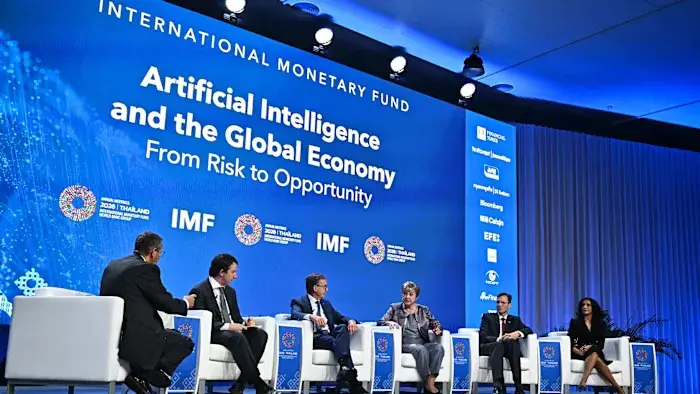
G7 finance ministers and central bank governors have agreed to conduct tabletop exercises simulating AI-driven cyberattacks on the financial sector. The initiative, announced in Bangkok during IMF meetings, aims to test how regulators and institutions detect, contain, and recover from breaches using advanced AI tools. While the specific dates and scenarios remain undisclosed, the move follows warnings from the IMF and Bank of England that AI is accelerating cyber threats, potentially undermining public confidence in financial stability.
Key points
- G7 leaders agreed to run tabletop exercises to assess resilience against AI-enabled cyber threats, confirmed by Japanese Finance Minister Satsuki Katayama.
- The exercises will simulate scenarios where AI tools automate phishing, exploit code vulnerabilities, and attack shared financial infrastructure, testing cross-border coordination.
- The decision follows a joint warning from IMF Managing Director Kristalina Georgieva and Bank of England Governor Andrew Bailey regarding the speed of AI-driven fraud.
- Previous G7 drills in May 2026 focused on generic malware; the new initiative specifically targets AI as the attacker’s tool, not just the target.
- Individual banks, such as JPMorgan, are already restricting external AI agents, prompting regulators to coordinate a unified defense strategy.
Background
In May 2026, the G7 Cyber Expert Group conducted a cross-border exercise simulating malware on shared technical infrastructure, involving 24 organizations. This new initiative builds on that framework but shifts the focus to AI-specific risks. Earlier this year, the IMF warned that software vendors often have insufficient time to patch vulnerabilities before exploitation, a gap widened by AI tools that accelerate attack speeds. The G7 has also published statements urging member jurisdictions to monitor AI evolution proactively rather than reacting post-incident.
How outlets are covering it
Techzine Global emphasizes the non-disruptive nature of tabletop exercises, noting they allow officials to test incident response procedures without affecting live systems. Startup Fortune highlights the urgency, linking the G7 move to recent actions by JPMorgan CEO Jamie Dimon, who blocked external AI agents from accessing customer accounts due to risks from 'rogue agents.' GuruFocus focuses on the broader policy response to escalating cybersecurity risks, though it incorrectly attributes the announcement to a different official and includes unrelated stock analysis. The Financial Times headline confirms the plan but is behind a paywall, offering no additional details. All sources agree that the G7 is moving from theoretical discussions to practical simulations to address AI-driven threats to financial stability.
Why it matters
This initiative signals a shift from reactive cybersecurity measures to proactive, coordinated stress testing at the global regulatory level. As AI tools make cyberattacks faster and more sophisticated, the ability of central banks and finance ministries to coordinate a response across borders is critical to preventing a single breach from triggering a systemic financial crisis. The exercises will likely lead to revised cybersecurity protocols and crisis manuals, ensuring that the global financial system can withstand AI-enabled disruptions.
What to watch
The G7 has not announced specific dates for the exercises or whether private commercial banks will participate, though they did in previous drills. The findings from these simulations are expected to inform revised cybersecurity protocols and incident response procedures for member nations. Regulators will likely continue to monitor AI developments closely, potentially updating standards for AI security and cyber-defense in banking in the coming months.
- G7 economies plan simulated AI attacks on banks as cyber fears rise Financial Times
- G7 to launch exercises to guard against AI cyber attacks Reuters
- G7 tests financial sector’s resilience against AI-based cyberattacks Techzine Global
- G7 Finance Leaders Plan AI Cyberattack Simulations GuruFocus
- G7 Will Stage Fake AI Cyberattacks on Banks to Find the Cracks First Startup Fortune
Want the full story? Read the original reporting
Read on Financial Times