Iran threatens to set US troops on fire as the conflict enters its fifth week, with Euronews' Europe Today outlining the top story alongside G7 energy/finance talks and related EU and global coverage.
US Secretary of State Marco Rubio said Washington expects its operation against Iran to wrap up within weeks without the need for ground troops, as the G7 urged an immediate halt to attacks on civilians and infrastructure. The US has deployed and is deploying forces to the region for flexibility, while diplomacy and further strikes continue amid rising energy prices and regional tensions.
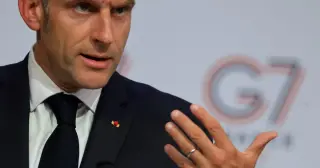
At a G7 foreign ministers meeting, Rubio said the United States expects to finish its operations in Iran within weeks, with objectives ahead of schedule and ongoing diplomacy, including a 15-point deal Iran has reportedly considered; Iran has signaled willingness to talk but threats of retaliation persist, while leaders stressed keeping the Strait of Hormuz open amid oil-security concerns.
US Secretary of State Marco Rubio travels to France for the G7 foreign ministers’ meeting to press skeptical allies to back a confrontation with Iran, a push framed against a backdrop of President Trump’s insults toward U.S. partners.
US Secretary of State Marco Rubio works to win G7 backing for a potential military action against Iran, with President Trump at his side as skeptical allies weigh the plan.
During a private G7 virtual meeting, Trump said Iran was near surrender after U.S. military actions, while acknowledging uncertainty about Iran’s leadership. Several G7 leaders pressed to end the war and secure shipping through the Strait of Hormuz as oil prices rose. Hours later, Iran’s new supreme leader vowed to avenge martyrs and open new fronts, signaling escalation in the conflict.
EU leaders criticized the US decision to permit purchases of Russian oil stranded at sea, saying lifting sanctions would undermine support for Ukraine and Europe’s security, with Merz, Costa, and von der Leyen stressing that sanctions should stay in place despite ongoing price pressures and Middle East tensions.
Trump told G7 leaders in a virtual meeting that Iran is 'about to surrender,' a claim reported by three officials; Iran's new supreme leader Mojtaba Khamenei vowed to keep fighting, and Tehran has threatened the Strait of Hormuz as oil prices climb above $100 a barrel. Allies urged a quick end to the war, while Trump offered no clear deadline and the White House declined to comment.
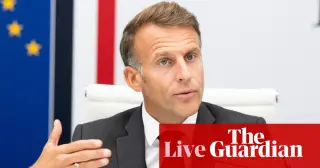
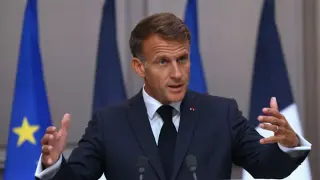
After a G7 call, Macron framed Trump’s goals as unclear, with the president wavering between claiming victory and threatening escalation. The war has degraded Iran’s navy, missiles, and industrial capacity but stopped short of eliminating its nuclear program or striking a fortified Natanz facility; Tehran’s 450 kilograms of highly enriched uranium and broader aims remain intact. While Israel and the U.S. share broad objectives, they diverge on what ‘winning’ means, with Netanyahu seeking regime change and Washington wary of overreach. With no direct US-Tehran talks and Tehran resistant to Washington’s timeline, the endgame remains unpredictable for allies and adversaries alike, with the risk of continued attacks even if Trump pulls back.
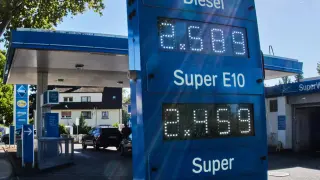
The International Energy Agency announced a release of about 400 million barrels from member countries’ emergency oil stocks to counter market disruption from Iran-related tensions and the Strait of Hormuz closure, with G7 members providing the majority of the total. The United States will also tap 172 million barrels from the Strategic Petroleum Reserve, to be delivered over about 120 days and then replenished by roughly 200 million barrels in the following year. Germany, Austria and Japan also pledged partial releases. Analysts say the move could stabilize prices in the short term, but it is not a long‑term fix and trades off future supply by dipping into strategic reserves.
G7 energy ministers will hold a virtual meeting to discuss a coordinated release of 300–400 million barrels from strategic oil reserves to address supply disruptions linked to the Iran war and the Strait of Hormuz closure; the United States backs the move but a decision has not yet been made, with talks following a separate finance ministers’ meeting.
G7 finance ministers broadly agreed not to release strategic oil reserves yet, signaling readiness to act if needed; energy ministers will reconvene on Tuesday and leaders will make the final call later this week.
G7 finance ministers are weighing a coordinated release of strategic oil reserves to blunt a sharp price surge driven by the Ukraine war and Iran tensions, aiming to avert a global energy shock and inflation spike. Oil briefly neared $118 a barrel before easing to about $104, with officials noting the reserves (300–400 million barrels) are modest and that past releases in 2011 and 2022 helped stabilize markets; the IEA’s potential involvement underscores the crisis-level risks to growth and central-bank policy.
On the fourth anniversary of Russia’s invasion, the G7 leaders reaffirm unwavering support for Ukraine’s sovereignty and back a peace process with Russia, including security guarantees via the Coalition of the Willing and continued humanitarian and financial aid. They highlight substantial energy assistance, with more than 2,500 generators and other equipment sent to Kyiv since January and over €500 million pledged to the Ukraine Energy Support Fund, to bolster the energy system ahead of winter. They also commit to nuclear safety work with the EBRD, including rehabilitation of the Chornobyl containment arch, and support the return of Ukrainian children and ongoing humanitarian aid.
Macron privately offered to host a Paris G7 with Russians invited on the sidelines; Trump posted the private message on Truth Social and it was authenticated by Macron’s entourage. The exchange comes amid Trump’s tariff threats on Greenland and Europe weighing countermeasures, with Ukraine and Denmark mentioned for possible invites.