
Polymarket Investigates Dozens of Election Bets Ahead of Midterms
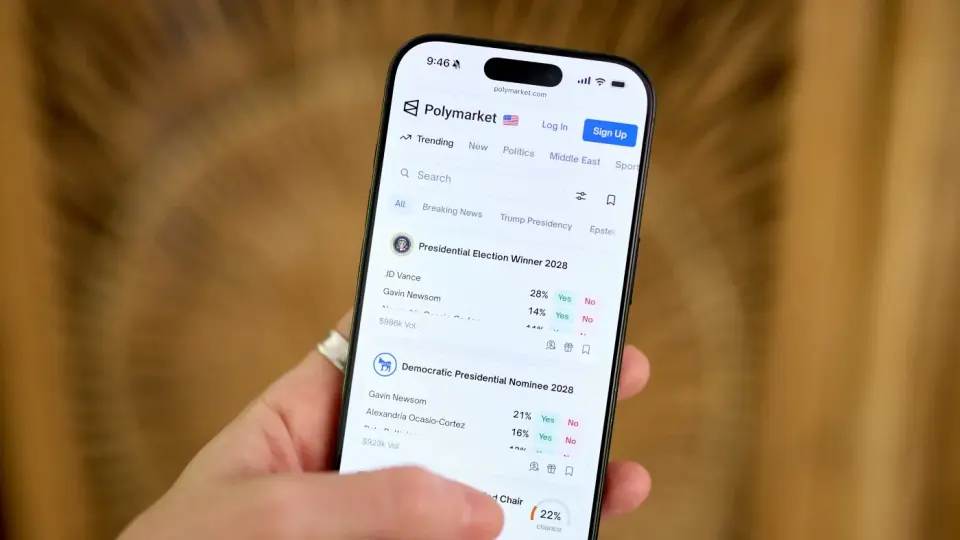
Polymarket has investigated dozens of election-related bets, with at least two cases referred to the CFTC. The platform’s new surveillance system, led by former FBI official Shana Bautista, monitors for insider trading and manipulation using data from social media, FEC records, and crypto transactions. While Kalshi has banned candidates from betting on themselves, staffers continue to exploit polling data. Critics warn that prediction markets can become self-fulfilling prophecies, potentially influencing election outcomes through perceived momentum shifts.
Key points
- Polymarket’s head of global intelligence, Shana Bautista, confirmed the company has investigated dozens of election-related cases, with at least two referred to the U.S. Commodity Futures Trading Commission (CFTC).
- Bautista’s team of 16 uses a surveillance system that analyzes gigabytes of data from social media, FEC records, crypto exchanges, and banking partners to detect insider trading and market manipulation.
- The system generates hundreds of alerts daily, triggering investigations when users hit specific red flags, such as opening multiple accounts or using consistent device IDs across short bursts of trades.
- Kalshi, Polymarket’s main rival, banned political candidates from betting on themselves in April and blocked dozens of campaign staffers in July, though some staffers reportedly bypassed these restrictions.
- Economics professor Rajiv Sethi warned that election prediction markets are uniquely vulnerable to manipulation because they can act as self-fulfilling prophecies, where perceived momentum affects actual campaign outcomes.
- Despite the CFTC’s limited regulatory action, Polymarket and Kalshi are self-policing the industry, with Bautista noting that crypto trades are rarely completely anonymous due to traceable banking and exchange links.
Background
This development occurs amid heightened scrutiny of prediction markets in the lead-up to the November 3, 2026, midterm elections. Recent archive coverage highlights the intense political volatility in key states like Georgia, where voter defection from former Trump supporters is pivotal, and the controversial timing of federal indictments in Virginia, which sparked debates over political interference. These events underscore the broader tension between financial speculation on political outcomes and the integrity of the democratic process, a concern that has intensified as prediction platforms like Polymarket and Kalshi have exploded in popularity during the current administration.
Why it matters
The integrity of the 2026 midterm elections is increasingly threatened by the intersection of financial speculation and political information. If insider trading or manipulation in prediction markets influences public perception of candidate viability, it could alter voter behavior and campaign strategies, potentially skewing election outcomes. The lack of robust federal regulation places the burden of policing these markets on private companies, raising questions about consistency and effectiveness in preventing democratic interference.
What to watch
Polymarket and Kalshi will continue to refine their surveillance systems as the November 3 midterms approach, likely increasing the frequency of investigations and referrals to the CFTC. State-level legal challenges and political pushback against election betting may intensify, potentially leading to new regulatory frameworks or bans. Campaigns and their staffers will face heightened scrutiny, with platforms likely tightening restrictions on insider trading to avoid legal repercussions and reputational damage.
Want the full story? Read the original reporting
Read on NPR